
Choose Thanksgiving Music the Congregation Can Carry
Holiday & Special Occasion Music
By Spiritrax Content Studio · September 4, 2026
Updated September 4, 2026
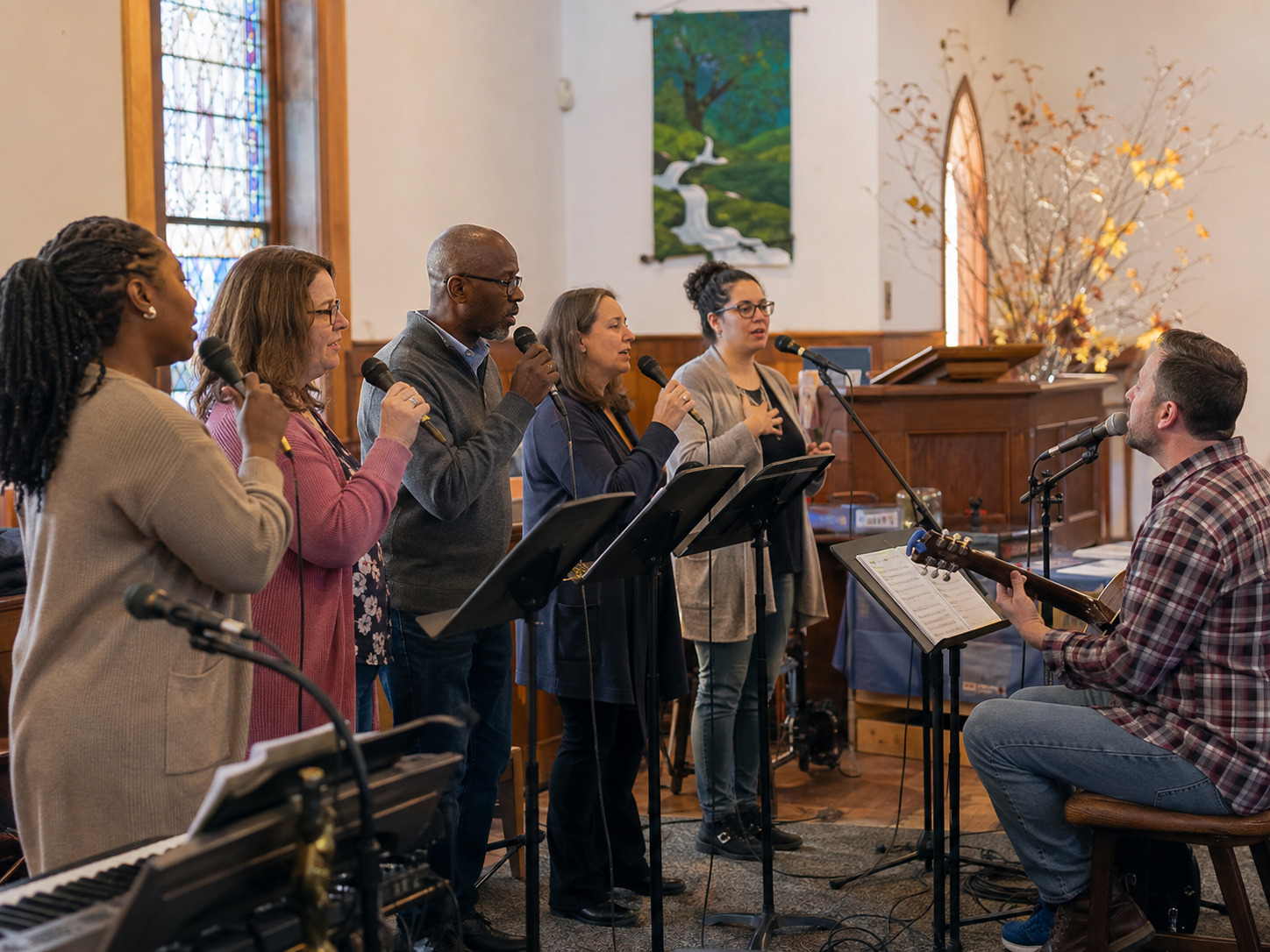
The short answer: a Thanksgiving worship service usually needs fewer songs than planners first imagine. Choose one familiar gathering piece, one clear song of gratitude, and one hopeful sending moment in keys the congregation can actually sing.
Backing tracks can support that plan when the choir is small, the accompanist is unavailable, a soloist needs a comfortable key, or volunteers need dependable cues. The track should make participation easier. It should not turn gratitude into a crowded seasonal concert.
What music works for a Thanksgiving church service?
Start with the job each song must do.
| Service moment | Music's job | Practical question |
|---|---|---|
| Gathering | Welcome people into a shared act of thanks | Can conversation settle without the music demanding attention? |
| Opening | Give the room one accessible entrance | Is the first phrase and key easy to join? |
| Gratitude | Carry the main congregational or choir response | Does the text fit this community's actual thanksgiving? |
| Prayer or offering | Support movement without covering words | Would an instrumental section or silence serve better? |
| Sending | Turn gratitude toward generosity and service | Does the ending feel hopeful rather than oversized? |
This works for a Thanksgiving Sunday, a midweek service, a community gathering, a school chapel, or a small-group program. Adapt the order to the tradition and purpose of the gathering.
Choose songs by text, range, and placement
A familiar title is only the beginning. Review the exact words, arrangement, number of verses, introduction, key, tempo, and ending before assigning it a place in the service.
Spiritrax has several useful starting points:
- Praise and Thanksgiving (Morning Has Broken) offers a gentle, uplifting shape for gathering, a solo, or a reflective congregational moment.
- Let All Things Now Living can carry a flowing song of gratitude with several available key choices.
- Come, You Thankful People, Come brings a traditional harvest-hymn sound when that text and imagery fit the service.
- Now Thank We All Our God can give the room a familiar, confident hymn of thanks.
Preview each arrangement. Do not choose only from the description. Listen for the actual first entrance, instrumental texture, verse pattern, dynamic growth, and final cadence.
Give the congregation one song it can carry
Holiday services may include guests, extended families, children, returning members, and people who do not know the worship team's usual repertoire.
Choose at least one piece with a melody and range the room can enter quickly. A strong congregational choice usually has:
- a recognizable opening phrase;
- a key centered for mixed voices;
- a tempo that feels steady without dragging;
- enough introduction for one calm breath;
- a clear verse or refrain pattern;
- and an ending people can hear coming.
If a soloist leads the first verse, tell the congregation exactly when it is invited to join. If the choir carries harmony, keep the melody present. Participation should feel offered, not tested.
The Spiritrax guide to choosing a church solo key can help a singer compare the highest phrase, lowest phrase, tone, and room before selecting a track.
Keep Thanksgiving and Harvest Sunday distinct
The themes may overlap, but the services are not always interchangeable.
A Harvest Sunday may emphasize creation, stewardship, agricultural imagery, or a seasonal offering. A Thanksgiving gathering may include civic tradition, family travel, community meals, testimony, service projects, or a wider invitation to gratitude.
Use the local service purpose as the filter. If harvest imagery is central, choose it intentionally. If the gathering needs broader language of gratitude, do not force every selection into fields, grain, and gathering crops.
Spiritrax's Harvest Sunday planning guide offers a separate framework when that is the service you are actually preparing.
Build a simple three-song arc
1. Gathering: warm and unhurried
Use an instrumental or gently led piece while people arrive. Keep the level low enough for greetings and seating. If the first song will become congregational, let the prelude establish the melody without using the largest section of the arrangement too soon.
2. Gratitude: one shared center
Place the primary hymn or worship song where its text can answer the readings, prayer, testimony, or message. The service does not need several songs saying nearly the same thing.
Decide whether the selection belongs to the congregation, choir, soloist, or a combination. Then choose the key from the people carrying the melody, not from the original recording.
3. Sending: gratitude becomes action
Close with language that moves beyond a private feeling of thankfulness. The final musical moment may point toward generosity, care for neighbors, service, stewardship, peace, or faithful attention.
A bright ending can work, but it should match the room. A small congregation with one volunteer singer may need a clear, warm button rather than a large orchestral finish.
Plan music around testimonies and spoken thanks
Thanksgiving services often include short testimonies, children's participation, a reading of community blessings, an offering, or an invitation to name what people are grateful for.
Those moments move at human speed. Do not place a fixed-length track beneath them without deciding what happens if participation is shorter or longer than expected.
Choose one of four clear plans:
- Use silence while people speak.
- Use a short instrumental introduction, then stop before the first testimony.
- Keep a restrained instrumental section under movement only.
- Begin the next song after a named spoken cue.
Speech should remain completely understandable. If the music competes with names, prayer, or testimony, lower it or remove it.
Give volunteers observable cues
“Start when it feels right” is not a cue.
Write what the playback volunteer can see or hear:
| Cue | Trigger | File and key | First entrance | Ending |
|---|---|---|---|---|
| Gathering | Doors open | Approved instrumental | No vocal entrance | Fade on welcome signal |
| Song of thanks | Leader says the final sentence of the invitation | Approved accompaniment in the chosen key | Soloist after the full introduction | Hold silence after final chord |
| Offering movement | Ushers begin | Short instrumental section | None | Stop before prayer |
| Sending | Closing words finish | Approved congregational track | Leader gives first phrase | Full ending |
Use the exact filename. Keep guide-vocal demos in the rehearsal folder and accompaniment-only files in the performance folder.
Rehearse the transitions people will notice
Running each song from beginning to end does not prove the service.
Practice:
- the spoken welcome into the first note;
- the moment the congregation joins;
- the move from testimony or prayer into music;
- any verse cut or repeated refrain;
- the ending under applause, silence, or movement;
- and the handoff from the final chord to the next speaker.
Test the tracks through the actual sound system. A phone speaker or rehearsal-room Bluetooth speaker cannot tell the team whether the sanctuary mix will keep words, melody, and spoken cues clear.
Prepare for the holiday volunteer schedule
Thanksgiving week changes normal routines. Musicians may travel. The usual operator may be away. A guest soloist may have only one rehearsal.
Send the final plan early enough for the people actually serving:
- service order;
- track titles and exact keys;
- guide-vocal or rehearsal links where available;
- lyric or lead-sheet references;
- who begins each song;
- who owns playback;
- arrival and sound-check time;
- and the backup plan.
Do not leave downloads inside one person's account or email. Store the approved files where the designated operator can reach them without searching through personal messages.
A practical Thanksgiving rehearsal checklist
- Name the service purpose before choosing songs.
- Give gathering, gratitude, prayer or movement, and sending distinct musical jobs.
- Choose one accessible song for the whole room.
- Review the exact text and arrangement of every selection.
- Pick keys from the actual singers and congregation.
- Confirm verse, refrain, introduction, and ending plans.
- Keep guide vocals separate from accompaniment-only files.
- Write observable playback cues.
- Rehearse spoken-to-musical transitions.
- Test through the real microphones and speakers.
- Download the files before the service.
- Prepare a second tested playback device.
- Confirm any separate permissions needed for lyrics, streaming, recording, or reposting.
FAQ: Thanksgiving worship music and backing tracks
How many songs should a Thanksgiving service include?
There is no universal number. A focused service may need one gathering piece, one central song of gratitude, and one sending song. Add music only when it has a different job.
What is a good traditional Thanksgiving hymn?
Common choices include “Now Thank We All Our God,” “Come, You Thankful People, Come,” and “Let All Things Now Living.” Review the exact lyrics, arrangement, key, and service context before choosing.
Can a small church use backing tracks for Thanksgiving?
Yes. A backing track can support a soloist, choir, or congregation when live accompaniment is limited. Choose a comfortable key, make the first entrance clear, and test the track in the room with the actual operator.
Should music play under testimonies?
Only when the speech remains completely clear and the duration, level, and ending are planned. Silence is often the strongest accompaniment for personal words of thanks.
Should guide vocals be used in the service?
Use guide vocals for learning when singers need them. For performance, confirm that the accompaniment-only file is in the active folder unless the service intentionally calls for a recorded lead voice.
Let gratitude stay singable
A thoughtful Thanksgiving music plan does not measure its success by how many songs fit into the order.
Choose a small arc, put one familiar melody within reach of the room, match keys to the people singing, protect testimonies and prayer, and give volunteers cues they can follow. Reliable accompaniment serves gratitude best when it helps people participate without making the service feel produced for its own sake.
Preview a familiar thanksgiving hymn accompaniment, choose the key that supports the people singing, and prepare the final service file, first entrance, and backup with your volunteers.
Preview Let All Things Now Living