
Build the Harvest Sunday Music Plan Before the Choir’s First Rehearsal
Holiday & Special Occasion Music
By Spiritrax Content Studio · July 13, 2026
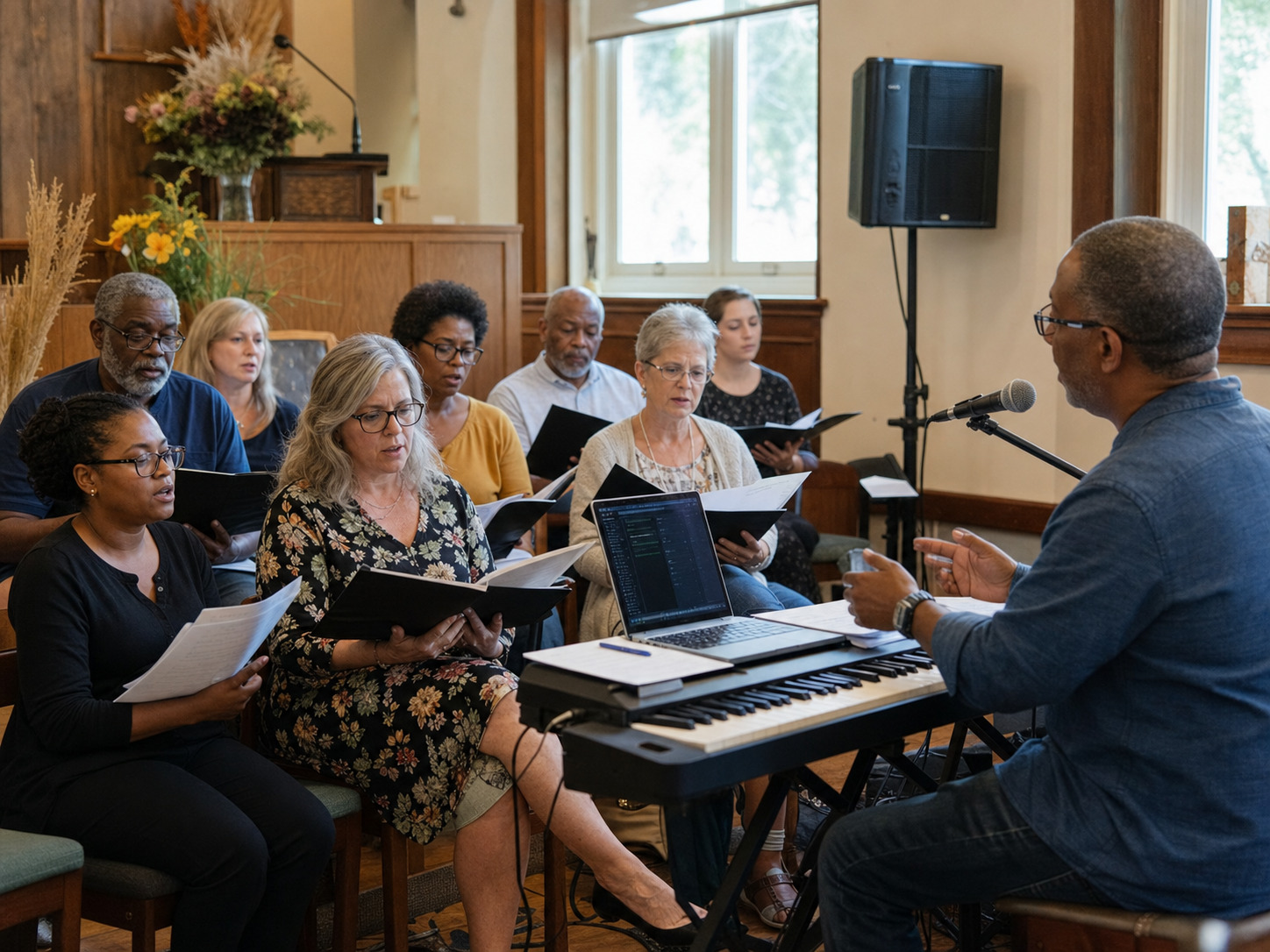
Harvest worship can carry several ideas at once: gratitude, stewardship, provision, service, creation, and care for neighbors. The music works best when the planning team decides which idea the service needs before choosing a long list of seasonal songs.
A backing track can give a small choir, soloist, cantor, or volunteer-led congregation dependable accompaniment. The useful plan starts with the people singing, then chooses the song, key, cue, and rehearsal schedule that help those people lead the room naturally.
Start with the service purpose
“Harvest music” can mean different things in different communities. Some churches plan a formal Harvest Sunday. Others connect the theme to a food drive, stewardship season, rural community event, fall festival, Thanksgiving preparation, or a general service of gratitude.
Write one sentence before selecting music:
This service uses harvest imagery to help the congregation respond with gratitude and practical care.
That sentence gives every musical choice a job. It also keeps the service from becoming a collection of autumn references without a clear worship arc.
Give each musical moment one role
Use the order of service to avoid making every song carry the entire theme.
| Service moment | Musical purpose | Backing-track need |
|---|---|---|
| Prelude or gathering | Set a reflective, welcoming tone | Instrumental or gentle vocal arrangement |
| Opening hymn | Establish gratitude and shared participation | Clear introduction and congregational key |
| Choir or solo | Develop the harvest theme in more detail | Comfortable key, learnable melody, supportive arrangement |
| Offering or response | Connect gratitude with action | Moderate length and easy transition |
| Closing song | Send the congregation out with confidence | Strong cue and clear ending |
One well-placed harvest hymn may serve the theme better than repeating the same imagery in every part of the service.
Choose the singer before the key
Do not begin with the original recording key and work backward.
Decide whether the music will be led by a soloist, small choir, full choir, cantor, children, or congregation. Then test the highest and lowest phrases with those voices. A soloist may need room for expressive phrasing. A congregation usually needs a comfortable shared range and a clear melody. A volunteer choir may benefit from a key that keeps entrances relaxed after a short rehearsal period.
Spiritrax offers many tracks with transposition options. Check the available versions before the first rehearsal, and keep the selected key in the file name so the sound operator and singers use the same one.
Use one track to build the rehearsal plan
Sing to the Lord of Harvest gives a planning team a focused seasonal starting point. Before using any track in a service, preview the arrangement and listen for four things:
- How long is the introduction?
- What sound gives the first vocal cue?
- Does the arrangement support a soloist, choir, or congregation in your room?
- How does the ending behave?
If a guide vocal demo is available, use it to learn the melody and entrance. Rehearse with the accompaniment-only version before the service so the singers do not depend on a recorded lead that will not be present.
Rehearse in three short passes
A clear rehearsal path is more useful than singing the full piece repeatedly.
Pass 1: entrance and first phrase
Play the exact final file. Count or listen through the introduction, mark the breath, and sing the first phrase. Repeat until the cue feels ordinary.
Pass 2: difficult transition
Jump to the place where the choir changes section, the harmony thickens, or the melody reaches its highest phrase. Rehearse the musical problem directly.
Pass 3: ending and service handoff
Run the final section and decide who moves, speaks, prays, or lowers the volume after the last chord. The ending should serve the next worship moment instead of leaving the room waiting.
Keep the sound plan simple
Download the approved MP3 before the service and test it through the real sound system. Do not depend on church Wi-Fi or a streaming page.
The playback checklist should include:
- final song title and key in the file name;
- device charged and notifications silenced;
- cable, mixer input, and speaker tested;
- track volume balanced under the live voice;
- one named person responsible for starting and stopping playback;
- backup file on a second tested device;
- cue written into the service order.
Listen from the congregation’s seating area. The singer should remain understandable, the introduction should be audible without becoming abrupt, and the last chord should leave enough space for the service to continue.
Match the arrangement to the room
A small chapel, retirement community, school hall, outdoor service, and large sanctuary do not need the same playback level or musical density.
Ask practical questions:
- Can the people in the back hear the first cue?
- Does the track cover a small choir instead of supporting it?
- Is the microphone adding clarity or only volume?
- Will spoken words immediately before and after the song feel balanced?
- Can the operator reach pause or stop without searching the screen?
Make those decisions at sound check with the actual singer and equipment.
Plan one internal link to the rest of the season
Harvest Sunday may be the start of a longer fall music cycle. Keep notes about the key, playback level, volunteer roles, and rehearsal time that worked. Those notes can make Thanksgiving, stewardship, All Saints, or early Advent planning more realistic without treating every service as the same occasion.
If the selected catalog arrangement is close but the key, tempo, introduction, ending, or cut does not fit, review the Spiritrax custom-track service early enough for planning and revision.
FAQ: harvest hymns and backing tracks
What is a good first step for Harvest Sunday music planning?
Define the service purpose and who will sing. Then choose one musical moment where a harvest hymn can support the theme clearly.
Can a small church choir use a backing track?
Yes. A backing track can give a small choir consistent accompaniment when the key, introduction, volume, and playback cue are prepared in advance.
Should the congregation sing every harvest-themed song?
Not necessarily. A familiar opening or closing hymn may invite participation, while a choir or solo can carry more detailed text elsewhere in the service.
When should the choir move from a guide vocal to accompaniment only?
Move to the accompaniment-only version once the melody and first entrance are secure. The final rehearsal should use the same file planned for the service.
What backup should the church keep?
Keep the downloaded MP3 on a second charged device, use a clear file name with the key, and make sure another volunteer knows the start cue and stop control.
The takeaway
Harvest music feels intentional when every song has one job. Define the service purpose, choose the people singing, test a comfortable key, rehearse the entrance and ending, download the final file, and give playback to one prepared operator. That simple plan lets gratitude and service remain at the center of the room.
Preview Sing to the Lord of Harvest, check the available accompaniment and learning support, and choose the version that helps your choir, soloist, or congregation prepare with confidence.
Preview the Harvest Backing Track