
A Church Solo Works Best in the Key the Room Can Trust
Backing Track Guides
By Spiritrax Content Studio · July 2, 2026
Updated July 2, 2026
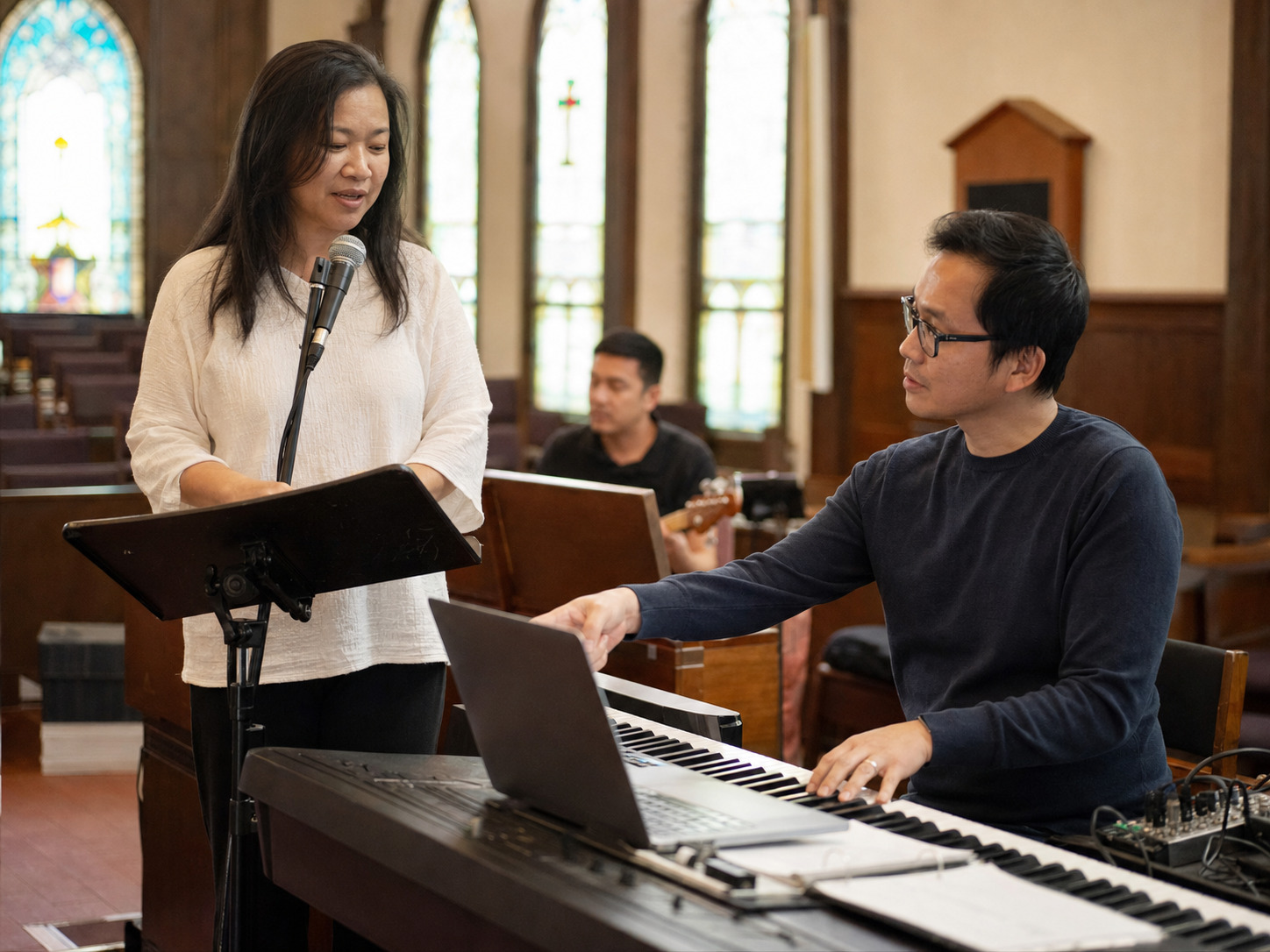
A solo can be familiar, meaningful, and beautifully chosen, but the wrong key can still make the moment feel tense. The singer may push the high notes. The congregation may stop joining in. The pianist or playback leader may keep turning the volume up because the vocal line is not sitting comfortably.
For worship settings, the best key is not always the original key. It is the key that lets the words land clearly, keeps the singer steady, and fits the purpose of the service. That matters for hymns, contemporary worship songs, memorial solos, civic services, small choir features, and quiet reflective moments.
Backing tracks can make solo planning easier because the arrangement stays consistent from rehearsal to service. The key still needs to fit the person and the room.
Start with the singer, not the recording
Many singers learn a song from a famous recording. That recording may be in a key chosen for a different voice, a different arrangement, or a studio setting with multiple takes. A church service is different. The singer is live, the room may be dry or echoing, and the words need to be understood on the first hearing.
Ask the singer to mark three places:
- the highest note that needs to feel confident,
- the lowest phrase that still needs to speak clearly,
- the line where breath support becomes difficult.
Those three spots usually tell you more than the first verse does. A key can feel easy early in the song and become uncomfortable near the final refrain.
Think about the role of the solo
A song used as a prelude can sit differently from a song used after a reading, during communion, or before a prayer. The same hymn might need a brighter key for a confident solo or a gentler key for a reflective moment.
Before choosing the track, decide what the solo is doing:
- inviting the room into worship,
- supporting a prayer or meditation,
- honoring a memorial moment,
- giving the choir a feature,
- helping a child or youth singer succeed,
- closing the service with something familiar.
The function affects the key. A reflective song should not force the singer into a strained performance. A congregational moment should not sit so high that the room stops singing.
Test the key at service volume
Key choice can change once microphones, speakers, and room acoustics are involved. A singer who feels comfortable in a small rehearsal may over-sing when the sound system feels unfamiliar. A track that sounds balanced through laptop speakers may feel too full once it is in the sanctuary.
Do a short service-volume check before the final rehearsal if possible. Listen for:
- clear words on low phrases,
- relaxed tone on high phrases,
- enough track support without covering the vocal,
- comfortable breaths before important lines,
- an ending that the singer can land without rushing.
If the singer keeps pulling away from the microphone or pushing harder at the top, the key may need to move.
Choose a key that respects the congregation
Some solos are meant only to be heard. Others invite the room to join on a refrain or final verse. If the congregation will sing, the key cannot be chosen only for the soloist. It needs to sit in a range ordinary voices can follow.
For familiar hymns, this is especially important. A strong soloist may be comfortable in a higher key, but the room may need the melody a little lower. A lower key may support a quiet prayer moment but make congregational singing feel heavy. The best choice depends on the service purpose.
If the room will join, test the refrain with two or three typical voices, not only the soloist.
Keep the arrangement easy to follow
A good backing track gives the singer a reliable path. The intro should make the entrance clear. The tempo should leave room for the text. The ending should be predictable enough that the vocalist, sound operator, and worship leader all know when the moment is complete.
When reviewing a track, pay attention to:
- the length and clarity of the introduction,
- whether there is a guide vocal demo available for learning,
- how the track supports breathing,
- whether the arrangement has extra repeats,
- whether the ending needs a spoken cue or visual signal.
These details matter more than polish alone. In worship, the track should support the service, not make the room work harder.
Build a simple key-choice checklist
Use this before rehearsal:
- Have the singer try the song in more than one key if options are available.
- Check the highest and lowest phrases, not only the opening.
- Decide whether the congregation will join.
- Rehearse with the same track version that will be used in service.
- Test the microphone and playback balance.
- Mark the entrance, any repeats, and the ending.
- Keep the final file easy to find on the service device.
That checklist prevents the most common Sunday-morning problem: everyone knows the song, but no one is fully sure which version, key, or ending is being used.
When a familiar hymn is the best place to start
Classic hymns can be a useful starting point because the melodies are familiar and the service use is clear. Songs such as "Amazing Grace," "How Great Thou Art," "Blessed Assurance," and "Come Thou Fount of Every Blessing" can work for soloists, small choirs, memorials, and reflective service moments when the key and track shape fit the room.
The same planning still applies. Choose the key for the singer and setting. Confirm whether the room will join. Rehearse the entrance and ending. Let the track keep the moment steady without taking attention away from the text.
FAQ: choosing a key for church solo backing tracks
Should a church solo use the original key?
Not automatically. The original key may be useful as a reference, but the service key should fit the singer, the room, and whether the congregation will join.
How do I know if a key is too high?
If the singer tightens, loses words, avoids the microphone, or cannot sustain the final phrases comfortably, try a lower key. The most important test is usually near the end of the song.
What if the congregation will sing part of the song?
Choose a key that supports ordinary congregational voices, not only the soloist. Test the refrain with a few people before finalizing the track.
Why use a backing track instead of only piano?
A backing track can provide consistent tempo, clear accompaniment, portability, and dependable rehearsal continuity when live accompaniment is unavailable or the service needs the same arrangement every time.
The takeaway
A trusted key makes the whole service feel calmer. The singer can focus on the words, the worship leader can trust the cue, and the room can receive the song without strain. Start with the voice, confirm the service purpose, and choose the track version that helps the moment serve the people in the room.
Looking for familiar hymn accompaniment in service-friendly arrangements? Browse Spiritrax classic hymn backing tracks for soloists, choirs, and worship teams.
Browse Classic Hymns