
Yankee Doodle Is Easier When Children Know the Cue
Holiday & Special Occasion Music
By Spiritrax Content Studio · June 4, 2026
Updated June 8, 2026
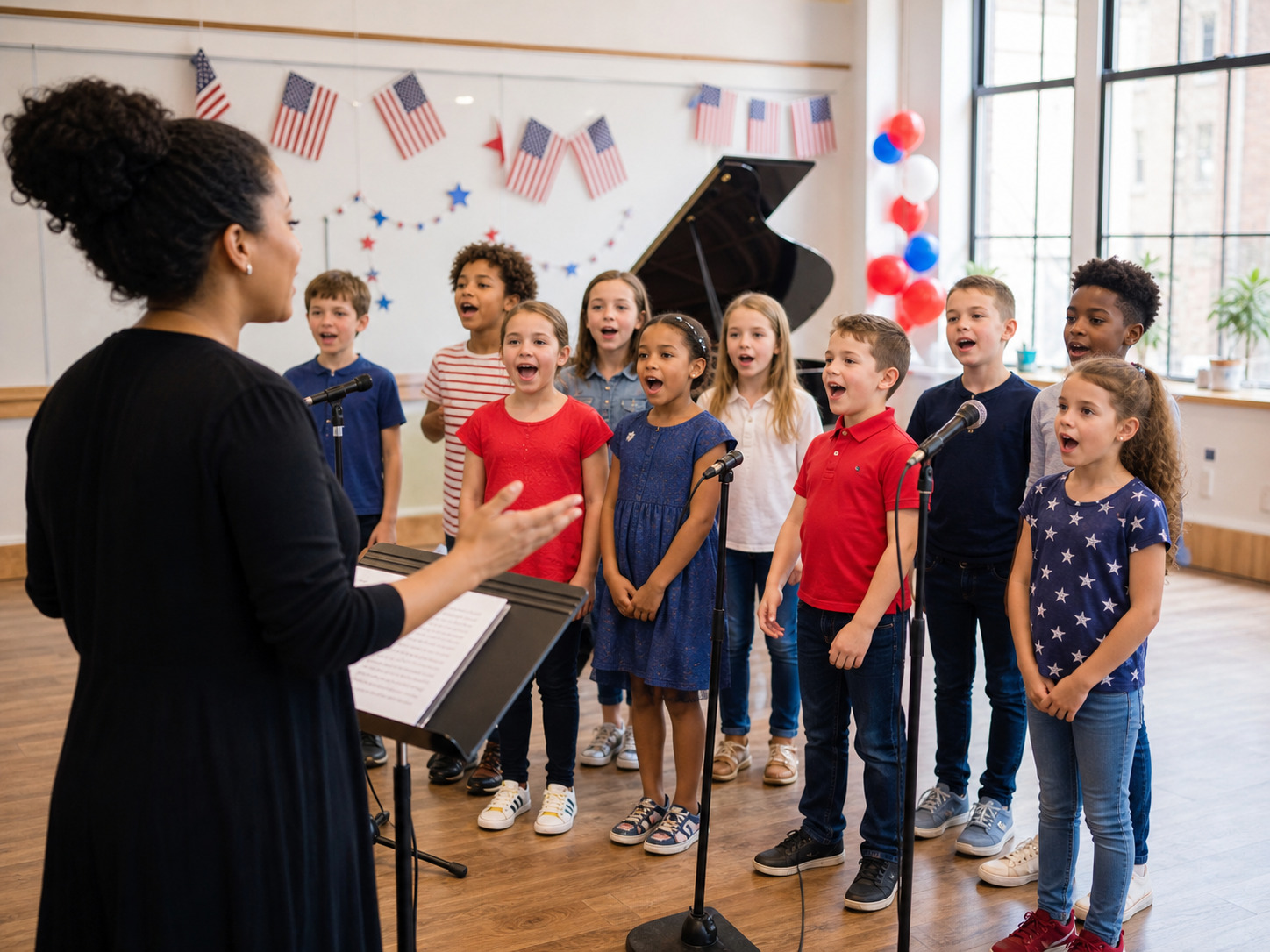
Yankee Doodle looks simple on paper, but it can get surprisingly messy in a children's choir, classroom program, vacation Bible school event, summer camp, or community patriotic celebration. The tune is familiar. The energy is high. The children may be moving, waving props, entering from the side of the room, or singing in front of family members for the first time.
That is exactly when the backing track has to feel obvious. A good track does more than play the melody under the singers. It gives the teacher, director, sound volunteer, and children the same map.
Start with the entrance, not the ending
Most problems happen before the first full phrase. Children need to know when the track begins, where the first sung word lands, and whether they should already be in place when the music starts.
Before rehearsal, decide:
- Will the group enter before the track starts or during the introduction?
- Will one teacher give a visible cue?
- Are children singing in unison, small groups, or call-and-response style?
- Is there movement that needs a fixed count-in?
- Should the sound operator fade the room before pressing play?
A track with a clear introduction gives young singers a dependable runway. If the first cue feels rushed, children tend to look at each other instead of singing confidently.
Choose a key for children's voices
Children's patriotic songs often work best when the key sits in a bright, comfortable range without pushing the top notes too hard. If the group includes younger children, casual singers, or a mixed classroom, test the first verse in rehearsal before committing to a key.
The Yankee Doodle backing track is available in multiple keys, which makes it easier to choose a version that fits the room. Try the opening phrase with the actual children who will perform it. A key that feels fine for one confident soloist may sit too high or too low for a full group.
Let movement follow the music
Yankee Doodle is often used with marches, simple choreography, flag entrances, class presentations, or playful patriotic staging. Keep the movement simple enough that children can still hear the track and sing together.
A practical rehearsal plan is:
| Moment | What to rehearse | Why it matters |
|---|---|---|
| Introduction | Stand still, count, or enter on cue | Prevents a scattered first phrase |
| First verse | Sing without movement first | Locks in pitch and rhythm |
| Second verse | Add gestures or marching | Keeps staging from taking over |
| Ending | Freeze, pose, or hold position | Makes the final note feel finished |
If the movement is more important than the singing, simplify the movement. The audience will remember a confident group far more than a complicated pattern that makes the room feel uncertain.
Give the sound volunteer a simple script
For small events, the sound operator may be a parent, teacher, worship volunteer, or staff member who is helping for the day. Do not assume they know the song structure.
Give them a short cue note:
- Track name and key
- Whether to start on the director's nod or at a fixed point in the program
- Whether the file should play straight through
- Expected ending action, such as "hold applause until children freeze"
- Backup plan if the room is loud or the children miss the first entrance
This kind of cue note keeps the performance calm. It also helps if a different person has to run sound on the day of the program.
Use the track in every late rehearsal
Do not wait until the final run-through to add the backing track. Children learn the timing of the intro, the feel of the tempo, and the shape of the ending by hearing the same file repeatedly.
Once the group knows the song, rehearse with the exact file you will use at the event. Play it from the same device if possible. Check that the speaker system is loud enough for the children to hear without overpowering them.
For a longer patriotic set, pair this song with the Patriotic Collection so the program has a consistent accompaniment style across multiple selections.
Quick checklist for directors and teachers
Before the performance, confirm:
- The chosen key is comfortable for the whole group.
- The introduction gives children enough time to breathe and begin.
- The sound volunteer has the exact track file and cue note.
- Movement has been rehearsed with the track, not only with clapping or piano.
- The ending has a planned visual finish.
- A backup speaker or download is available if the main device fails.
FAQ
What is the best way to rehearse Yankee Doodle with children? Start with singing only, then add entrances, gestures, or marching after the group can follow the backing track confidently.
Should children sing with a guide vocal or instrumental track? A guide vocal can help early learning, but the final program usually works best with the instrumental accompaniment track once children know the melody.
How do I keep the first entrance clean? Use a visible cue, rehearse the introduction several times, and make sure the children know whether they sing after a count, a gesture, or a musical pickup.
The goal is not to make the song complicated. The goal is to make a familiar patriotic moment feel clear, bright, and easy for children to perform with confidence.
Plan a patriotic music set
Use the Patriotic Collection for a ready-to-download set, or choose a familiar individual track for a service, school program, civic event, or community gathering.