
Let World Communion Sunday Music Serve the Table, Not Crowd It
Holiday & Special Occasion Music
By Spiritrax Content Studio · August 6, 2026
Updated August 6, 2026
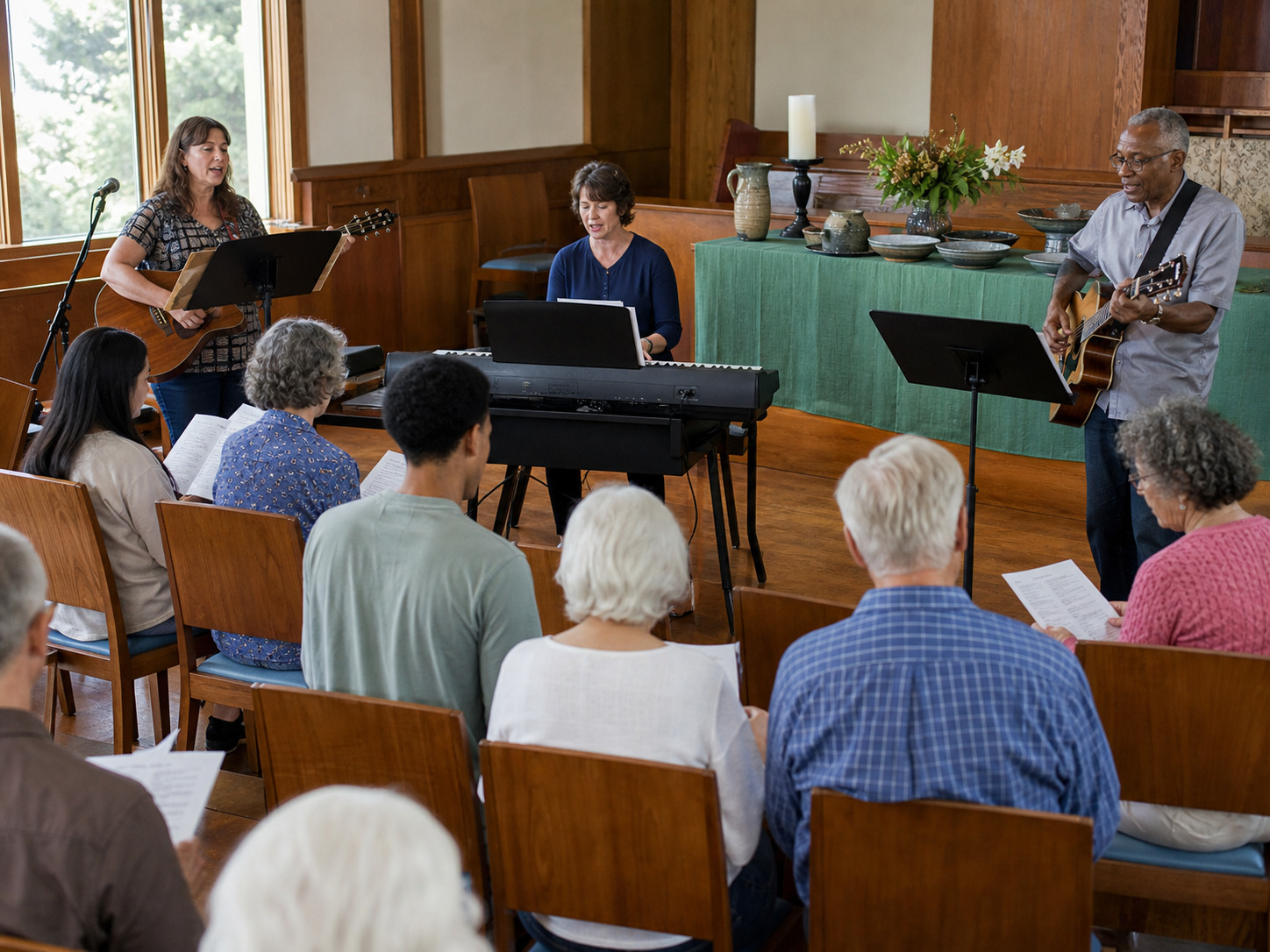
World Communion Sunday music does not need to represent every tradition in one crowded set.
It needs to help the local congregation gather, sing, pray, approach the table, and return to the service without making the music the center of the moment.
For a church with a small music team, accompaniment tracks can provide a steady foundation. The plan works best when the songs are familiar enough to join, the key fits ordinary voices, and the cues follow the congregation’s actual Communion practice.
Start with the service order, not a list of songs
World Communion Sunday is commonly observed on the first Sunday in October, but the exact liturgy and Communion practice vary among congregations. Confirm the local plan with the pastor, priest, worship leader, or other responsible service leader before building the music.
Ask:
- Will the congregation come forward or remain seated?
- Is Communion served in groups, by rows, continuously, or all together?
- Will music accompany the entire distribution?
- Is a choir, cantor, soloist, instrumentalist, or worship team leading?
- Does the leader need the music to stop for spoken words or prayer?
- How long does the table movement usually take?
- What music and lyric permissions apply to the service, stream, or recording?
The answers determine how much music is useful. A beautiful five-minute track can still be the wrong choice for a two-minute movement.
Give each piece one clear role
The music should not all do the same emotional job.
| Service moment | Useful music role | Planning question |
|---|---|---|
| Gathering | Familiar opening hymn or instrumental prelude | Can people recognize it quickly? |
| Before Communion | Focused congregational or choir response | Does it prepare the room without rushing? |
| Distribution | Steady hymn, gentle solo, or instrumental accompaniment | Can the length flex around movement? |
| Prayer after Communion | Quiet underscoring or silence | Will music help, or should it stop? |
| Sending | Clear congregational close | Can the whole room rejoin together? |
Silence is a valid part of the plan. Do not add another track simply because the distribution or prayer feels quiet.
Choose participation before musical variety
World Communion Sunday often invites churches to notice connection beyond one local room. That does not require borrowing unfamiliar music without context or asking the congregation to perform cultural breadth it has not rehearsed responsibly.
Begin with music the community can carry. If the service includes a song from another language, culture, or tradition, prepare it with reliable source guidance, accurate pronunciation, appropriate context, and enough rehearsal to treat it respectfully.
Avoid turning another community’s music into decoration. One carefully prepared selection is stronger than several gestures the leaders cannot explain or lead.
The Spiritrax Classic Hymns Collection offers familiar accompaniment options in practical keys for congregational singing, solo leadership, and small music teams. Choose from the collection only when a hymn fits the service theme and local practice.
Pick the key for the congregation and leader
The best key is not automatically the one used on a favorite recording.
Test the highest and lowest phrases with the person who will lead. Then test the refrain or most repeated section with two or three ordinary voices. If the congregation is expected to sing while moving, consider whether the melody still feels comfortable without everyone watching the leader.
Before finalizing the track, confirm:
- the leader’s complete range;
- the congregation’s role;
- the first audible pitch or rhythmic cue;
- the number of verses or repeats;
- the ending the room will hear;
- and whether another key is available or needed.
A comfortable shared key usually serves the table better than a dramatic solo key.
Match the track length to the Communion movement
Estimate the movement with the people who know the room. Use a recent service as the baseline when possible.
Then decide what should happen if the movement finishes early or takes longer than expected.
| Timing condition | Safe plan |
|---|---|
| Distribution ends early | Finish the current verse or move to a named ending |
| Distribution matches the track | Use the rehearsed ending and transition |
| Distribution runs long | Repeat a planned verse, begin a second prepared piece, or move to silence |
| Spoken instruction interrupts | Lower or stop at the agreed cue |
Do not improvise the contingency on Sunday morning. Mark the optional repeat or second track on the service plan and tell the operator who may call it.
Keep accompaniment under the people and the words
The track should establish pitch, pulse, and arrangement without covering live voices or spoken leadership.
Test volume from three places:
- beside the musicians;
- in the first rows near the Communion movement;
- toward the back of the room.
If the track sounds balanced only at the sound desk, it is not balanced for the congregation.
Leave enough space for prayer, spoken liturgy, movement instructions, and the natural sound of people participating. A dense arrangement may need a lower level than an instrumental verse or simple hymn accompaniment.
Write cues around observable actions
“Start when Communion begins” can mean several things to different people.
Use cues that can be seen or heard:
- after the final spoken invitation;
- when the first server reaches the table;
- when the first row begins moving;
- after the congregation completes a named response;
- when the pastor or worship leader gives a hand cue;
- or after a specific line of prayer.
For every track, write:
- filename and key;
- who starts it;
- first vocal entrance;
- verse or repeat plan;
- early-ending option;
- long-distribution option;
- final chord or fade;
- and the next spoken or musical cue.
This lets the operator support the service without guessing at the table.
Build a compact plan that can breathe
A simple three-part structure can be enough.
Gathering
Use a familiar hymn or instrumental selection that brings the room together without spending the strongest musical moment too early.
Communion
Choose one principal piece that can support the expected movement. Prepare an optional repeat, second track, or intentional silence if timing changes.
Sending
Choose a clear close that helps the congregation sing together again after Communion. Rehearse the handoff from prayer or announcements so the ending does not feel detached from the rest of the service.
This is a planning frame, not a required liturgy. Let local leadership and practice determine the actual order.
Rehearse the table cues with the real operator
Run the edges of the service, not only the songs.
- Speak the words immediately before the first track.
- Give the exact start cue.
- Sing the first entrance.
- Simulate the congregation’s movement.
- Test the early-ending and long-distribution options.
- Finish the track.
- Continue into the next prayer, response, or spoken instruction.
The operator should know whether to finish the current phrase, stop immediately, lower under speech, or move to the next file. The leader should use the same cue language printed on the plan.
Download the final files before the service, silence notifications, and keep a tested backup on a second device. A reliable local file is safer than searching or streaming during Communion.
FAQ: World Communion Sunday music
When is World Communion Sunday observed?
It is commonly observed on the first Sunday in October. Confirm the date and service practice used by your congregation or denomination.
How many songs should the service include?
There is no required number. Choose enough music to support gathering, Communion, prayer, and sending without crowding the service. One principal Communion piece may be sufficient.
What kind of backing track works during Communion?
Use a clear, restrained arrangement in a comfortable key, with a rehearsed entrance, ending, and timing contingency that fits the local Communion movement.
Should the music continue through the entire distribution?
Not necessarily. The plan may include singing, instrumental accompaniment, spoken words, and silence. Follow the local service leader’s direction.
How should we prepare a song from another tradition or language?
Use reliable source guidance, accurate pronunciation, appropriate context, and enough rehearsal to lead it respectfully. Do not use unfamiliar music only as decoration.
Can we livestream the service with a backing track?
Streaming, recording, lyric display, and public use may require permissions beyond downloading the track. Confirm the music, recording, lyric, and platform permissions that apply.
The takeaway
World Communion Sunday music should make participation easier, not make the service busier.
Choose familiar, singable material; prepare unfamiliar music responsibly; match track length to the table movement; write visible cues; test the room; and keep silence available. A clear plan lets the accompaniment support the people gathered around the table without taking over the moment.
Build a singable service with familiar hymn accompaniment in practical keys for congregations, soloists, choirs, and small worship teams.
Explore the Classic Hymns Collection