
Let “What Child Is This?” Keep Its Quiet Tension
Holiday & Special Occasion Music
By Spiritrax Content Studio · October 22, 2026
Updated October 22, 2026
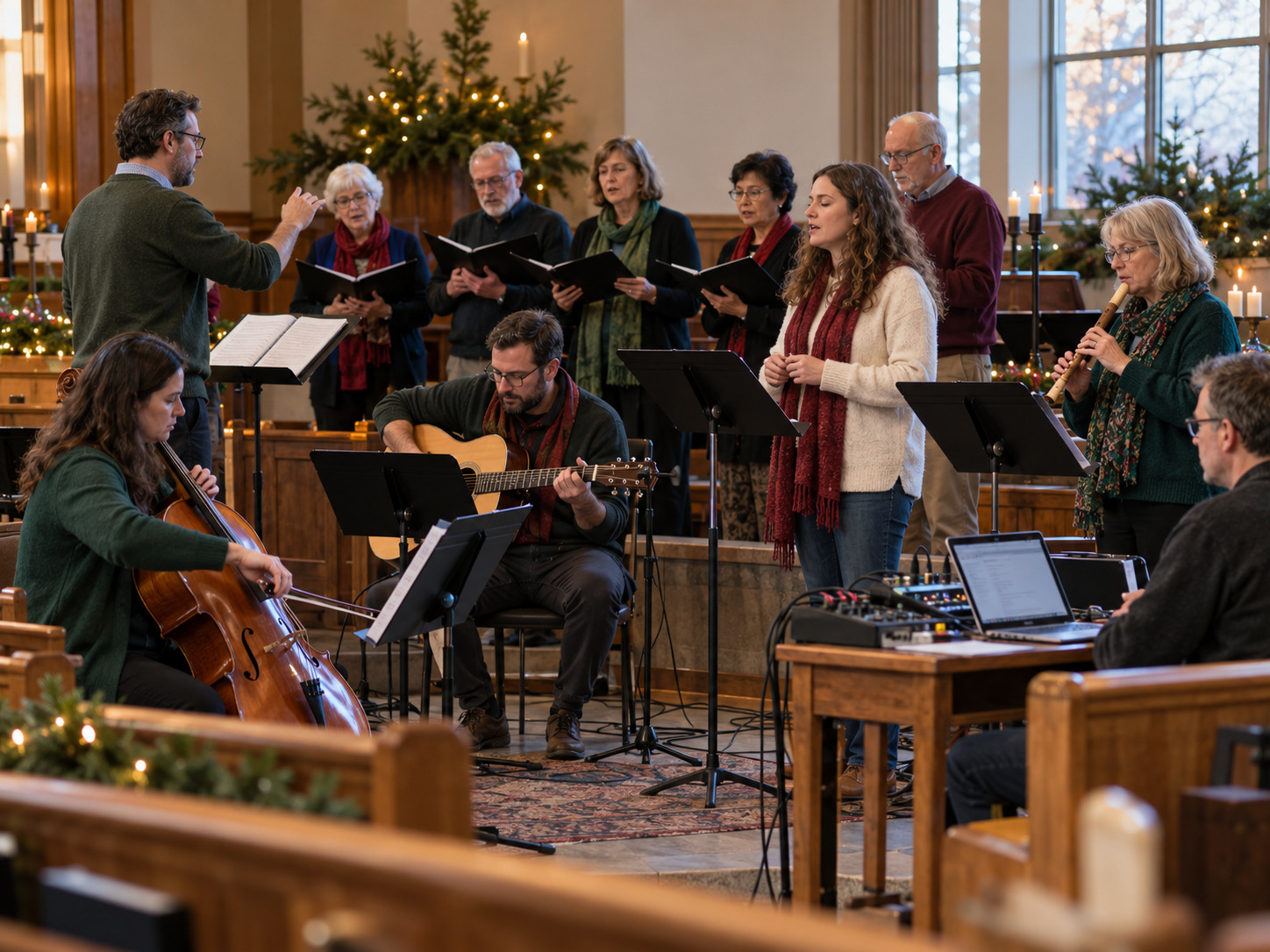
The short answer: choose the key for the complete melody, then rehearse “What Child Is This?” as a quiet question that gradually becomes an invitation. Keep the 3/4 pulse calm, let the acoustic colors support the text, plan each verse’s purpose, and protect the space after the final phrase.
The Spiritrax “What Child Is This? (Greensleeves)” backing track is available in E minor, G minor, and C-sharp minor. Its acoustic guitar, recorder, flutes, solo cello, harp, and bass create a tender medieval color that can support a soloist, choir, or reflective service moment without requiring a full live ensemble.
Decide what the carol is doing in the service
This carol can function as a solo, choir anthem, congregational hymn, offering reflection, or Christmas Eve meditation. The same track will feel different in each role.
| Service role | Main planning question |
|---|---|
| Solo | Can the singer carry the complete text without forcing the upper phrases? |
| Small ensemble | Are the shared breaths and consonants clear enough for the words to lead? |
| Choir | Does the arrangement leave room for blend and text? |
| Congregational singing | Is the key comfortable and the entrance obvious to ordinary voices? |
| Reflection or offering | Does the room know whether to listen, pray, or join? |
Write the role into the service plan. If participation changes between verses, make that invitation visible and rehearse the handoff.
Choose the key by singing the whole melody
Spiritrax provides versions in E minor, G minor, and C-sharp minor. Compare realistic options with the people who will lead.
Do not decide from the first phrase alone. Test:
- the highest repeated material;
- the lowest text that still needs warmth and clarity;
- the final verse after the voice has already worked through the earlier music;
- the point where the arrangement becomes fuller;
- and whether the leader can remain expressive without oversinging.
For congregational use, choose the key ordinary mixed voices can sustain. A soloist may prefer a key with a particular color, but that choice should match the service role.
Once the key is selected, label the file clearly and remove alternate keys from the active playback folder. A last-minute key change affects singers, printed or projected words, cue notes, and the sound volunteer.
Feel one calm pulse in each measure
The familiar Greensleeves melody can become heavy when every beat receives equal emphasis. It can also rush when performers treat “gentle” as unmeasured.
Begin by feeling one broad pulse per measure. Then notice how the three smaller beats move inside it. Speak the text over that quiet pattern before singing.
The leader should be able to show:
- the preparation before the first entrance;
- the direction through the middle of a phrase;
- the arrival point rather than every individual beat;
- and the release that makes space for the next breath.
Use the accompaniment as the shared clock. The recorded instruments will not stretch around a late consonant or an unplanned breath, so singers need to know where the phrase is going before it begins.
Let the instrumental colors guide, not distract
Recorder, flute, cello, harp, guitar, and bass create a distinctive texture. Listen for the instruments that make each entrance or transition easiest to hear.
During rehearsal, ask:
- Which instrument gives the clearest opening cue?
- Where does the cello or bass make the harmony feel more grounded?
- Which plucked figure helps the next phrase begin?
- Where do flute or recorder colors make the texture feel lighter?
- Which sound carries the final release?
Name only the landmarks the singers and operator can reliably hear. The goal is not an orchestration lecture. It is a practical map that keeps everyone together.
Keep playback at a level where the acoustic detail remains present but the words stay in front. In a reverberant sanctuary, high instruments may travel clearly while low support disappears; in a dry room, the accompaniment may feel closer and more exposed. Check from the congregation’s position.
Give every verse a distinct purpose
Three verses of the same melody can flatten when the rehearsal plan is simply “repeat, then get louder.”
Assign a clear service purpose to each verse. For example:
- Wonder: allow the opening question to remain spacious and attentive.
- Cost: let the middle verse carry greater gravity without becoming harsh.
- Invitation: give the final verse warmth, direction, and a sense of shared response.
Those labels are rehearsal tools, not mandatory interpretation. Choose language that fits the service and the people singing.
The change can come from articulation, focus, dynamic shape, blend, or who joins—not only volume. A soloist might begin alone, a small group might enter later, or the choir might save its fullest unison for the final verse. Whatever plan is chosen, rehearse the transition so it feels intentional.
Make the first entrance unmistakable
Familiarity does not guarantee a confident start.
Play the introduction and identify the final cue before the vocal entrance. Confirm who gives the visible breath, whether the soloist or choir begins, and whether the congregation is expected to join immediately.
Practice only the introduction and first complete phrase. Repeat until the breath, consonant, and pulse feel shared.
Avoid speaking over the introduction. If a welcome or reading precedes the carol, let the speaker finish, hold an unhurried pause, and then give the playback cue. The music should enter a settled room.
Shape consonants without crowding the line
The text contains repeated questions, soft sounds, and words that can disappear when the room is reverberant.
For choir or small ensemble:
- agree on the opening consonant;
- release final consonants together rather than early;
- keep sibilants from spreading across the beat;
- place breath marks where the complete thought can survive;
- and decide which words need clarity without turning every syllable into an accent.
Speak each verse in pulse, then sing it at a moderate dynamic. If the words are unclear, improve timing and alignment before raising volume.
For congregational use, let a confident leader model the first phrase. People join more readily when they hear both the melody and the language clearly.
Balance soloist, choir, and playback in the room
Headphones are useful for learning but cannot prove sanctuary balance.
Run the track through the actual sound system while a listener moves to the front, middle, rear, and side seating. Ask:
- Can the singer hear enough accompaniment to enter securely?
- Can the room understand the words without strain?
- Does the low accompaniment support the melody without becoming muddy?
- Do the higher instruments remain color rather than competition?
- Can the choir hear one another well enough to blend?
Lower playback before asking singers to push. If microphones are used, check that the soloist and choir remain natural and that the accompaniment does not sound detached from them.
Keep a little dynamic space in reserve. A tender arrangement feels more persuasive when its fuller moments have somewhere to grow.
Plan the final phrase and the silence after it
Do not treat the ending as only a cutoff.
Listen for the last harmonic arrival and decide:
- how the final consonant releases;
- who holds the visible stillness;
- whether the congregation remains seated or standing;
- how long the silence lasts;
- and what spoken, visual, or musical action follows.
Run the ending into that next event. If a prayer follows, the speaker should know when to begin. If another piece follows, the operator should know whether the transition is immediate or separated by silence.
The final quiet is part of the carol’s meaning. Let it complete before the room moves on.
Prepare one dependable playback plan
Give the sound volunteer one final file and one plain-language cue.
The run sheet should include:
- selected key;
- exact filename;
- service position;
- cue owner and
GO; - first audible landmark;
- expected playback level;
- who sings each verse;
- final release and silence;
- next service action;
- and backup-file location.
Download the file before the service, silence notifications, and test the real device, cable, mixer channel, and speakers. Keep other keys and rehearsal copies outside the active folder.
For a wider seasonal plan, the Spiritrax Christmas backing-track collection can help the team compare this reflective texture with brighter orchestral and acoustic choices.
A focused 20-minute rehearsal
Minutes 1–4: compare keys
Sing the complete melody in realistic options and choose the key for the actual service role.
Minutes 5–8: learn the entrance
Rehearse the introduction, visible breath, first consonant, and first phrase.
Minutes 9–12: map the verses
Name one purpose for each verse and decide who joins when.
Minutes 13–16: check pulse and balance
Run with the sound system while a listener checks text and accompaniment from the room.
Minutes 17–20: rehearse the ending
Sing the final verse through the last release, planned silence, and next service action.
Final checklist
- The service role is clear: solo, ensemble, choir, congregation, or reflection.
- E minor, G minor, and C-sharp minor were compared where practical.
- The selected key fits the complete melody and the people who will sing.
- The broad 3/4 pulse remains calm without dragging.
- Instrumental landmarks support entrances and transitions.
- Each verse has a distinct purpose.
- Consonants, breaths, and releases are aligned.
- Playback supports the text without covering it.
- The final phrase, silence, and next service action are planned.
- One approved file and a tested local backup are ready.
- Lyrics, public use, and any recording or streaming needs have been checked separately.
FAQ: using “What Child Is This?” with a backing track
Which keys are available?
The Spiritrax product page lists E minor, G minor, and C-sharp minor. Test the complete tune before choosing the service file.
Can this arrangement support congregational singing?
Yes, when the key, first entrance, playback level, and visible leadership fit the room. The tender texture also works well for a soloist, choir, or reflective service moment.
How do we keep the carol from dragging?
Feel one broad pulse in each 3/4 measure, choose phrase destinations, and rehearse entrances against audible instrumental landmarks. Quiet music still needs direction.
Should every verse be louder than the last?
Not necessarily. Change purpose, who sings, articulation, focus, or texture. Save added volume for a moment that genuinely benefits from it.
How loud should the backing track be?
Loud enough to make pulse, harmony, and entrances dependable, but low enough that the room understands the words and singers can hear one another. Check from the pews, not only beside the speaker.
The strongest preparation keeps the carol quiet without making it passive: one comfortable key, one calm pulse, clear words, attentive listening, and enough silence for the final thought to remain in the room.