
Let “Still, Still, Still” Feel Calm Without Losing the Pulse
Holiday & Special Occasion Music
By Spiritrax Content Studio · November 5, 2026
Updated November 5, 2026
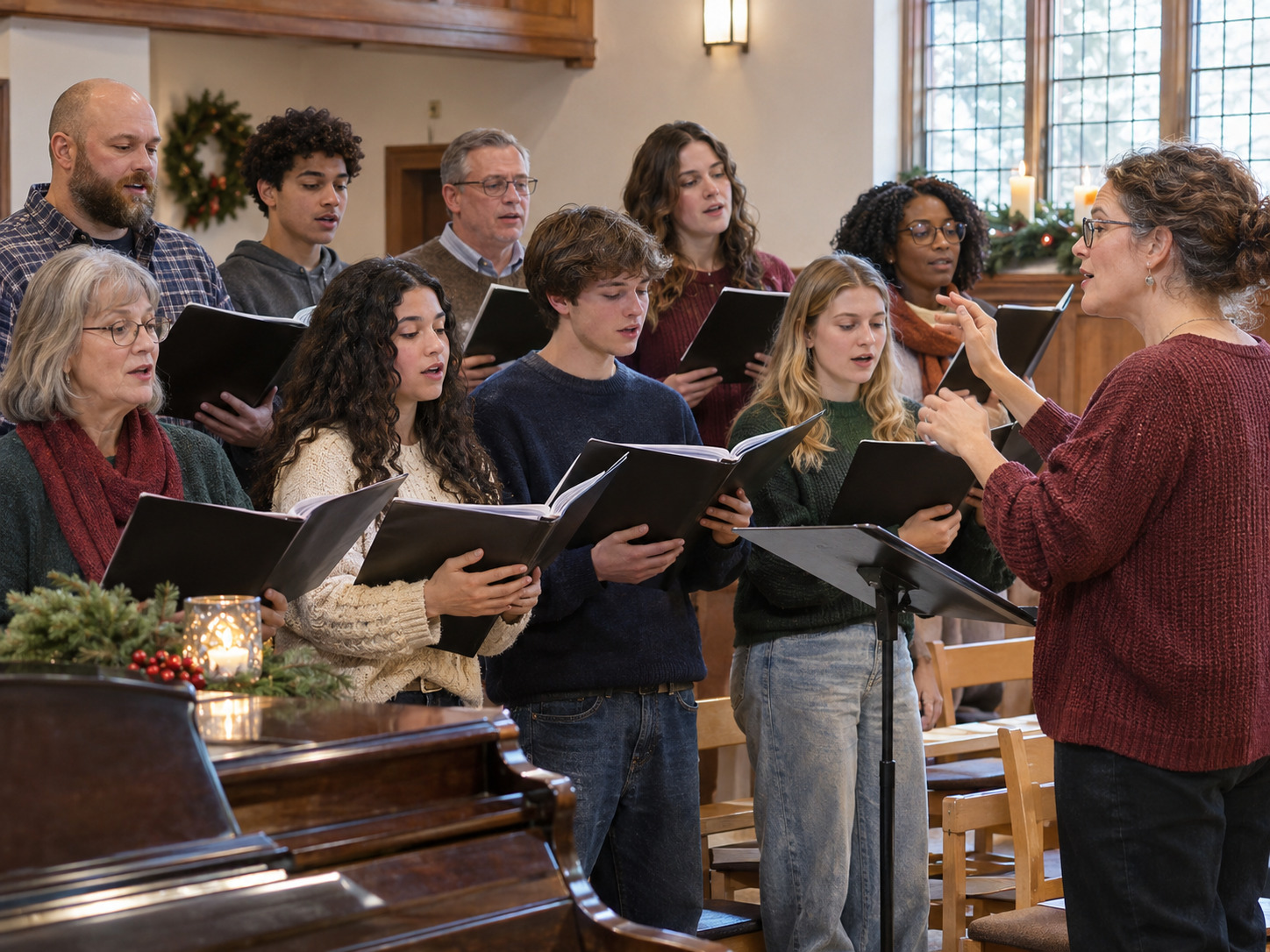
The short answer: keep a quiet carol moving with a shared inner pulse, choose the key for the singers who will actually lead, and let stillness come from attention rather than from slowing every phrase. “Still, Still, Still” should feel restful without leaving the choir unsure of the next breath or entrance.
The Spiritrax “Still, Still, Still” backing track is a gentle Christmas-lullaby arrangement for orchestra, acoustic instruments, and music box. The product page offers C, A, and E-major versions and recommends the arrangement for children, youth choirs, or full congregations. Those choices make the track flexible, but the service team still needs one clear plan for key, pulse, participation, and the moment around the music.
Decide what kind of stillness the service needs
Name the carol’s job before choosing a key.
It might be:
- a youth-choir feature;
- a quiet congregational carol;
- a transition into prayer, scripture, or candlelight;
- a solo or small-group reflection;
- or a gentle contrast between larger Christmas selections.
Each use needs a different balance. A choir feature can carry finer dynamic detail. Congregational singing needs a dependable entrance and range. A transition around candles, readings, or movement needs enough musical clarity that the room knows what happens next.
Write one sentence in the service plan:
This carol creates space for ______, and the next event is ______.
That sentence keeps a reverent moment from becoming vague.
Compare C, A, and E major with the actual singers
Do not choose a key because it looks familiar or because the first phrase feels comfortable. Test the complete melodic range with the people who will lead.
Use this process:
- Preview the introduction in C, A, and E major.
- Sing the first complete phrase in each realistic option.
- Continue into a later phrase after the voice has settled.
- Test the quietest planned dynamic without losing clear words.
- Choose the version that supports the entire group, not only its strongest singer.
For a youth choir, listen for the singers whose changing voices or limited range need the most support. For an intergenerational group, check whether the key keeps both lower and higher voices engaged. For a congregation, favor a range the room can carry without the leader having to sing over everyone.
Once the key is selected, put only that version in the live service folder. Keep alternate keys in a separate planning location so the operator cannot choose the wrong file during the service.
Find the pulse before asking for softness
Soft singing is not the same as slow singing. If the choir loses the inner beat, vowels spread, consonants arrive late, and every phrase becomes harder to support.
Begin without words. Let the choir listen to the accompaniment and tap the larger pulse with one hand. Then speak the text together in rhythm. Finally sing on a neutral vowel before returning to the words.
Mark:
- the length and character of the introduction;
- the first dependable entrance;
- shared breaths;
- consonants that release together;
- any instrumental turn that leads into the next phrase;
- and the final decay.
Ask the conductor to give smaller, clearer gestures rather than slower ones. The singers should feel that the phrase is traveling somewhere even when the sound remains gentle.
Let young singers sound natural
A Christmas lullaby can tempt a youth choir to imitate an overly mature or breathy sound. Keep the tone healthy and direct.
Use language the singers can act on:
- Sing to one person across the room.
- Keep the first consonant clear and the vowel easy.
- Take the agreed breath instead of stretching the phrase.
- Listen for the section next to you.
- Release together before taking another breath.
Avoid asking for “more angelic” when the actual need is clearer diction, balanced vowels, or less volume. A natural sound will usually communicate calm more honestly than a manufactured whisper.
If children or younger singers are involved, follow the organization’s usual supervision, privacy, and rehearsal procedures. The music plan should support them without turning the service into a performance-pressure exercise.
Build contrast without making every stanza louder
The arrangement’s orchestra, acoustic instruments, and music-box color can support a gradual change in texture. The choir does not need to solve that shape only with volume.
Plan contrast through participation:
| Section | Possible leader | Musical purpose |
|---|---|---|
| Opening | soloist, small group, or light unison | establish the lullaby pulse |
| Middle | fuller choir or congregation | widen the shared sound |
| Later return | smaller texture or selected section | restore intimacy and clear words |
| Final phrase | chosen full or reduced group | complete the service transition |
This is a planning model, not a required arrangement. Use the approved musical materials and the service leader’s direction. The useful idea is that adding or subtracting voices can create shape without forcing the singers to chase a dramatic crescendo.
Keep the words in front of the accompaniment
The track should provide pitch, harmony, color, and motion while leaving room for the people in the room.
At sound check, listen from the center and sides of the sanctuary. Confirm that:
- the introduction is audible without being startling;
- the first sung consonant is clear;
- youth or lower voices do not disappear under the orchestration;
- the music-box color remains a detail rather than a distraction;
- the choir can hear enough pulse to release together;
- and the final decay is not cut off by the next microphone or speaker.
Set the live voices first, then bring the track underneath them. If singers become breathy or forceful, adjust the playback level and monitoring before asking for a different vocal color.
Record a short rehearsal from audience distance. Listen once for text and once for balance. A calm service moment still needs intelligible words and a dependable musical path.
Rehearse the moment before and after the carol
Quiet music often sits beside a reading, prayer, candle movement, tableau, or spoken introduction. Those handoffs deserve as much rehearsal as the song.
Confirm:
- who gives the playback cue;
- whether the congregation is seated, standing, or moving;
- where the choir takes its first breath;
- whether a reader or worship leader must clear the microphone;
- how the final sound is allowed to decay;
- and who begins the next event.
Run the complete transition from the preceding action through the first sung phrase. Then rehearse the ending into the next service moment. Do not let an operator search for the file while the room waits in silence.
If candlelight or other movement is involved, use the organization’s established safety plan and keep the musical timing secondary to safe movement.
Move from online preview to the service file
The product page provides previews in all three keys. Those previews contain a watermark voiceover; downloaded accompaniment tracks do not.
After choosing the key:
- Download and label the approved file.
- Put it in the exact service order.
- Rehearse the introduction and first entrance.
- Mark breaths, transitions, and the final decay.
- Test the file through the actual sound system.
- Store a backup on a second authorized device.
Disable crossfade, autoplay, notifications, and device sleep. Confirm that the backup uses the same approved key and filename.
If the listed keys or structure do not fit the service, the product page provides a customization route. Test the complete current version first, then name the exact key, tempo, cut, repeat, or ending need.
A 20-minute gentle-carol rehearsal
Minutes 1–4: compare the keys
Test C, A, and E major with the intended singers. Choose one version for the complete melody.
Minutes 5–8: establish pulse and breath
Listen, tap the larger beat, speak the text in rhythm, and mark shared breaths and releases.
Minutes 9–12: shape participation
Decide whether a soloist, small group, youth choir, congregation, or combined group leads each section.
Minutes 13–16: balance the room
Sing with the intended microphones and playback level. Listen from audience distance and protect natural vocal tone.
Minutes 17–20: prove the handoffs
Run the preceding service event into playback, then rehearse the final decay into the next reading, prayer, movement, or silence.
Christmas-lullaby checklist
- The carol has one named service purpose.
- C, A, and E-major previews were compared with the actual leaders.
- Only the approved key is in the live service folder.
- The choir can feel the pulse without singing loudly.
- Breaths and final consonants are shared.
- Youth singers use a natural, healthy tone.
- Participation changes are written into the service plan.
- The track supports the words without covering them.
- The introduction and final decay have been rehearsed.
- Any reading, candle movement, or microphone handoff has a clear owner.
- The actual playback device and sound route have been tested.
- A labeled backup file is ready.
Common questions
Which key should a youth choir use?
There is no universal youth-choir key. Compare C, A, and E major with the complete melody and the singers who will perform it. Choose the version that supports clear words, healthy tone, and secure entrances.
Can the congregation join?
The product page identifies the arrangement as suitable for full congregations as well as children and youth choirs. Give the room a clear invitation, audible introduction, comfortable key, and one visible leader.
How do we keep a quiet version from dragging?
Establish the larger pulse, agree on breaths, and keep the conductor’s gestures small but active. Softness should reduce weight, not erase direction.
Do the online previews contain the finished audio?
The previews contain a watermark voiceover. Downloaded accompaniment tracks do not contain that watermark.
Can the track be customized?
Yes. The product page provides options for key, tempo, cuts, repeats, and comments. Describe the exact tested need and how the service team will verify the result.
The most effective quiet carol does not ask the room to stop listening. It gives singers, congregation, and operator one calm pulse to share, then lets the final sound open naturally into whatever the service needs next.