
Spirituals Need Space, History, and a Steady Cue
Worship Music & Hymn Resources
By Spiritrax Content Studio · July 1, 2026
Updated July 1, 2026
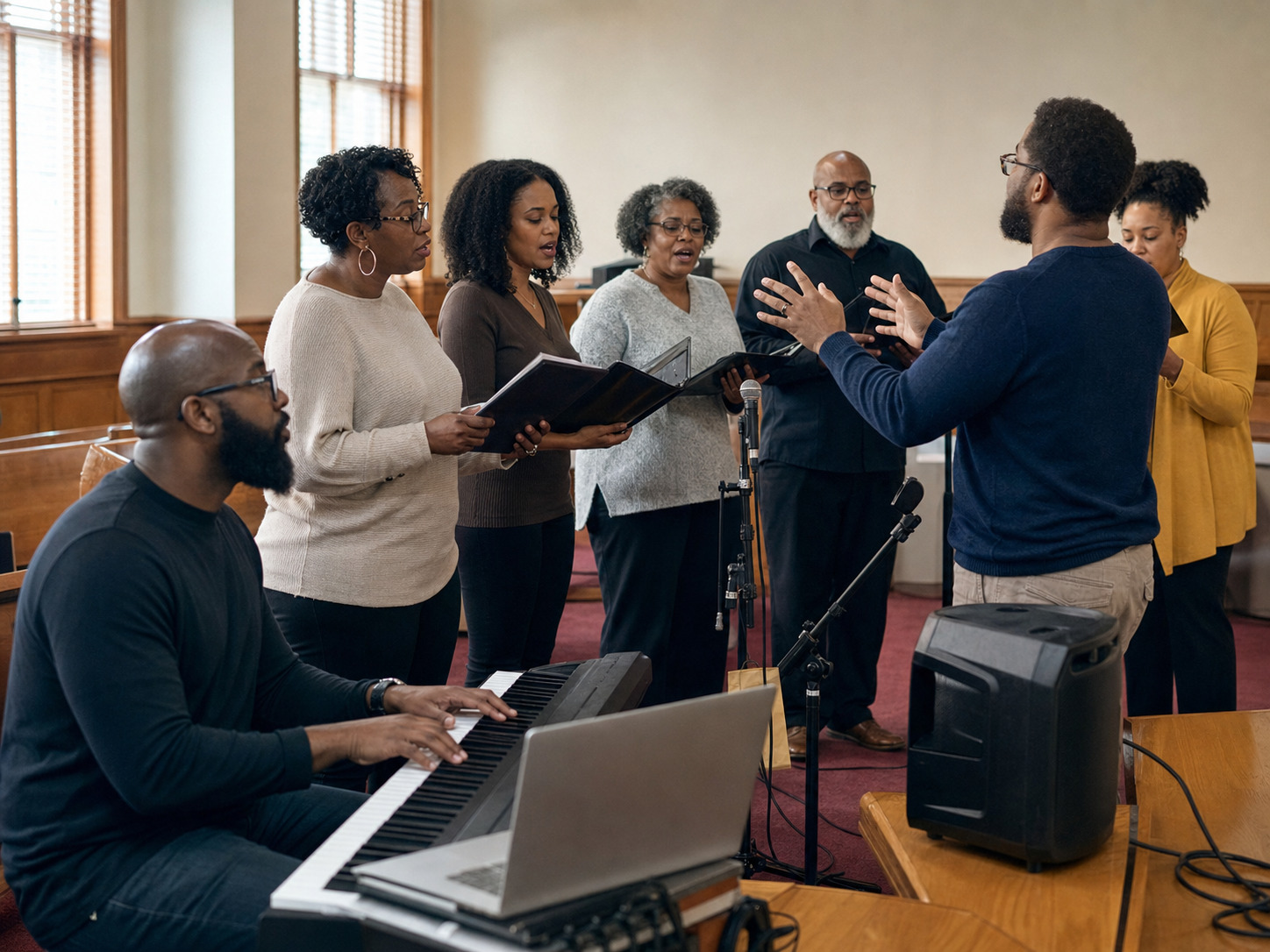
A spiritual can carry more emotional weight than the service plan around it. That is why the accompaniment should support the moment without rushing it, overfilling it, or turning it into background music.
For worship leaders, soloists, choirs, school groups, and community programs, the best backing-track plan starts with respect for the song and practical care for the room. The track should help singers enter confidently, keep the service moving, and leave enough space for the text to be heard.
Choose the song for the moment, not only the melody
The Spiritrax spirituals backing tracks category includes songs that can serve different kinds of worship and community settings. Some are reflective. Some are joyful. Some work well for solo voice. Others are stronger with choir or congregational participation.
Before choosing the track, decide what role the song needs to play:
- gathering music before worship begins;
- a solo during prayer or reflection;
- a choir anthem;
- a congregational response;
- a school or community program selection;
- a closing song with lift and hope.
The same song can feel different depending on where it sits. A track that works beautifully as a solo may be too detailed for congregational singing. A full, energetic arrangement may work better as a sending song than as a quiet prayer response.
Respect the song's weight
Many spirituals come from traditions shaped by hardship, faith, endurance, and community memory. Treating them casually can flatten what the music is carrying.
That does not mean every performance must be slow or solemn. It means the leader should make intentional choices:
- introduce the song plainly;
- avoid overexplaining from the platform;
- choose a key the singer can communicate well;
- rehearse diction and entrances;
- keep accompaniment volume under the text;
- let silence after the song do some of the work.
The room should feel held by the music, not pushed through it.
Match the track to the singers
A backing track is only useful if the singers can lead with confidence. Listen for three practical things before the service:
| Planning question | Why it matters |
|---|---|
| Is the key comfortable? | A spiritual often needs warmth and communication more than vocal display. |
| Is the intro clear? | Soloists and choirs need a dependable first entrance. |
| Does the groove fit the room? | A track that feels good in headphones may feel too busy in a small sanctuary. |
If the singer is unsure of the entrance, do not wait for the service to solve it. Rehearse the start, mark the count, and decide who gives the cue.
Build a simple rehearsal path
For choirs and small groups, keep the process clear:
- Listen once without singing.
- Mark the first entrance, any repeats, and the ending.
- Rehearse the melody or parts slowly if needed.
- Sing with the track at service volume.
- Test the microphone and playback balance in the actual room.
- Save the final file and remove old practice versions from the live device.
That last step helps prevent a common service problem: the right song, the right singer, and the wrong file.
Leave room for prayer, speech, and response
Spirituals often work best when the service does not crowd them. If the song follows a reading, prayer, testimony, or memorial moment, leave enough time for the transition.
Useful service notes:
- decide whether applause belongs after the song;
- keep spoken introductions short;
- avoid talking over the track intro;
- let the final chord or ending settle;
- keep the next spoken cue ready, but do not rush it.
Small choices like these make the accompaniment feel woven into the service instead of dropped into it.
When to use a collection or category path
If your church, school, or community group uses spirituals often, a single song may not be enough planning. Browse related Spiritrax categories and featured collections when you need a broader music library for different seasons, services, and singers.
The practical benefit is readiness. When a service changes, a soloist becomes unavailable, or a choir needs another option, you are not starting from a blank search box.
FAQ: spirituals backing tracks
Can a spiritual backing track work for a choir?
Yes, if the choir rehearses entrances, repeats, endings, and balance with the exact file. Do not assume the group will follow the track naturally on the first try.
Should a soloist choose the original key?
Not automatically. Choose the key that lets the singer communicate the text clearly and finish comfortably.
How loud should the backing track be?
Loud enough to support pitch, timing, and groove, but low enough that the words lead. Test this in the actual room, not only through laptop speakers.
The takeaway
A spiritual should never feel like filler.
Choose the song for the service moment, rehearse the first cue, protect the text, and keep the playback plan simple. Start with the Spiritrax spirituals backing tracks category when you need accompaniment that supports the singer, the room, and the meaning of the music.
Browse Spiritrax spirituals backing tracks for worship services, soloists, choirs, and community gatherings that need steady accompaniment and singable keys.
Browse Spirituals Tracks