
A Small Church Can Use Tracks Without Losing the Room
Worship Music & Hymn Resources
By Spiritrax Content Studio · June 16, 2026
Updated June 16, 2026
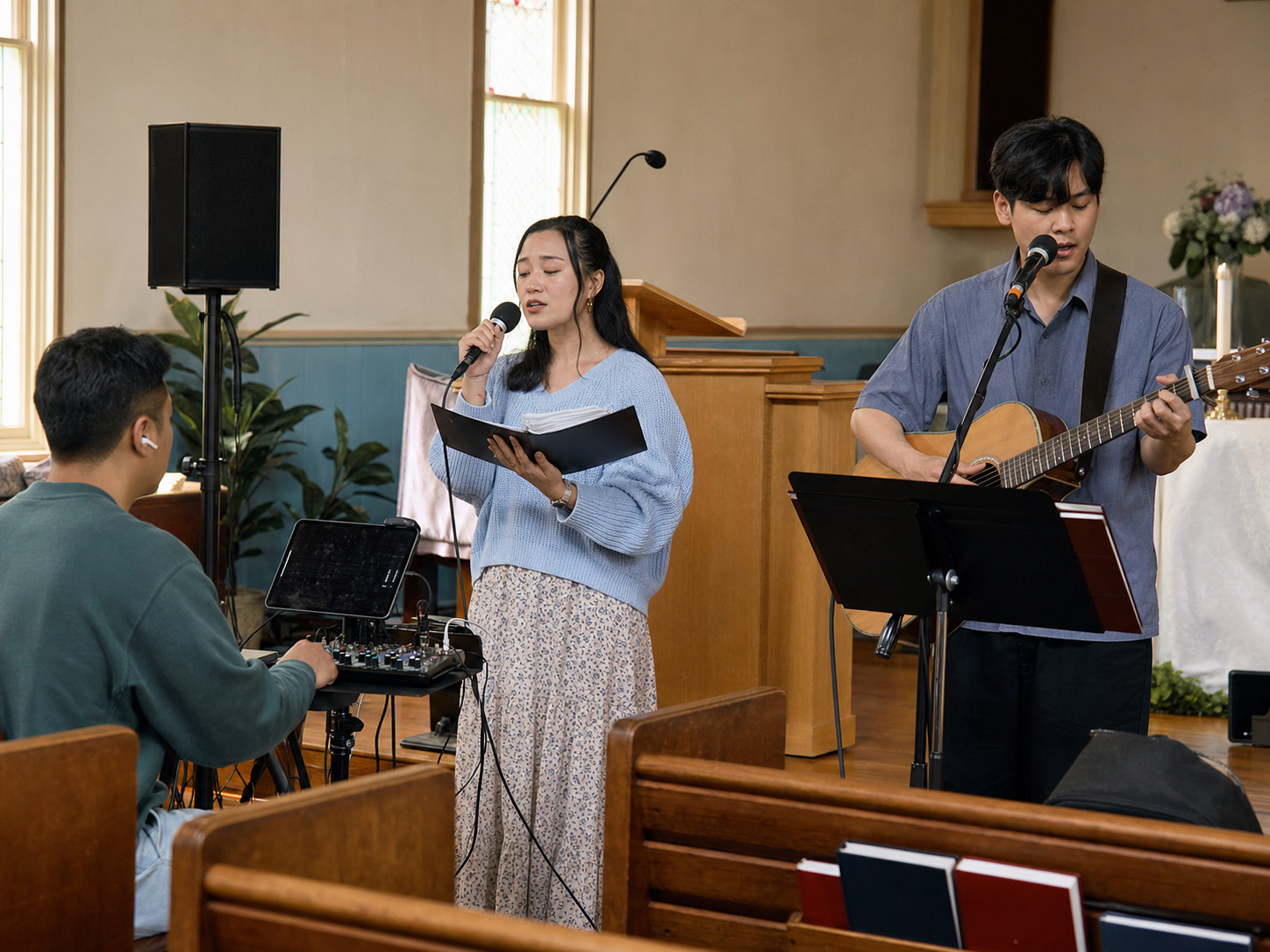
A small church does not need to sound like a concert to use backing tracks well. The best track plan is usually quiet, clear, and easy for volunteers to follow.
When there is no full band, a track can support a soloist, help a choir stay together, or give a worship leader a dependable accompaniment for a hymn or worship song. The important part is keeping the room first. The track should serve the prayer, song, and people who are actually present.
Start with the service moment
Before choosing a track, decide what the song is doing in the service.
Is it a solo during offering or communion? A congregational hymn? A choir anthem? A reflective song before prayer? A closing song that needs the room to leave with energy?
That answer shapes the track choice. A solo can use more detail because one singer is carrying the line. A congregational song needs a singable key, clear tempo, and enough space for ordinary voices. A choir or small ensemble may need a steadier introduction and an ending that does not feel rushed.
The same song can need a different track plan depending on where it sits.
Choose a key for real voices
The fastest way to make a backing track feel awkward is to choose a key that only works in theory.
Test the melody with the actual singer or group. For a soloist, check the highest phrase and the lowest opening notes. For a congregation, avoid keys that make the room strain by the second verse. For a choir, make sure the strongest section still feels supported after people have been singing for a few minutes.
A comfortable key is not less musical. It often lets the text come through more clearly.
Keep the first cue simple
Many track problems happen in the first ten seconds.
The worship leader is looking at the order of service. The sound volunteer is finding the right file. The singer is waiting for an entrance. The congregation is deciding whether to stand, listen, or join.
Make the first cue simple enough for a busy Sunday morning:
- write the track title exactly as it appears on the device,
- note who starts singing,
- mark whether the intro is short or long,
- decide who gives the visual cue,
- set the volume before the service begins.
If the first entrance feels calm, the rest of the song has a better chance.
Let the track support the room
A backing track should not overpower a small sanctuary. It should give the singer or group enough foundation to feel secure.
In rehearsal, stand in the room instead of only listening near the speaker. Ask whether the words are clear, whether the accompaniment covers the voices, and whether the congregation would know when to come in.
If the track feels too big, lower the volume before changing everything else. If it still feels too busy, choose a simpler arrangement or a different song placement.
Plan for volunteer sound support
Many churches rely on volunteers who are serving before, during, and after worship. A good track plan respects that.
Give the sound helper a short cue sheet:
- file name,
- song placement in the service,
- playback device,
- who gives the start cue,
- microphone needs,
- whether the ending should stop naturally or fade,
- backup plan if the device does not connect.
This does not need to be complicated. It just needs to remove guessing.
Use tracks differently for solos, choirs, and congregation
For a solo, the track should fit the singer's key and phrasing. Rehearse the full song so the singer knows the intro, instrumental breaks, and ending.
For a choir, use the track to keep tempo steady while the director focuses on blend, diction, and entrances. If the choir has limited rehearsal time, run difficult transitions more than once before Sunday.
For congregation, keep the lead clear. A worship leader, cantor, or choir should confidently establish the entrance so the room knows it is safe to sing.
Common mistakes to avoid
Treating the track as the leader
The track provides accompaniment. A person still needs to lead the room.
Choosing the loudest version
Fuller does not always mean better. Small rooms often need clarity more than size.
Skipping rehearsal because the track is fixed
A fixed track still needs rehearsal. The singer, leader, and sound helper must know the same map.
Forgetting the ending
Endings are service cues. Decide whether the next moment is silence, prayer, applause, a reading, or a spoken transition.
FAQ: worship backing tracks in small churches
Can a backing track work without a full band?
Yes. That is one of the most practical uses. A track can support a soloist, choir, or worship leader when live instrumental support is limited.
Should the congregation sing with a track?
They can, if the key is comfortable and a leader gives a clear entrance. If the arrangement feels like a solo feature, use it as a solo instead of forcing congregational singing.
What should be rehearsed first?
Rehearse the entrance, the highest or most difficult phrase, any instrumental break, and the ending. Those points usually determine whether the service moment feels steady.
Should this article include an in-article ad block?
No. This is a high-trust worship-planning topic. An in-article ad would interrupt the service-preparation path and distract from the practical CTA.
The takeaway
Backing tracks can help a small church sing with steadiness and care. Choose a track that fits the voices, make the first cue simple, rehearse the service moment, and keep the accompaniment in its proper role: support for the people in the room.
Browse worship and hymn backing tracks that can help a soloist, worship leader, choir, or small team keep the service steady and singable.
Browse Worship Tracks