
Silent Night Works When the Room Knows What Happens Between the Verses
Holiday & Special Occasion Music
By Spiritrax Content Studio · September 17, 2026
Updated September 17, 2026
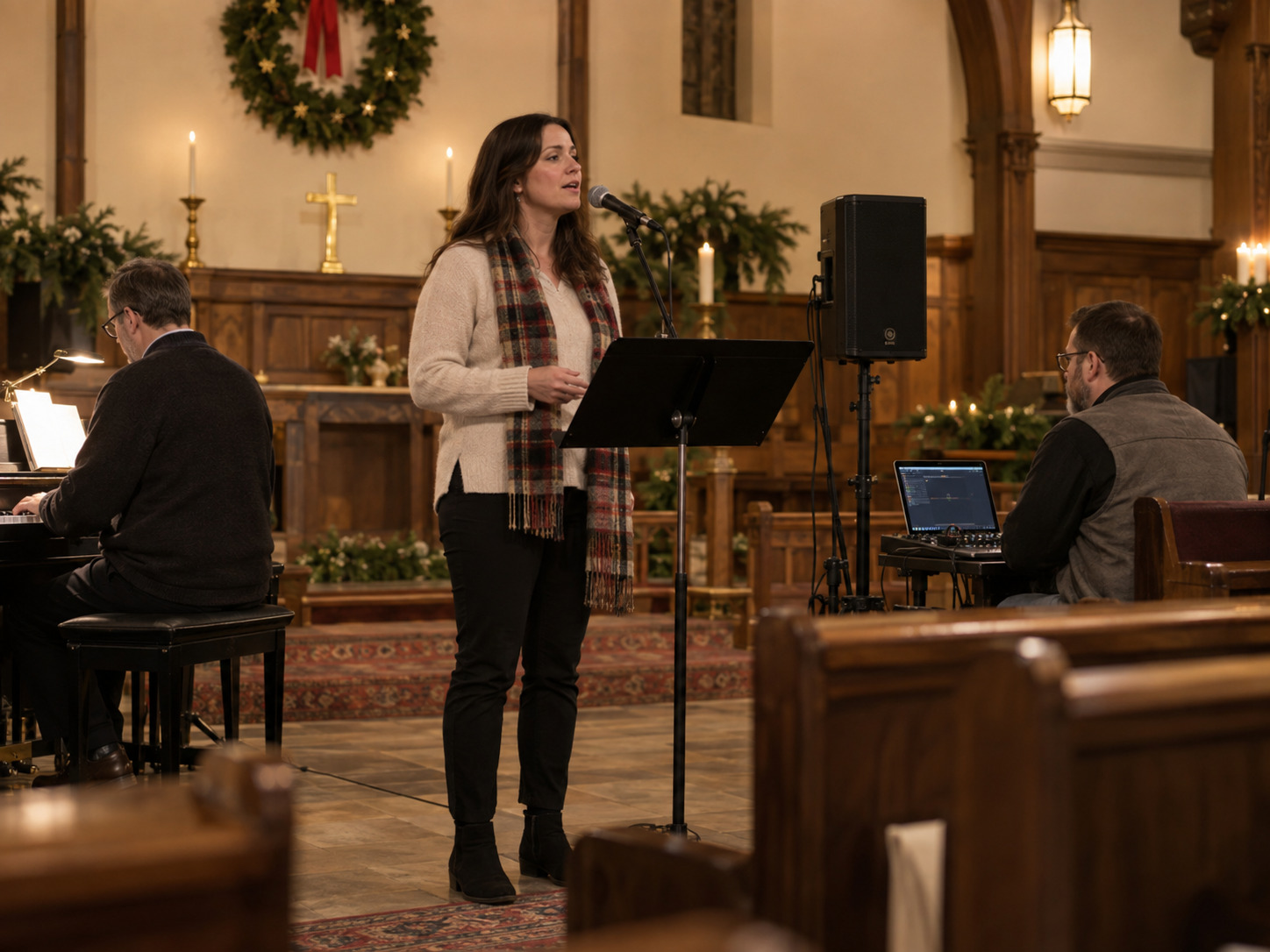
The short answer: a “Silent Night” backing track should be chosen for the voices in the room, rehearsed through all three verses, and cued with enough space for each interlude to feel intentional. Familiarity does not remove the need for a plan.
Spiritrax’s arrangement uses string quartet and acoustic guitar, moves at a moderate 3/4 tempo, and includes three verses with an eight-bar interlude between verses. Those interludes can support reflection, a change of soloist, candle movement, or a quiet breath—but only when the service leader, singer, and sound operator agree on what happens during them.
Choose the key by singing the entire track
The opening phrase can make almost any key feel comfortable. The better test is the complete arrangement after the singer has carried the text, sustained the long lines, and returned from two instrumental interludes.
The Spiritrax Silent Night backing track is currently offered in A, B-flat, B, C, D-flat, D, E-flat, and E major. Preview more than one option when needed, then sing every verse in the likely key.
Listen for:
- a calm low opening without breathy effort;
- sustained phrases that stay free rather than pressed;
- the highest notes after the voice is fully warmed into the song;
- clear words at a quiet dynamic;
- and a final verse that still sounds settled.
For a congregation, choose a key people can enter without strain. For a soloist, choose the version that supports line, breath, and meaning from beginning to end. For a choir, confirm how the melody and harmony sit for the singers actually present.
Treat the interludes as part of the service
An eight-bar interlude is not empty time. It is a musical transition with a beginning, shape, and destination.
Decide what each interlude will do before rehearsal:
| Interlude | Possible service job | What to rehearse |
|---|---|---|
| After verse one | Let the room settle | Singer stays present and prepares the next breath |
| After verse two | Support candle movement or a soloist handoff | Movement finishes before the next entrance |
| Before verse three | Gather everyone for the final verse | Leader gives one clear visual invitation |
Those are examples, not a required sequence. The service may use all three verses with one soloist, alternate solo and congregation, or let a choir join later. What matters is that the room does not discover the plan while the track is already moving.
Count the interlude during rehearsal. Identify the musical cue that leads back to the verse. A singer who waits only for a feeling may enter early when the sanctuary sounds different or when candles and people are moving.
Decide who sings each verse
The simplest plan is often one singer or one group for the complete track. If the service needs a change, assign it clearly.
Possible structures include:
- soloist for all three verses;
- choir for all verses, with the congregation invited to join;
- soloist for verse one, congregation for verses two and three;
- different soloists by verse, with the handoff rehearsed during the interlude;
- or a children’s or family group joining only after a confident adult leader establishes the first verse.
Avoid an unannounced “everyone join when you know it” plan. People may enter at different words, and a soloist may not know whether to keep leading. If congregational participation is intended, say when it begins and make the first pitch and tempo easy to hear.
The Christmas backing-track catalog can help planners compare other carols and collections when the service needs a larger seasonal set. Keep each song’s key, form, and cue notes separate.
Rehearse the first entrance without talking over it
“Silent Night” often follows a reading, prayer, candle-lighting instruction, or brief silence. Decide where the spoken element ends and where the music begins.
Use one exact cue:
- The reader or service leader finishes the final sentence.
- The room holds the agreed silence, if any.
- The leader gives a visible nod or the sound operator receives a stage-management cue.
- Playback begins at the tested level.
- The singer enters from the musical introduction, not from memory of another arrangement.
Do not ask the operator to “start softly under the prayer” unless the spoken and musical overlap has been heard in the room. The words should remain clear, and the music should not force the prayer to rush.
Spiritrax’s worship backing-track setup guide offers a wider plan for testing real service cues instead of checking volume alone.
Let candle movement follow the music, not race it
If candles are part of the service, treat the movement as its own production element. An interlude may help, but it does not guarantee enough time for a large room.
Before the service:
- decide whether candles are already lit before the track;
- test how long the planned movement actually takes;
- keep aisles and fire-safety procedures under the venue’s responsible leadership;
- give ushers or service leaders a clear stopping point;
- and avoid adding unplanned movement once the final verse begins.
The track should support the service, not become a timer that pressures people. When the movement needs more time than the arrangement provides, change the service order or use a separately approved music plan rather than asking the singer to miss an entrance.
Balance the recording below the words
String quartet and acoustic guitar can feel intimate in headphones and fuller through sanctuary speakers. Test the purchased file through the actual system with the actual singer or choir.
Listen from several places:
- near the front, where a speaker may feel loud;
- the middle, where words and accompaniment should feel connected;
- the rear, where quiet consonants may disappear;
- and any side area where the track may arrive unevenly.
Set the track low enough that the text leads, but high enough that singers can hear the 3/4 pulse and the return from each interlude. If the singer strains to be heard, lower the accompaniment before asking for more vocal effort.
If the service uses a livestream, recording, or repost, confirm the applicable permissions for that use separately. The musical rehearsal plan and the rights plan answer different questions.
Use the guide vocal for learning, not as a surprise in worship
The product page notes a guide vocal performance in the available materials. Use a demonstration version to learn melody, phrasing, and entrances when helpful. Then rehearse with the exact accompaniment file intended for the service.
Make the filenames unmistakable:
Silent Night - KEY - guide vocal - rehearsalSilent Night - KEY - accompaniment - service
Keep the service file in the final playlist and keep teaching versions elsewhere. The operator should not have to open two similar files to discover which one includes a recorded singer.
Online previews contain a watermark voiceover, while the purchased accompaniment download does not. Use previews to compare versions, then sound-check the downloaded service file rather than treating the preview as the final audio.
Plan the ending before the final verse begins
The final note needs a destination. Decide whether the room will remain silent, continue with prayer, lower candles, begin another song, or hear a spoken blessing.
Rehearse the complete ending:
- Sing the final phrase at the intended dynamic.
- Let the accompaniment finish naturally.
- Hold the room still for the agreed breath or silence.
- Begin the next service element from a visible cue.
Do not let a device automatically crossfade into the next file. Check autoplay, notifications, screen locks, and playlist order before people arrive. Save the MP3 locally and keep a tested backup on another approved device.
Silent Night service checklist
- Sing the complete arrangement before choosing the key.
- Confirm who sings each of the three verses.
- Count and name the purpose of both eight-bar interludes.
- Rehearse any soloist, choir, congregation, or candle handoff.
- Use the downloaded accompaniment file, not the watermarked preview.
- Separate guide-vocal and service filenames.
- Test playback, microphone, and speaker balance in the sanctuary.
- Give the sound operator one exact starting cue.
- Disable crossfade, autoplay surprises, notifications, and screen locks.
- Plan the silence or spoken transition after the final note.
Common questions about a Silent Night backing track
How many verses are in this Spiritrax arrangement?
The current product description specifies three verses with an eight-bar interlude between each verse.
What key should a soloist choose?
Choose after singing the complete track. The best key supports the opening, sustained middle phrases, and final verse without forcing the singer to push or disappear.
Can the congregation join a soloist?
Yes, when the invitation and verse are planned. Tell the room when to join, and let one leader establish the key and tempo first.
Should candle lighting happen during an interlude?
It can, if the actual movement fits safely and musically. Time the action in the room instead of assuming eight bars will cover every congregation or venue.
Can we rehearse with the online preview?
Use the preview to compare the arrangement and keys, but rehearse the final service with the purchased accompaniment download. The preview includes a watermark voiceover that is not part of the downloaded track.
The takeaway
A familiar carol becomes meaningful through preparation, not production size.
Choose a singable key, give every verse and interlude a purpose, keep the words above the accompaniment, and rehearse the first cue and final silence. When the room knows what happens between the verses, the track can support a Christmas moment that feels calm rather than mechanical.
Preview the Spiritrax Silent Night arrangement in the available keys, then choose the accompaniment version that fits your soloist, choir, congregation, and Christmas-service plan.
Preview Silent Night Keys