
A Senior-Living Hymn Service Works Better When Everyone Can Join
Genre & Audience Music Resources
By Spiritrax Content Studio · July 20, 2026
Updated July 20, 2026
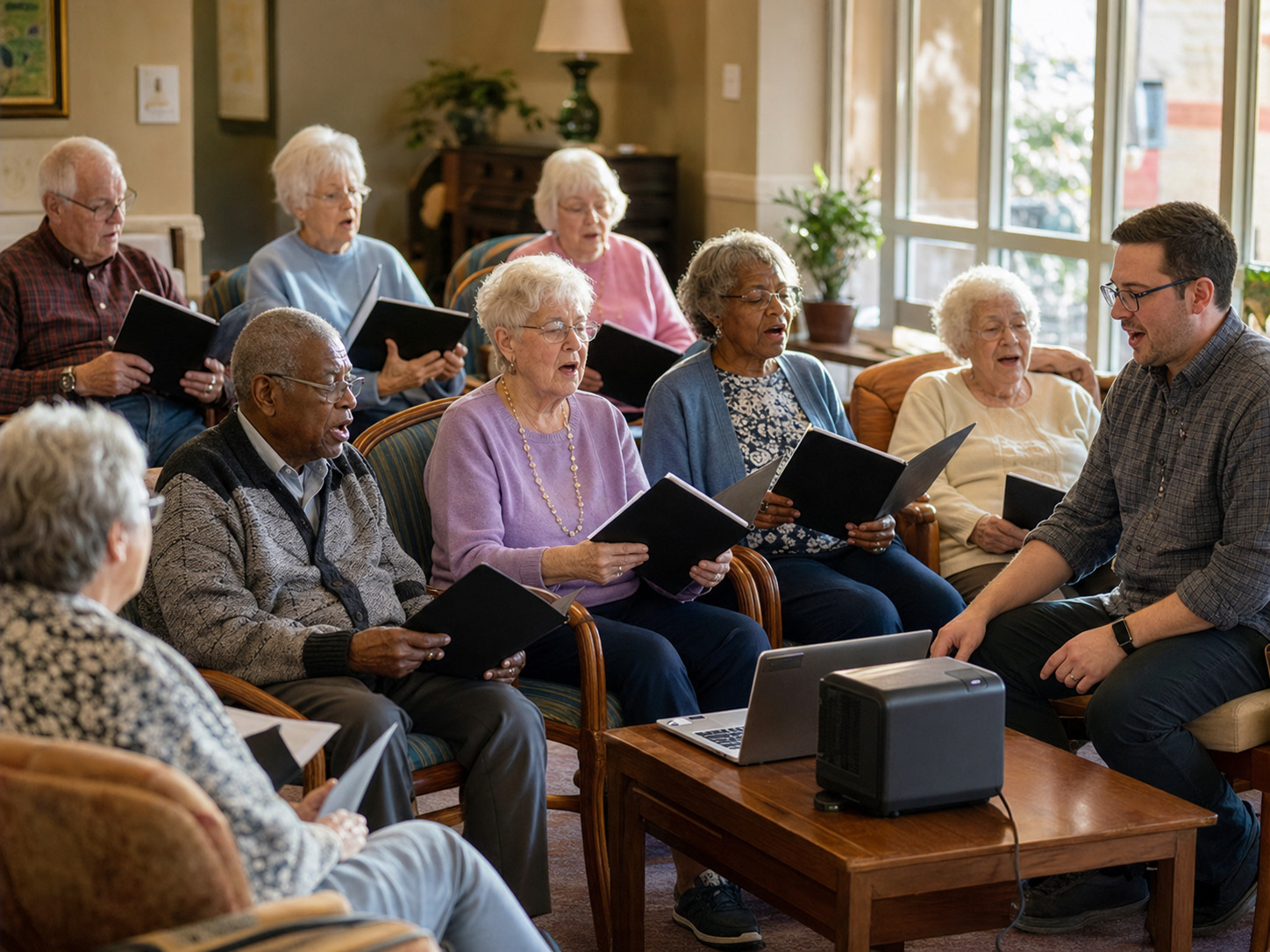
A senior-living worship service does not need a large music team to feel prepared. It needs familiar songs, a comfortable pace, a clear leader, and playback that helps the room participate without taking over.
That can be true in an independent-living community room, assisted-living residence, nursing home chapel, memory-support program, or retirement-community gathering. The room, group, and service purpose will differ, but the planning principle stays the same: choose music around the people who are present.
A useful backing-track plan makes the hymn easy to recognize, easy to enter, and easy to hear at a level that still leaves room for real voices.
Start with the people, not the playlist
Before choosing songs, ask the staff member, chaplain, worship leader, or activity director what kind of gathering is planned.
- Will residents sing, listen, or do both?
- Is the service tied to a scripture, prayer, holiday, memorial, or ordinary weekday chapel?
- Will family members, volunteers, or a small choir join?
- Does the room use printed lyrics, hymnals, a screen, or spoken prompts?
- Is there a microphone and speaker, or only a portable playback setup?
- How long can the musical portion comfortably hold the group's attention?
Those answers matter more than building the longest possible set. Three familiar hymns with clear transitions can serve the room better than eight songs chosen only because they are available.
Choose hymns the room can recognize quickly
Familiarity lowers the amount of explanation the leader must give before people can participate.
The Spiritrax Classic Hymns Collection includes 12 accompaniment tracks in commonly sung keys. The current collection lists “Amazing Grace,” “Blessed Assurance,” “Be Thou My Vision,” “Holy, Holy, Holy,” “The Old Rugged Cross,” “What a Friend We Have in Jesus,” “Come Thou Fount of Every Blessing,” and other familiar hymns.
Use recognition as a starting point, not an assumption. A song familiar to one congregation or generation may be less familiar in another community. Ask what residents already sing, and keep a note of the hymns that produce steady participation over time.
Give each hymn one job
A short service feels more intentional when the songs do different work.
| Service moment | Useful hymn role | Planning note |
|---|---|---|
| Gathering | Familiar, steady opening | Let people settle before asking for a strong first entrance |
| Prayer or reflection | Gentle solo, unison hymn, or instrumental verse | Keep the arrangement under the words and silence |
| Scripture response | Hymn that supports the reading's theme | Give one sentence of context before playback |
| Congregational singing | Comfortable melody with a clear introduction | State the title and verse plan before the track begins |
| Closing | Warm, recognizable sending song | Use an ending the room can hear and follow |
The leader does not need to fill every pause. Spoken welcome, scripture, prayer, silence, and conversation can carry as much meaning as the music.
Pick the key for ordinary voices
The best key is not automatically the key from a famous recording. It is the key the actual leader and group can sing without pushing.
Preview the highest and lowest phrases before the service. If a volunteer or soloist is leading, test the full verse rather than one high note. If residents will sing together, favor a comfortable middle range and a melody that stays clear when the room joins at different volumes.
The Classic Hymns Collection page identifies the key for every track. If a different key is needed, Spiritrax also offers individual tracks and transposition options where available. Confirm the final version before printing lyric materials or rehearsing introductions.
Keep the playback setup simple
A reliable senior-living worship setup can be modest:
- one charged laptop, tablet, or phone with the tracks downloaded;
- one speaker appropriate for the room;
- an audio cable or tested wireless connection;
- a simple numbered playlist in service order;
- a printed service plan with song titles, verse count, and cues;
- a backup copy on another device.
Store the files locally so the service does not depend on guest Wi-Fi. Silence notifications. Test the device, speaker, and connection before residents arrive.
If another volunteer will operate playback, use clear filenames such as 01_AmazingGrace_KeyD.mp3 instead of leaving the operator to search a downloads folder.
Set the volume for participation
The track should be loud enough to establish the melody and rhythm but low enough that the leader can hear the room.
Test volume from the seating area, not only beside the speaker. A portable speaker placed on a hard table can sound very different across the room. Avoid sudden changes in level between speaking and music, and do not assume the setting used last week is right for a different room or group.
During the first verse, listen. If the track is covering the people who are singing, lower it. If the melody is disappearing and residents are losing the phrase, raise it gradually or bring the leader's microphone closer.
The goal is support, not concert volume.
Make lyric support easy to use
Choose one lyric method and explain it before the track begins.
Printed sheets should use readable type, strong contrast, and uncluttered spacing. Hymnals should be opened to the correct page before the introduction. If a screen is available, place only the words people need for the planned verse order.
Check the permissions that apply to displaying, printing, recording, or streaming lyrics and music. A purchased backing track does not automatically grant every lyric, video, or public-distribution right.
Keep the verse plan short enough that the leader can announce it clearly: “We will sing verses one and three,” for example. If the track arrangement does not match that plan, choose another version or adjust the service map before the gathering.
Rehearse the start and ending
The first and last 20 seconds of a track deserve more attention than most leaders give them.
Before the service, practice:
- the spoken introduction;
- the button or click that starts playback;
- the length of the musical introduction;
- the leader's first sung phrase;
- the final held note, button, or fade;
- the words or prayer that follow.
A clear entrance helps the room join with confidence. A clear ending prevents the leader from speaking over the last chord or leaving an awkward search for the stop control.
Build a three-hymn service that can breathe
For many gatherings, a compact plan is enough.
Opening: a hymn people recognize immediately
Choose a steady song such as “Blessed Assurance” or “Holy, Holy, Holy” when it fits the service theme and community.
Reflection: a gentler hymn or solo
“Be Thou My Vision,” “What a Friend We Have in Jesus,” or another familiar selection can support prayer, scripture, or quiet listening.
Closing: a hymn with a warm, settled ending
“Amazing Grace,” “Come Thou Fount of Every Blessing,” or another community favorite can help the gathering close together.
These are planning examples, not a required set. Choose songs that suit the community, faith context, leader, service theme, and permissions in place.
Prepare for different levels of participation
Not everyone will sing every word. Participation may look like humming, listening, following the lyric sheet, tapping a rhythm, singing one refrain, or simply being present.
Do not pressure the room to perform. Give a clear invitation, begin the music calmly, and let the familiar shape of the hymn do its work. If the group joins strongly on one verse, stay attentive rather than pushing immediately to the next item on the plan.
The leader's job is to guide the service, not judge the volume of the response.
FAQ: senior-living worship backing tracks
What hymns work well for a senior-living service?
Start with hymns the specific community already recognizes and that fit the scripture, prayer, season, or service purpose. Familiar titles such as “Amazing Grace,” “Blessed Assurance,” “Be Thou My Vision,” and “What a Friend We Have in Jesus” can be useful options when they fit the group.
How many songs should a short service include?
There is no required number. A focused three-hymn plan often leaves enough room for welcome, scripture, prayer, reflection, and conversation without making the music feel rushed.
Should we use guide vocals during the service?
Guide-vocal demos are useful for learning the melody and arrangement. Accompaniment-only tracks usually leave more room for the live leader and group during the service.
How loud should a backing track be?
Set it loud enough to make the melody and pulse clear, but low enough that the leader can hear real voices in the room. Test from the seating area and adjust gradually.
Can we livestream or record the service with a backing track?
Recording, streaming, lyric display, and public use may involve permissions beyond downloading the track. Confirm the applicable music, recording, and platform requirements before the service is shared.
The takeaway
A senior-living hymn service works best when the room does not have to chase the music. Choose a few familiar songs, test the key and volume, make the lyrics easy to follow, write the cues, and rehearse the first and last moments of each track. Simple preparation gives more people a comfortable way to join.
The Spiritrax Classic Hymns Collection gathers 12 familiar accompaniment tracks in commonly sung keys, with sheet music and selected guide-vocal demos. Preview the set and choose the few hymns that best fit your room, leader, and service purpose.
Explore the Classic Hymns Collection