
Let “O Holy Night” Rise Without Rushing the Final Verse
Holiday & Special Occasion Music
By Spiritrax Content Studio · October 13, 2026
Updated October 13, 2026
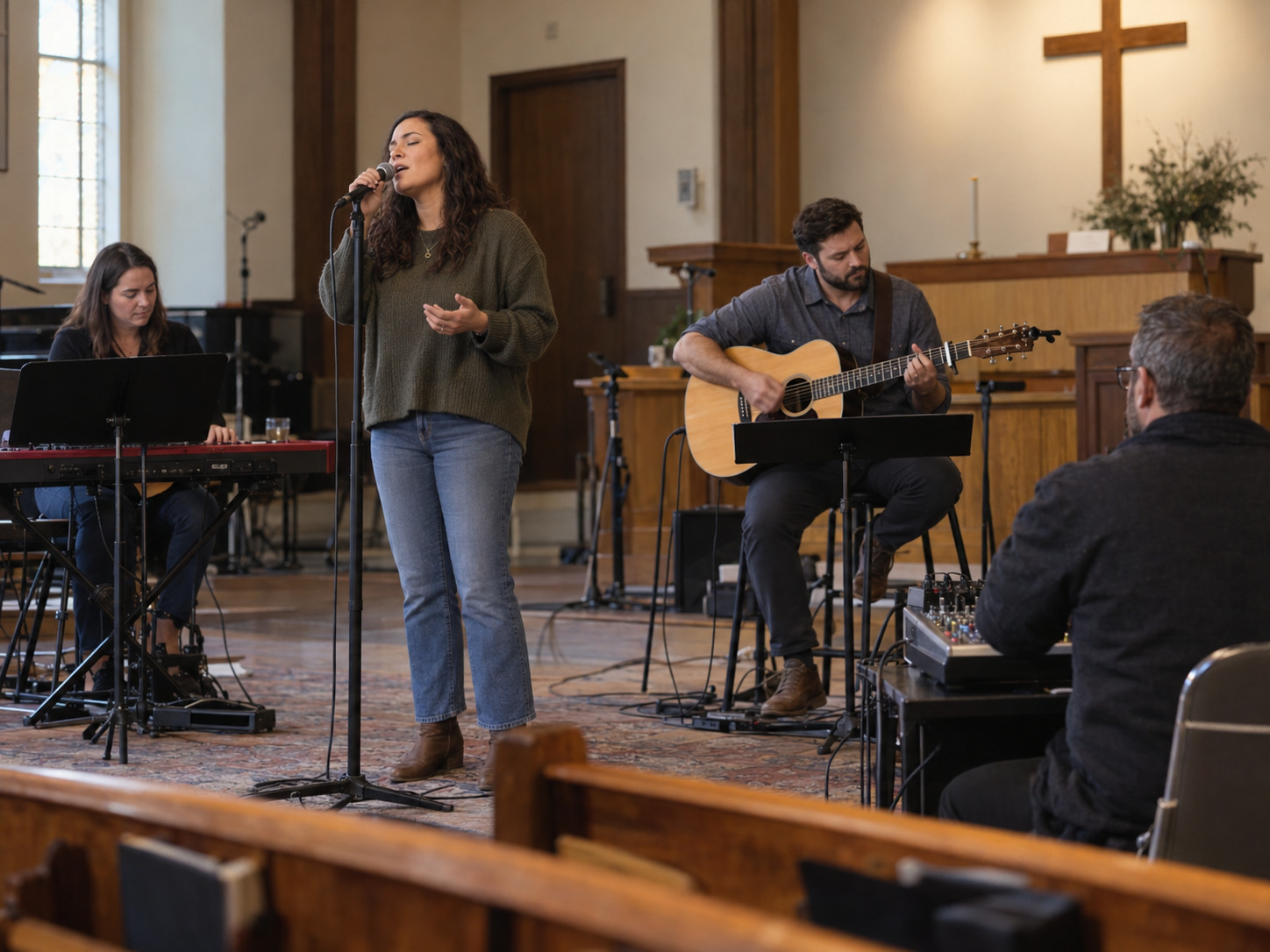
The short answer: choose your “O Holy Night” backing track by the singer’s comfortable key, the arrangement’s role in the service, and the amount of musical lift the room can support. Rehearse the exact file early, keep the opening restrained, plan the final build before adding volume, and give the sound volunteer a clear start and ending cue.
This familiar Christmas song often becomes harder in performance than it seems in practice. A soloist may know the melody but still feel rushed by the accompaniment, choose a key that makes the final section costly, or spend the whole first verse singing at the emotional level of the ending. A practical track plan protects the voice and lets the message unfold.
Choose the arrangement by its job in the service
Begin with the service moment, not a favorite recording. Ask what the song needs to do.
It may be:
- a featured solo before a reading or message;
- a reflective response after a quiet moment;
- a Christmas Eve centerpiece;
- a choir or ensemble feature with one lead singer;
- a concert selection that needs a broad final arrival;
- part of a longer medley where the ending must hand off cleanly.
An orchestral arrangement can support a formal solo and a wide dynamic arc. A contemporary arrangement can fit a band-led service when guitar, bass, drums, and a steady 6/8 feel match the surrounding music. A three-verse version can serve a program that needs the fuller text, but it also asks the singer and congregation to sustain the arc longer.
Name the job first. Then preview the arrangement through the speakers and in the room where it will be used.
Pick the key from the final section backward
The opening can feel comfortable in a key that becomes expensive later. Test the highest, longest, and most exposed phrases before deciding.
Spiritrax’s orchestral “Oh Holy Night” backing track is available in A, C, and F major. The contemporary version is available in C, E-flat, G, and B-flat major. The three-verse orchestral version is available in C, A, and F major.
Do not choose only from the first verse. For each possible key:
- Sing the final section at rehearsal volume.
- Check whether the vowels remain clear without pushing.
- Notice whether the singer can still shape the phrase instead of only surviving it.
- Test the preceding breath and the recovery after the climactic line.
- Repeat the passage after several minutes of singing, not only while fresh.
The right key is the one that allows the whole performance to remain expressive. A lower key is not a lesser choice, and a higher key is not automatically more moving.
Build the dynamic arc on paper first
If every phrase grows, the singer and track have nowhere left to go. Draw a simple line over the song’s structure before the first full run.
Try a four-stage plan:
| Stage | Musical aim | Rehearsal cue |
|---|---|---|
| Opening | Invite the room to listen | Supported, contained tone |
| First expansion | Let hope enter the sound | More resonance, not more speed |
| Quiet reset | Create space before the final build | Release unnecessary volume |
| Final arrival | Open the full message | Broad breath, clear text, planned ending |
The exact shape depends on the arrangement, but the contrast should be intentional. Record a rehearsal from the back of the sanctuary. If the opening already sounds like the finale, reduce intensity before raising the microphone or changing the track.
Rehearse the introduction as part of the song
The soloist should know the introduction well enough to breathe and enter without searching for the cue. The sound volunteer and worship leader should also know who initiates playback.
Use one clear sequence:
- Spoken introduction or prior element ends.
- The designated person gives the playback cue.
- The track begins at the agreed level.
- The soloist hears the final landmark in the introduction.
- The first breath and entrance happen exactly as rehearsed.
Avoid “start when ready.” Decide whether the cue comes from the soloist, worship leader, conductor, or sound volunteer. Practice the silence before playback so the beginning feels settled rather than technical.
If the song follows another item, rehearse the transition from that item instead of starting from a stopped room. The emotional and acoustic handoff may change the first breath.
Move from guide vocal to accompaniment early
The orchestral product includes a guide-vocal recording in A major. A guide vocal can help a singer hear the melody, entrances, and relationship to the accompaniment. It should be a learning tool, not a permanent crutch.
Use this handoff:
- Listen with the guide vocal and mark entrances.
- Sing quietly with the guide while checking the form.
- Repeat short sections with accompaniment only.
- Complete full runs with the exact performance track.
Do not alternate among unrelated online versions once the service file is chosen. Different introductions, keys, tempos, interludes, and endings create hesitation. Label the approved file clearly and place only that version in the service playback folder.
Plan every breath against the track
A backing track will not wait for a longer breath. That makes breath planning especially important in a song with long phrases and a broad final section.
For each breath, mark:
- whether it completes the thought or interrupts it;
- the consonant that must release before the breath;
- the exact rhythmic re-entry;
- whether the singer needs a silent catch breath;
- whether the dynamic plan still leaves enough support for the phrase.
Rehearse difficult pairs of phrases in rhythm before adding pitch. Speak the text over the accompaniment, then sing at half volume, then restore the full musical shape.
If the singer repeatedly feels rushed, confirm that the problem is not an unplanned consonant, late breath, or unfamiliar interlude. When the arrangement truly needs a different tempo, cut, repeat, key, or ending, use the product’s customization option and settle the revision before the final rehearsal.
Let the room shape the sound check
Sanctuaries can exaggerate both orchestral texture and vocal brightness. A balance that feels comfortable near the platform may cover words in the middle of the room.
During sound check:
- listen from several seating areas;
- test the quiet opening as carefully as the final build;
- keep the vocal clear above the accompaniment without making it harsh;
- check monitors so the soloist hears the pulse and pitch center;
- confirm the track does not mask consonants in its fullest section;
- rehearse the final note, release, and silence after it.
Ask one listener to write down any words that disappear. Fix the earliest clarity problem first. Raising the entire vocal channel may make the climax uncomfortable without solving a covered opening phrase.
For a livestream, make a separate check through the stream mix. The room and the online feed may need different balances.
Give the final verse room to arrive
The final section should feel larger because the whole performance has prepared it—not because the singer suddenly pushes.
Work backward from the last sustained phrase:
- Decide the emotional and vocal destination.
- Mark the breath that makes it possible.
- Identify where the final build actually begins.
- Keep the preceding section below that level.
- Rehearse the ending through the track’s final sound and silence.
Do not rush when the arrangement grows. Let the pulse stay stable while the breath and resonance broaden. If the singer feels behind, practice the final section with a smaller sound and precise consonants before restoring full intensity.
The performer should also know what happens after the last note. Will the worship leader speak, will the room stay silent, or will another element begin? That transition is part of the service plan.
A 30-minute rehearsal plan
Minutes 0–5: confirm the role and key
Name the song’s place in the service. Test the final section in the available keys and choose the one that preserves expression.
Minutes 5–10: learn the introduction
Listen without singing. Mark the playback cue, first breath, entrance, interlude, and ending.
Minutes 10–15: map the dynamics
Draw the four-stage arc and sing the opening plus final section at deliberately different intensities.
Minutes 15–20: mark the breaths
Speak difficult phrases in rhythm, then sing them at half volume with exact re-entries.
Minutes 20–25: run the transition
Begin with the spoken introduction or preceding service element. Rehearse who cues playback and how the first entrance settles.
Minutes 25–30: record a full pass
Listen from audience distance. Note one clarity fix, one balance fix, and one musical choice for the next rehearsal.
Common problems and practical fixes
The singer peaks too early
Reduce the opening intensity and mark the exact point where the final build begins. Contrast creates the arrival.
The final section feels strained
Recheck the key, breath before the climb, and accumulated volume. Choose the key that lets the singer shape the phrase rather than force it.
The first entrance feels uncertain
Rehearse the introduction without singing, name the final cue in the accompaniment, and assign one person to start playback.
The words disappear when the track gets full
Test from the seating area, simplify the singer’s volume strategy, and adjust the relationship between vocal and accompaniment instead of raising everything.
The track feels too rigid
Mark the places where the singer can change color, focus, and intention without changing the timing. A fixed musical map still allows a live performance.
FAQ: using an “O Holy Night” backing track
Which key should a soloist choose?
Test the final section first. Choose the key that keeps the highest and longest phrases clear, supported, and expressive after the singer has warmed up and completed several passes.
Orchestral or contemporary arrangement?
Choose by service role and surrounding sound. The orchestral version supports a formal, expansive solo; the contemporary version uses a 6/8 pop-rock texture that may fit a band-led Christmas program.
Should we use the guide vocal in the service?
Use it to learn melody and entrances. Move to the accompaniment-only performance file early enough that the singer leads the text and phrasing independently.
Is a three-verse version better?
It is useful when the fuller text fits the program and the singer can sustain the longer arc. Choose it for a clear service purpose, not simply because it is longer.
Can the track be customized?
Spiritrax offers customization options for keys, tempo changes, cuts or repeats, and other practical needs. Finalize the revised file before late rehearsals.
A dependable “O Holy Night” performance begins with a modest opening, a comfortable key, and a clear cue. When the singer, sound volunteer, and track share the same plan, the final arrival can feel spacious instead of rushed.
Preview the orchestral Oh Holy Night backing track in A, C, and F major, then choose the key that lets your soloist carry the final section with clarity and room to shape the text.
Preview the O Holy Night Track