
Rehearse the Rubato Before “O Come, O Come, Emmanuel” Reaches the Service
Holiday & Special Occasion Music
By Spiritrax Content Studio · November 12, 2026
Updated November 12, 2026
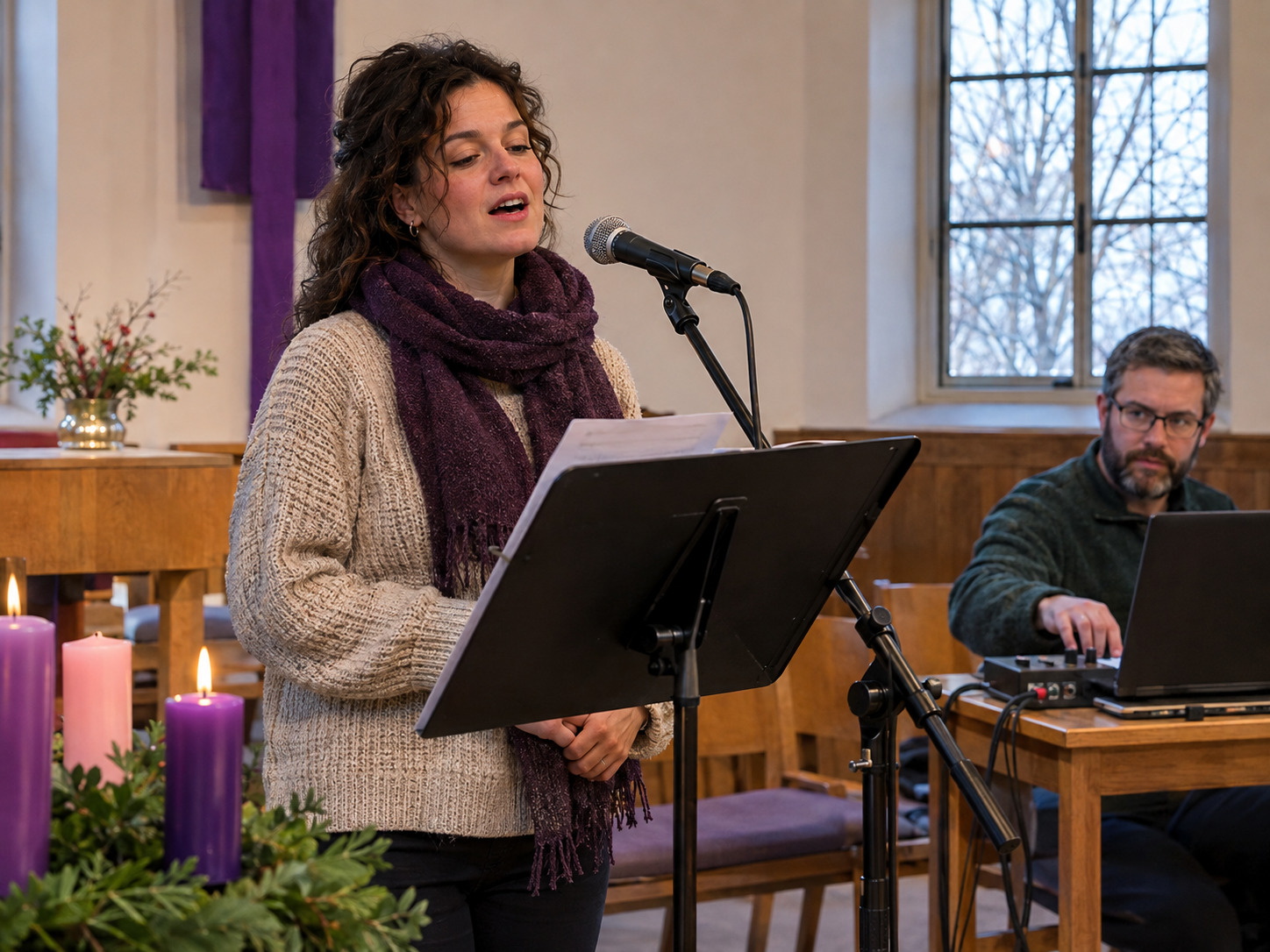
The short answer: rehearse the freedom. Spiritrax’s current “O Come, O Come, Emmanuel” arrangement uses solo piano, brass, and percussion in a rubato, wide-open setting. That spaciousness can support a reflective Advent moment, but only when the soloist and sound volunteer agree on the entrances, breaths, and releases before the service.
Rubato does not mean that everyone guesses. It means the musical line can flex inside a shared plan.
Choose the key for the complete vocal line
The current Spiritrax product page lists D minor, E minor, B minor, and G-flat minor, with D minor identified as the original key. Test more than the opening phrase before choosing.
Ask the soloist to sing through the highest and lowest parts of the complete version they intend to use. Listen for three things:
- whether the lowest phrases still carry clearly,
- whether the climactic phrases stay free rather than pressed,
- and whether the singer can sustain clear words at the slower, more exposed moments.
A lower key is not automatically more comfortable if it removes presence from the bottom of the melody. A higher key is not automatically more expressive if the singer has to push through the final section. Choose the version that lets the whole line remain steady.
Mark the places where time can flex
Listen to the exact accompaniment file and mark the moments where the piano, brass, or percussion gives the singer room. Do not rely on a general instruction such as “take your time.”
Name the specific choices:
- where the opening breath happens,
- which phrase endings may broaden,
- where the accompaniment clearly leads into the next entrance,
- where the soloist must carry the pulse internally,
- and how the final release will be cued.
Then rehearse those landmarks in order. A singer can sound unhurried while still knowing exactly what comes next.
Use the guide vocal as a map, not a crutch
The current product page credits a guide vocal performed by Cassie Davis. Use that demonstration to hear how the vocal line sits against the accompaniment, especially at the opening, transitions, and ending.
After the form is clear, switch to the accompaniment-only file. Rehearse one landmark at a time before attempting a complete run:
- the playback cue and first entrance,
- the first broad phrase ending,
- the return after the first refrain,
- the most exposed transition,
- and the final release.
If an entrance becomes uncertain, compare that short section with the guide, identify the instrumental cue, and return immediately to the accompaniment-only version.
Rehearse the refrain without making it suddenly heavy
The repeated refrain needs enough lift to feel like an arrival, but a larger sound should not erase the arrangement’s open character.
Decide in advance what will change. The soloist might use a more energized consonant, a slightly broader line, or a clearer forward motion. The sound volunteer might leave the playback level unchanged so that the singer—not the speakers—creates the growth.
Avoid treating every return as a cue to get louder. Repetition can deepen through focus and direction rather than volume alone.
Give the sound volunteer exact cues
A rubato track needs a more specific handoff than “press play when I nod.” The operator should know:
- the approved filename and key,
- who gives the start cue,
- whether the soloist needs silence before playback,
- the intended starting level,
- the first vocal entrance,
- any especially exposed transition,
- and whether the ending should finish naturally.
Practice the cue with the same microphone and playback setup planned for the service. Test from the middle and back of the room, not only beside the speaker.
If the brass feels too prominent or the piano detail disappears, adjust the playback balance before asking the soloist to compensate vocally.
Protect the silence around the hymn
The wide-open arrangement can lose its effect if the service handoffs are crowded. Plan what happens immediately before and after the track.
Confirm whether the hymn follows a reading, candle lighting, prayer, or spoken introduction. Decide who holds the room while the operator prepares playback. At the end, allow the final sound to settle before the next person speaks.
This does not require a dramatic pause. It requires one shared expectation so that no one rushes to fill the space.
FAQ: rehearsing a rubato Advent backing track
Does rubato mean the singer can ignore the accompaniment?
No. Rubato allows flexibility, but the singer still needs to recognize the accompaniment’s entrances, transitions, and releases. Rehearse the exact places where the line can broaden and the exact cues that bring everyone back together.
Which keys are available?
The current product page lists D minor, E minor, B minor, and G-flat minor. D minor is identified as the original key. Test the whole vocal line with the intended soloist before choosing.
Should the guide vocal play in the service?
Use the credited guide vocal to learn the line and phrasing. Rehearse the service with the accompaniment-only file so the live soloist carries the vocal part.
How should the operator cue the beginning?
Choose one visible cue, confirm the starting level, and rehearse the first breath and entrance with the actual playback setup. One calm, repeatable cue is better than several people trying to start the track.
The takeaway
A spacious “O Come, O Come, Emmanuel” should feel free, not uncertain. Choose the key for the complete line, mark where time can flex, move from the guide vocal to accompaniment only, and rehearse the opening and ending with the sound volunteer.
The result is a reflective Advent moment held together by preparation rather than hurry.
Rehearse the spacious phrasing in a key that fits your soloist with the Spiritrax accompaniment track.
Hear the accompaniment