
No Pianist This Sunday? Keep the Music Plan Simple and Singable
Planning Guides
By Spiritrax Content Studio · July 10, 2026
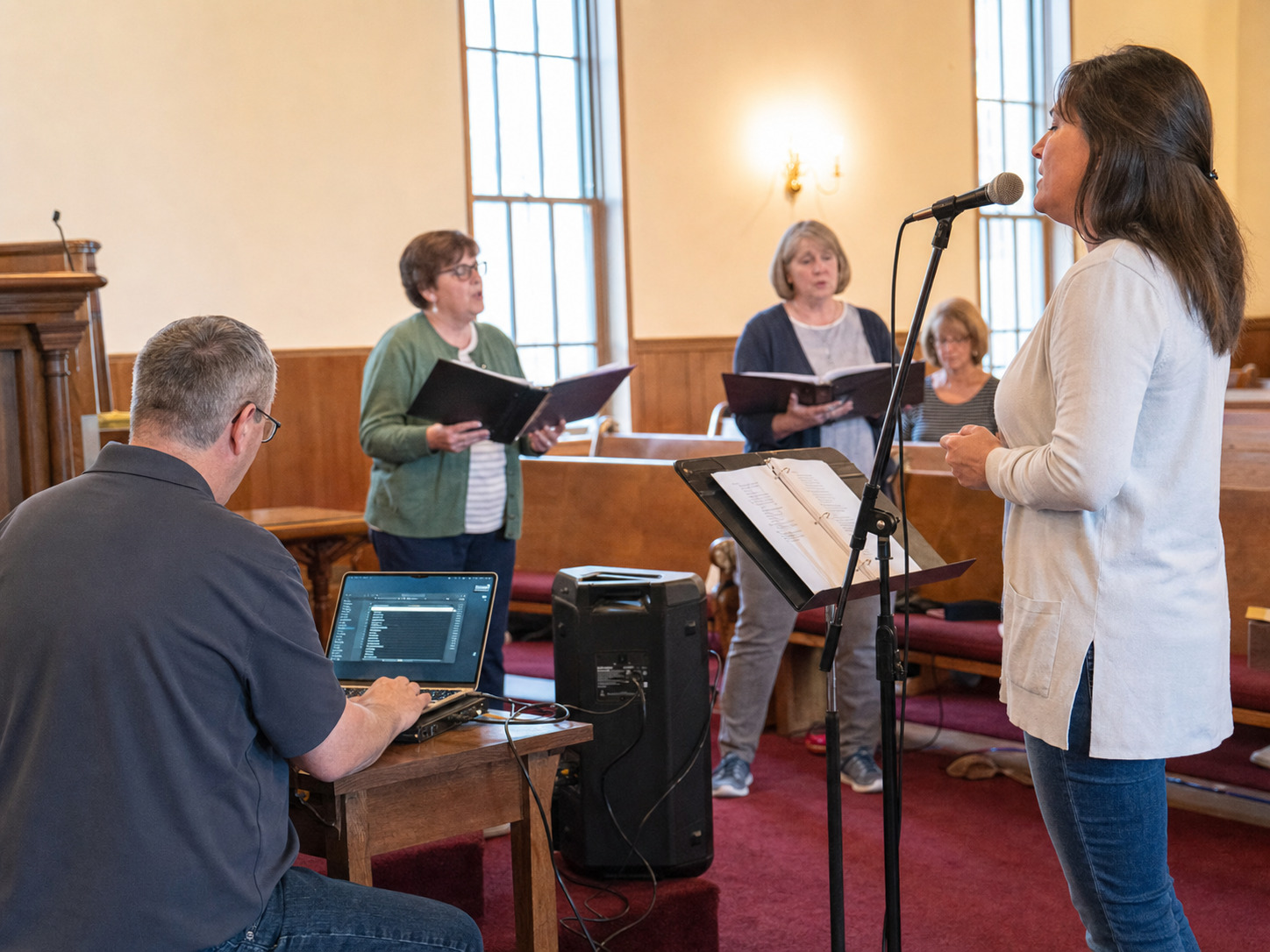
The pianist is sick. The regular accompanist is traveling. A volunteer is willing to lead, but the service is only a few days away.
This is not the week to build a complicated music program.
A clear accompaniment track can keep the service musical without asking one volunteer to solve every problem at once. The best plan is usually one familiar song, one comfortable key, one tested playback device, and one person who knows when to press play.
Choose the safest musical moment first
Start with the service order, not the catalog.
Ask where a track can help without making the service harder to lead. A familiar opening hymn, offertory solo, prayer response, or closing song may be easier than replacing an entire worship set at the last minute.
Use this quick guide:
| Service moment | Simple track plan |
|---|---|
| Opening hymn | Familiar melody, clear introduction, comfortable congregational key |
| Solo or special music | Key chosen for the singer, enough lead-in to breathe |
| Prayer response | Gentle arrangement, moderate volume, simple ending |
| Closing song | Strong first cue, predictable tempo, confident button |
One dependable track used well is better than four unfamiliar files that nobody has rehearsed.
Pick a song the room already knows
When rehearsal time is short, familiarity protects the service.
Choose a song that the singer, choir, or congregation already understands. The leader should not have to learn a new melody, teach new words, and operate unfamiliar playback at the same time.
Before downloading, confirm:
- who will sing;
- whether the congregation is expected to join;
- how many verses or sections will be used;
- whether the arrangement has a clear ending;
- whether the singer knows the first entrance;
- whether printed or projected lyrics are already handled.
Spiritrax worship backing tracks can provide an immediate starting point when a church needs accompaniment without a live pianist or band.
Choose the key before you choose the sound
The right arrangement still fails if the key makes the singer tense or leaves the congregation behind.
Test the highest and lowest phrases with the person who will lead. If the congregation will sing, choose a key that supports ordinary mixed voices rather than copying an artist recording by default. If it is a solo, let the singer's most natural storytelling range guide the choice.
Many Spiritrax tracks include transposition options, so check the available keys before committing the service to one version. A guide vocal demo can also help a volunteer hear the melody and entrance before moving to the accompaniment-only file.
Rehearse the first 20 seconds
The beginning causes more stress than the middle.
Practice this short sequence:
- Start the exact final file.
- Listen through the full introduction.
- Mark the breath before the first lyric.
- Sing the first phrase.
- Stop and repeat it.
- Confirm the track volume under the live voice.
Once the entrance feels secure, rehearse the ending. Know whether the file ends with a button, fade, held chord, or short instrumental tail. The leader and sound operator should not discover that shape during the service.
Make one person responsible for playback
The singer should not have to search a phone while walking to the microphone.
Assign one person to:
- open the final file before the service;
- confirm the device is charged;
- silence notifications;
- connect to the speaker or sound system;
- start the track on the agreed cue;
- lower or stop playback if something changes;
- keep the backup file ready.
Write the cue in the service order. Something as simple as “Start track after reader sits” is more useful than assuming everyone understands the transition.
Download the file and keep a backup
Do not rely on a streaming page or the church Wi-Fi during the service. Download the final MP3 and test it offline.
Keep:
- the primary file on the playback device;
- a second copy on another charged phone, tablet, or computer;
- a clear file name with song and key;
- only the final version in the active playlist;
- the volume setting noted after sound check.
Spiritrax tracks use portable MP3 downloads, which makes it practical to move the approved file to the device the church will actually use.
Test the real room
Run the track through the same microphone, mixer, cable, and speaker setup planned for Sunday.
Stand where the congregation will sit and listen for:
- a clear introduction;
- enough track volume to support the singer;
- words that remain understandable;
- no sudden jump between speaking and music volume;
- a clean ending that lets the service continue;
- easy access to pause or stop.
A small speaker may work for a classroom or chapel rehearsal but not for a larger sanctuary. The sound check should answer that question before people arrive.
Know when a custom track is worth asking for
If the catalog version is close but the key, tempo, cut, intro, or ending does not fit the service, a custom Spiritrax track may be useful for future dates.
For this Sunday, do not force a rushed custom plan if a familiar, ready-made track will serve the room well. After the service, keep notes about what the singer or congregation needed so the next plan can be made earlier.
FAQ: worship music without a pianist
Can a church use backing tracks when no pianist is available?
Yes. Backing tracks can support a soloist, choir, worship leader, or congregation when the key, introduction, volume, and playback cue are prepared in advance.
Should we replace the whole worship set with tracks?
Not automatically. If time is short, start with one familiar service moment and keep the rest of the music plan simple.
Should the singer practice with a guide vocal?
A guide vocal can help the singer learn melody, rhythm, and entrance. Before the service, rehearse with the accompaniment-only version that will actually be played.
What is the safest backup plan?
Keep the downloaded MP3 on a second charged device, label it clearly, and make sure another volunteer knows the start cue and stop control.
The takeaway
When the pianist is unavailable, preparation matters more than scale. Choose one familiar song, test the key with the real singer, rehearse the entrance and ending, download the file, and assign one person to playback. A simple track plan can keep the service steady while letting the words and the people in the room remain the focus.
Find a clear, downloadable accompaniment track for Sunday worship, then choose the key and rehearsal support that help the singer and congregation feel prepared.
Browse Worship Backing Tracks