
“Let All Things Now Living” Needs a Pulse the Room Can Follow
Holiday & Special Occasion Music
By Spiritrax Content Studio · October 15, 2026
Updated October 15, 2026
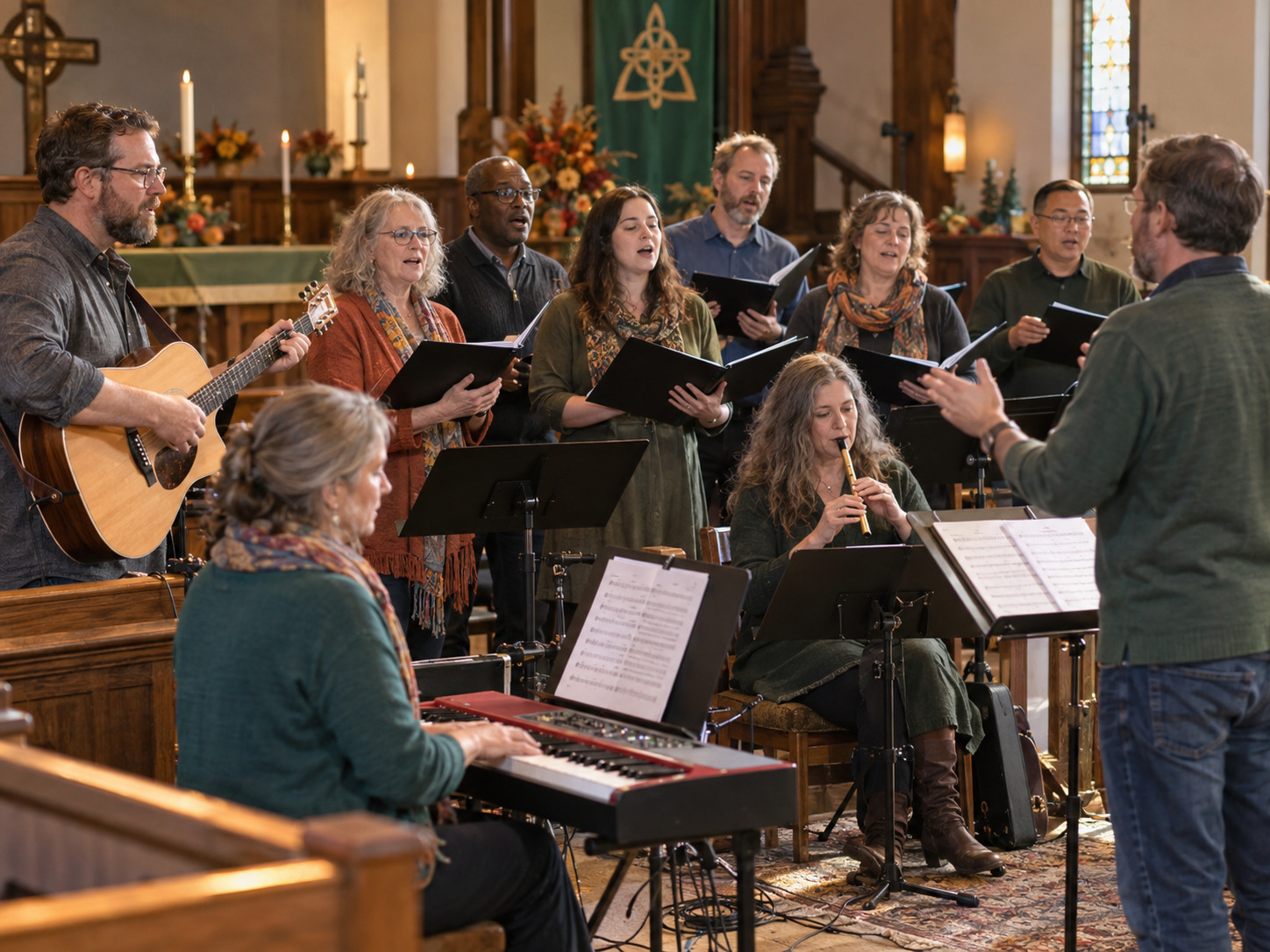
The short answer: choose the key with the people who will sing the complete hymn, then rehearse the flowing accompaniment in steady phrases rather than chasing every instrumental detail. “Let All Things Now Living” works best when the room can hear the words, feel a dependable pulse, and return from the interlude together.
The Spiritrax “Let All Things Now Living” backing track is available in G, F, A, and D major. The arrangement uses a Celtic-influenced texture with Irish whistle, dulcimer, lute, bass, percussion, and strings, and it moves through two verses with a short interlude. Those details make the track warm and distinctive, but they also give worship leaders several decisions to settle before the service.
Choose the key with the final phrase, not the first one
A comfortable opening does not prove that the complete hymn fits. Sing both verses in the proposed key at service volume. Pay particular attention to the phrases that sit highest, the places where the accompaniment becomes fuller, and the final sustained line.
Use the available keys as a real rehearsal comparison:
- Begin with the key closest to the group’s familiar range.
- Sing the complete second verse, not only the opening phrase.
- Listen for strain in the highest section and loss of clarity in the lowest one.
- Ask the congregation-facing leader whether ordinary voices could join without pushing.
- Choose one key and use it for every remaining rehearsal.
For a soloist, the singer’s whole range is the priority. For a choir or congregation, favor a key that lets the majority enter confidently and sustain the text. Do not choose a brighter key simply because it feels more exciting in the preview.
Feel the pulse underneath the Celtic texture
The whistle and plucked instruments give the arrangement motion. Singers can start following those decorative details instead of carrying the underlying phrase.
Before adding voices, have the leader and accompanist listen once for the main pulse. Conduct broad phrase shapes rather than every small instrumental figure. Then ask the choir to speak the text in rhythm while one person marks the steady beat.
When the singers enter, keep consonants aligned without making the sound clipped. The accompaniment can flow while the words remain clear. If the group begins to rush, return to the larger beat and rehearse one complete phrase at a time.
The track should feel like support beneath the hymn, not a moving target the choir has to catch.
Plan the two verses as different jobs
Two verses do not need identical leadership or dynamics. Give each one a purpose before rehearsal.
One practical plan is:
- Verse one: a clear invitation led by a soloist, small ensemble, or choir section.
- Interlude: a musical breath while the leader keeps the room oriented.
- Verse two: a wider sound that welcomes the choir or congregation.
That plan is only a starting point. A smaller service may keep both verses intimate. A choir feature may begin with the full ensemble and use the second verse for stronger harmony. What matters is that the change is intentional and rehearsed.
Write down who leads each verse, who joins, and where the visual cue will come from. The backing track cannot watch the room. A person must carry that responsibility.
Rehearse the interlude as a real handoff
The short instrumental interlude is not empty time. It connects the two verses and gives the ensemble a chance to breathe, reset, and prepare the next entrance.
Run the handoff by itself:
- Sing the end of verse one.
- Keep the conductor or worship leader visible through the interlude.
- Mark the exact place where singers breathe for verse two.
- Give one clear preparation gesture.
- Enter together without waiting to hear someone else begin.
If a congregation will join after the interlude, explain that plan before the song or model it visibly from the platform. Do not assume the room knows whether the instruments are continuing, repeating, or preparing a new verse.
The sound volunteer should also know that the interlude is part of the file. Avoid fading or speaking over it unless the service plan specifically calls for that transition.
Keep the instruments from covering the words
A textured arrangement can sound beautiful in headphones and become crowded in a live room. Test the track through the actual sanctuary speakers while the singers use their real microphones.
Listen from the congregation’s position for:
- whether the whistle draws attention away from the vocal line;
- whether the percussion makes the group hurry;
- whether the keyboard or guitar adds useful support or duplicates the track;
- whether the bass becomes heavy in the room;
- and whether every phrase remains understandable.
If live musicians are joining the recording, give them a specific job. A keyboard can reinforce pitches quietly, a guitar can support the pulse, or a leader can provide a clear visual cue. Avoid adding parts simply because instruments are available. Extra layers may hide the very words the hymn is meant to carry.
Place the hymn where gratitude can breathe
“Let All Things Now Living” fits Thanksgiving planning, but it can also support services centered on creation, stewardship, protection, gratitude, or the turning of seasons. Choose its place by function rather than by holiday label alone.
It may work as:
- an opening song that gathers the room;
- a choir response after a reading or reflection;
- a congregational hymn near a thanksgiving prayer;
- a music offering that widens from soloist to ensemble;
- or a closing song that sends the congregation out with energy.
The Spiritrax holiday-music catalog can help planners compare this hymn with other seasonal backing tracks. Keep the service arc simple. A strong Thanksgiving plan does not need every song to carry the same theme in the same way.
Give the playback operator a complete cue
The operator needs more than the track title. Prepare a cue note that includes:
| Detail | What to record |
|---|---|
| File | Exact downloaded file name and key |
| Start | Spoken line, gesture, or service action that releases playback |
| First entrance | How many measures or audible landmarks occur before singing |
| Interlude | Who keeps time and who cues verse two |
| Ending | Hold, cutoff, prayer, spoken transition, or silence |
| Backup | Location of the verified duplicate file and device |
Store the downloaded track locally rather than relying on a streamed preview. Test notifications, sleep settings, cable connections, and backup playback before the room is full.
A rehearsal plan for choir and congregation
Use this sequence to keep the rehearsal practical:
- Compare the full hymn in the most likely keys.
- Choose one key and remove the alternatives from the active playlist.
- Speak the text in rhythm over the main pulse.
- Sing verse one with the planned leader.
- Rehearse the interlude-to-verse-two entrance three times.
- Add the full choir or congregational leadership plan.
- Balance the track and microphones from the room.
- Run the complete service handoff before and after the hymn.
Finish with the exact file, device, leader, and sound operator intended for the service. A rehearsal version and a service version should not quietly become different arrangements.
Frequently asked questions
Which key is best for “Let All Things Now Living”?
There is no universal best key. Spiritrax offers G, F, A, and D major. Sing the complete hymn with the actual leader, choir, or congregation-facing team, then choose the key that keeps the full range clear and sustainable.
Can a congregation sing with a Celtic-style backing track?
Yes, when the pulse is clear, the key is comfortable, the introduction and interlude are understood, and the track stays beneath the people rather than competing with them.
Should live musicians play along with the backing track?
They can, but each musician needs a defined role and must follow the recording’s fixed tempo and form. Test the combined balance in the room so added instruments do not cover the text.
Is the hymn only for Thanksgiving?
No. It can also support worship themes around creation, gratitude, stewardship, protection, and seasonal transition. Let the service purpose determine the placement.
Should an announcement happen during the interlude?
Usually the interlude works best as part of the musical flow. If spoken material is necessary, rehearse its timing with the exact track so verse two still receives a clear cue.
The useful test
At the end of rehearsal, ask whether the room can follow the pulse, understand the words, and return from the interlude without hesitation. If the key, leadership, balance, cue, and ending are all settled, the Celtic texture can bring warmth and movement without making the congregation chase the recording.
Preview the Celtic-influenced Let All Things Now Living backing track in G, F, A, and D major, then choose the key and cue plan your singers can carry through both verses and the interlude.
Preview the Available Keys