
Let the Readings Set the Pace for Lessons and Carols
Holiday & Special Occasion Music
By Spiritrax Content Studio · July 17, 2026
Updated July 17, 2026
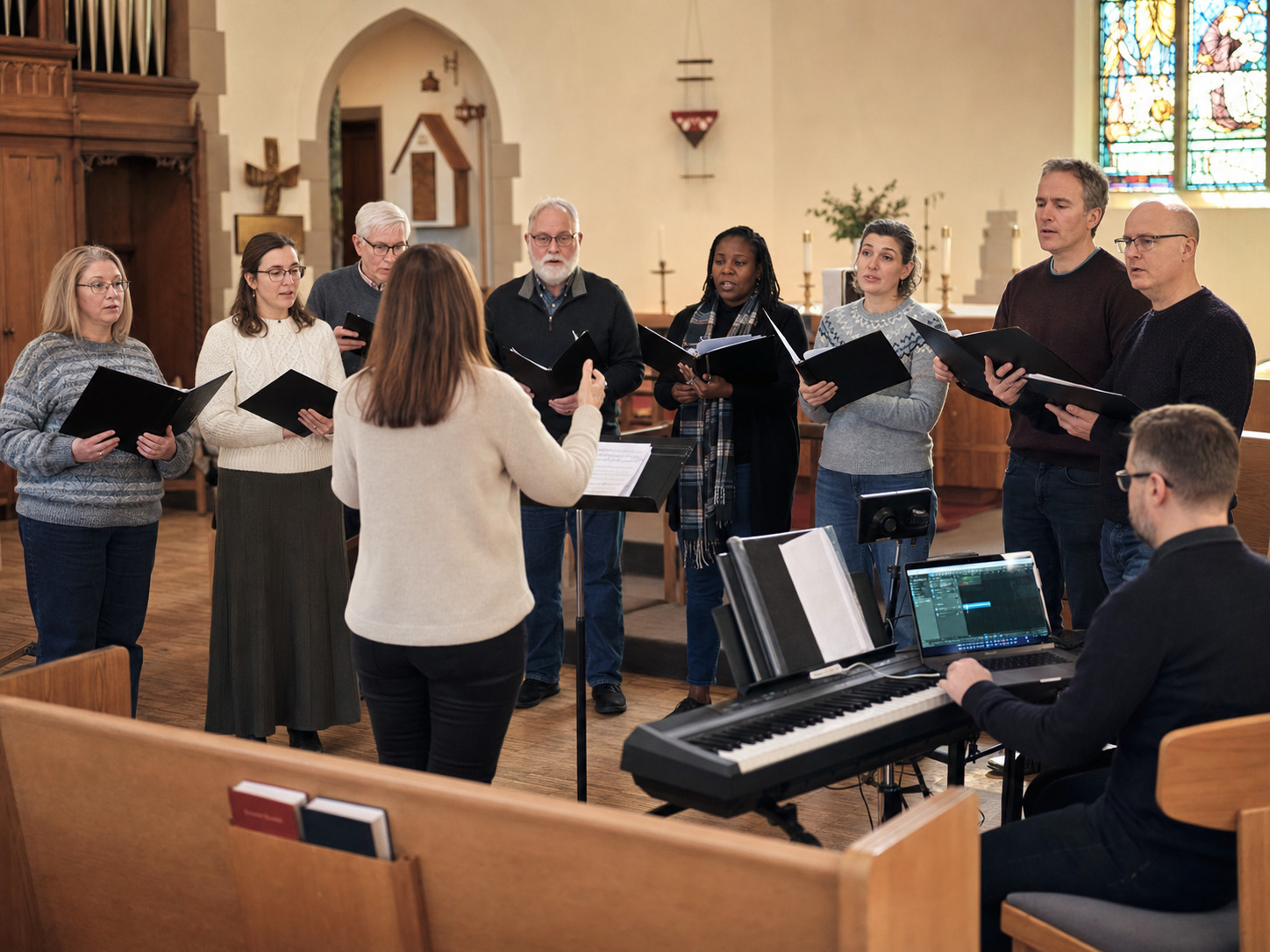
A Lessons and Carols service works best when the music serves the movement of the readings.
The planning question is not simply, “Which Christmas songs do we like?” It is, “What should the room hear, sing, or reflect on after this reading—and how will that transition happen?”
A useful service map gives every musical moment one role, one leader, one key, one version, one cue, and one ending. That clarity helps readers, choir members, soloists, volunteers, and the person operating accompaniment move through the service without rushing the story.
Build the reading-to-music map first
Before choosing arrangements, place the readings and musical responses in one working plan.
| Service moment | Music decision to make |
|---|---|
| Gathering | Prelude or opening carol that settles the room |
| After a reading | Choir response, solo, congregational carol, or silence |
| Transition | Spoken introduction, instrumental underscoring, or direct musical cue |
| Central reflection | The most focused choral or solo moment |
| Closing | Carol or sending song with an ending the room can follow |
The exact number and order of readings varies by church and service design. The practical discipline is the same: let each reading shape the musical response instead of crowding the plan with songs that all do the same job.
Give every carol one clear role
A familiar carol can serve several different purposes, but it should have one purpose in this service.
Decide whether each selection is:
- congregational singing;
- a choir anthem or unison response;
- a solo or small-ensemble reflection;
- instrumental gathering music;
- a transition under movement;
- the final sending song.
That role determines the useful arrangement. Congregational singing needs a clear introduction and comfortable key. A solo needs room for the singer's phrasing. A choir response needs an entrance and ending everyone recognizes. Background music should support movement without asking the room to divide its attention.
The Spiritrax Christmas backing-track catalog includes individual songs and Christmas collections that can help planners compare familiar carols and accompaniment options in one place.
Choose keys for the people who will sing
Do not select every track in the original or most familiar recording key by default.
Test the highest and lowest phrases with the actual soloist, choir section, or congregation. A key that flatters one trained singer may leave a mixed-age congregation uncomfortable. A choir may need a different center than the guide recording. A child or youth reader moving directly into a song may also need a clear, unhurried transition.
Record the chosen key in the service map and file name. If more than one key is being considered, keep the alternatives out of the final playback folder once the decision is made.
Plan the space between the reading and the track
The transition often determines whether the service feels prayerful or mechanical.
For every reading-to-music move, answer:
- Does the music begin immediately or after silence?
- Who gives the start cue?
- How long is the introduction?
- Does the choir stand before or during the introduction?
- Is the congregation invited to sing before playback begins?
- What tells the reader, director, and operator that the moment is complete?
Avoid vague notes such as “music starts here.” A cue such as “begin after the reader is seated and the director raises both hands” gives the room something visible and repeatable.
Rehearse with two kinds of files
Choir members and soloists may learn faster with a guide vocal or reference recording. The service itself usually needs the accompaniment-only version unless the plan intentionally calls for another format.
Keep the two jobs separate:
| File type | Best use |
|---|---|
| Guide vocal or demo | Learning melody, rhythm, entrance, and arrangement shape |
| Accompaniment track | Rehearsal with the live singer or choir and final service playback |
Move to the accompaniment-only file early enough that singers learn to carry the melody and hear their own entrance. The final rehearsal should use the same version, key, verses, volume, and cue planned for the service.
Decide verses, cuts, and endings early
Christmas services often include familiar songs with several verses. The service plan should state exactly what will be used.
Confirm:
- verse count and order;
- whether an instrumental verse remains;
- any repeated refrain;
- spoken words over an introduction or ending;
- the final cutoff, held chord, button, or fade;
- whether the room remains seated or stands.
If a standard arrangement is close but the service needs a different key, cut, tempo, lead-in, or ending, explore custom Spiritrax tracks before the rehearsal calendar becomes crowded.
Give the operator a service-ready folder
The playback volunteer should not have to interpret the whole worship plan from scattered messages.
Prepare one final folder with:
- numbered files in service order;
- song title and key in each file name;
- only the approved accompaniment versions;
- a cue note for each start and stop;
- the tested volume setting;
- a second offline copy on another charged device.
Practice the first and last 20 seconds of every track. Most visible problems happen at entrances, transitions, and endings, not in the middle of a familiar verse.
Run one rehearsal that includes the readers
A choir-only rehearsal cannot test the full shape of Lessons and Carols.
Bring the readers, director, soloists, and playback operator together for at least one transition run. They do not need to perform every verse at full length. They do need to practice:
- the final lines of each reading;
- the planned silence;
- movement to microphones or choir positions;
- the start cue and introduction;
- the first sung phrase;
- the ending and move into the next reading.
This rehearsal reveals whether a thoughtful plan on paper still feels rushed in the room.
FAQ: Lessons and Carols backing-track planning
Can a church use backing tracks for Lessons and Carols?
Yes. Backing tracks can support congregational carols, choir responses, soloists, and instrumental transitions when the key, cue, verses, volume, and ending are prepared for the specific service.
How early should the music plan be finished?
Finish the reading-to-music map before the choir and readers need final rehearsal files. Early decisions give the team time to test keys, confirm versions, and correct transitions without last-minute pressure.
Should every reading be followed by a carol?
Not necessarily. Silence, spoken reflection, instrumental music, choir responses, and congregational singing can all serve different moments. Choose the response that supports the reading and the room.
Should the congregation sing in the original key?
Only if that key is comfortable for the people expected to sing. Test the range with ordinary voices and choose a version the room can join confidently.
Is a guide vocal appropriate during the service?
A guide vocal is most useful for learning and rehearsal. For the service, the accompaniment-only version usually gives the live singer, choir, or congregation room to lead.
Choose familiar Christmas accompaniment for each musical role in the service, then confirm the key, introduction, verses, cue, and ending. Explore Christmas backing tracks for your Lessons and Carols plan.
The takeaway
Lessons and Carols does not need more music than the service can hold. Start with the readings, give every carol one role, choose keys for the real singers, write the transitions, and rehearse the actual playback cues with readers in the room. When the map is clear, the music can support the story without pulling attention away from it.