
“Hark! The Herald Angels Sing” Should Lift the Room, Not Rush It
Holiday & Special Occasion Music
By Spiritrax Content Studio · September 25, 2026
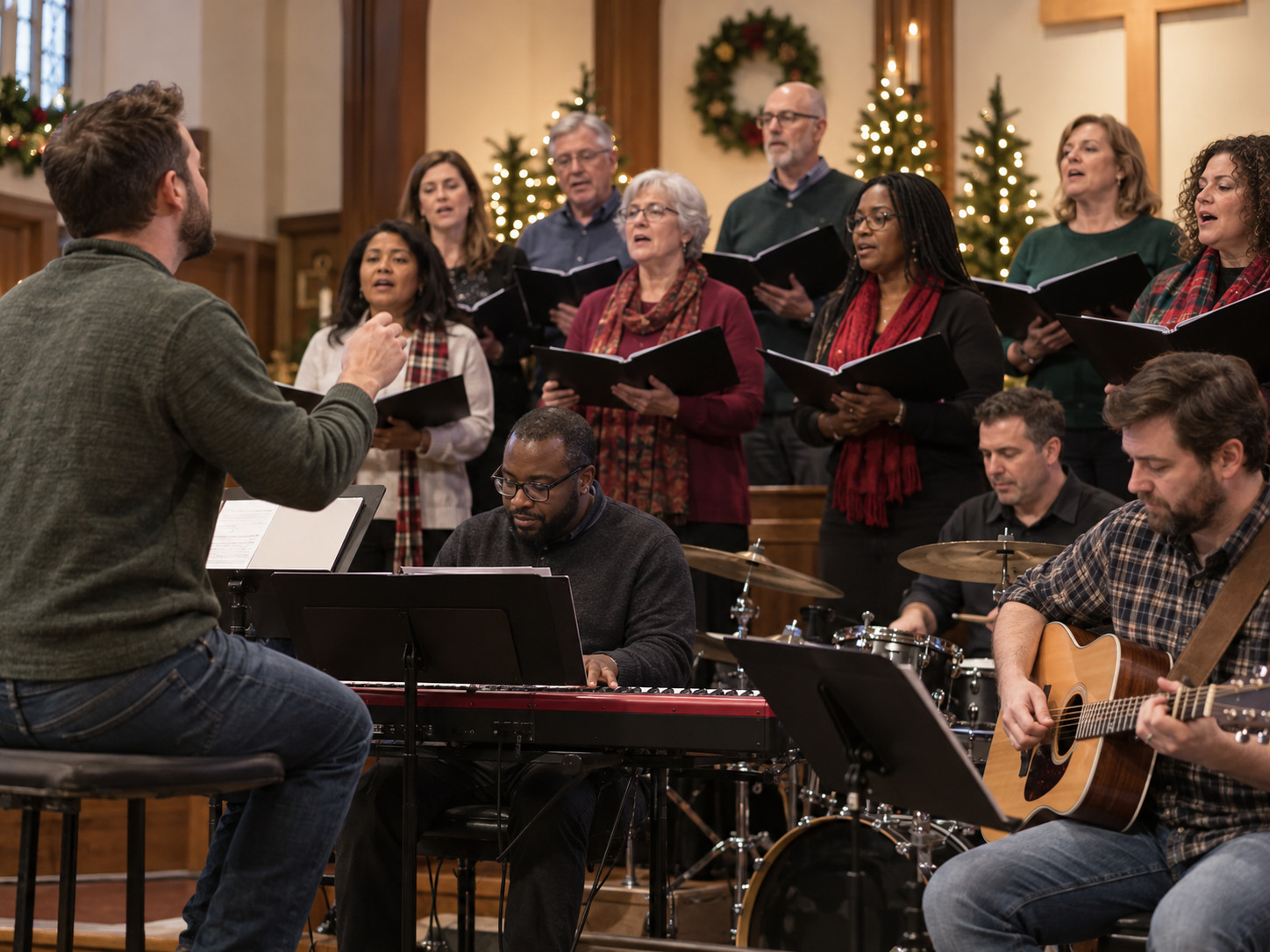
The short answer: choose the “Hark! The Herald Angels Sing” key with the singers who must carry the whole hymn, then rehearse the track’s pulse before adding more volume. The best key is not the one that makes the first line easiest. It is the one that keeps every verse and refrain clear, energetic, and singable in the room.
Spiritrax offers this contemporary worship arrangement in F, A, C, and D major. The recording uses keyboards, guitars, and drums, so key choice and groove have to support each other. A comfortable melody sung against an unsteady pulse will still feel difficult.
Start with the exact arrangement
“Hark! The Herald Angels Sing” appears in many hymnals and recordings. Do not build the service plan from memory of a different version.
The familiar MENDELSSOHN tune is commonly associated with F major, but the Spiritrax accompaniment is available in four keys. Preview the actual file you plan to use and confirm:
- the key;
- the introduction;
- the number of verses;
- the rhythmic feel;
- the instrumental spaces;
- the shape of the refrain;
- and the final ending.
Write those decisions into the service order and rehearsal notes. “The Christmas hymn” is not a useful filename when several arrangements are in the room.
Choose the key for the whole vocal arc
Test more than the first phrase. A key can feel friendly at the opening and become tiring when the melody repeatedly rises with a full band underneath it.
Use this ten-minute key test:
- Ask the lowest and highest dependable voices to sing the opening in each realistic key.
- Jump to the strongest part of the refrain instead of singing every verse.
- Continue into the next phrase so the singers prove recovery, not only one high point.
- Repeat at the volume expected in the service.
- Listen from the congregation, not only beside the keyboard or monitor.
Choose the key in which words remain clear and the group can finish with energy. A soloist-led service may make a different choice from a choir or congregation. Name the actual singers before deciding.
If none of the four offered keys fits the people and arrangement, use the product’s customization option rather than forcing the room to sing outside a practical range.
Let the pulse carry the hymn without rushing it
The contemporary arrangement includes a rhythm section. That can bring lift and forward motion, but it can also tempt singers to hurry consonants or push the refrain.
Rehearse one verse with only the playback operator, keyboard player or worship leader, and a small group of dependable singers. Ask everyone else to listen for:
- the count and feel established by the introduction;
- where the lyric sits against the drums;
- whether consonants arrive before or on the beat;
- how long sustained notes actually last;
- and where the accompaniment releases the final phrase.
Then add the full group without changing the tempo. Energy should come from shared rhythm and clear words, not from singing ahead of the track.
Build each entrance from the introduction
Do not start rehearsal on the first lyric every time. The introduction is where the room learns the tempo and prepares its first breath.
Assign one person to release playback and one visible leader to release the singers. Those may be different people. The operator should not guess from body movement, and the singers should not wait for the track to drag them into the first line.
Practice this sequence three times:
- the spoken or visual service cue;
- the exact playback start;
- the leader’s preparatory breath or gesture;
- the first sung entrance;
- and the first complete phrase.
If the entrance is inconsistent, diagnose whether the problem belongs to the file, the operator, the leader, or the singers before changing the arrangement.
Keep the band underneath the words
Key choice does not solve balance. The accompaniment includes keyboards, guitars, and drums, and those colors should create momentum without covering the text.
During sound check:
- use the same speakers and playback device planned for the service;
- begin at the real congregational or choir volume;
- stand where the singers will actually stand;
- check whether the introduction is audible without being startling;
- listen for lyric clarity when drums and guitars are active;
- test monitors separately from the house sound;
- and finish with the last refrain and ending.
Do not judge balance from an empty platform if the final group will be larger. Bodies absorb sound, and a full choir can change what both singers and listeners hear.
Decide what the congregation is expected to do
This arrangement can support a choir feature, a worship team, corporate singing, or caroling. Each use needs a slightly different plan.
For congregational singing, give a clear invitation and a leader whose melody can be followed. For a choir feature, protect ensemble diction and internal balance. For caroling, confirm that the playback system, key, and introduction make sense outside the usual sanctuary setup.
The accompaniment file is consistent. The leadership cue must explain how this particular room joins it.
Rehearse the ending as part of the service
The hymn is not finished merely because the track stops.
Name the final cutoff and what follows it: silence, spoken words, prayer, another musical cue, or movement. The visible leader, playback operator, and service leader should share the same plan.
Run the last refrain into that next moment. A confident ending lets the room receive the hymn instead of watching the platform decide what happens next.
Christmas hymn rehearsal checklist
Before the service, confirm that:
- the selected file is the intended Spiritrax arrangement and key;
- the lowest and highest dependable voices tested the full vocal arc;
- the group can enter from the actual introduction;
- the rhythm section supports rather than covers the words;
- the leader and operator have separate, named cues;
- the house and monitor balance were tested from real positions;
- the service plan states whether the congregation, choir, or worship team leads;
- the final cutoff is visible and rehearsed;
- and the next service moment follows without uncertainty.
FAQ: “Hark! The Herald Angels Sing” backing tracks
Which keys does the Spiritrax track offer?
The product page lists F, A, C, and D major. Preview the exact key and arrangement before rehearsal rather than assuming it matches another recording.
Is the original or traditional key always best?
No. Choose the key that fits the real singers, vocal arc, room, and service role. Familiarity is useful, but it is not a substitute for a complete range test.
Can the track work for congregational singing?
Yes, when the key, introduction, visible leadership, playback level, and service cues are prepared for the congregation that will actually sing.
Should the drums be reduced for a hymn?
Judge the full arrangement in the room. The useful question is whether the rhythm creates lift while the words and melody remain clear, not whether one instrument is present in principle.
The final test is practical: can the singers enter together, carry every verse in the chosen key, and finish with enough breath and clarity to make the refrain feel welcoming? If they can, the arrangement is serving the room.
Preview the F, A, C, and D-major versions, then choose the key that keeps the complete hymn clear and singable for your room.
Preview the Available Keys