
For Unto Us Needs a Choir Rehearsal Plan Before the Trumpets Arrive
Worship Music & Hymn Resources
By Spiritrax Content Studio · September 14, 2026
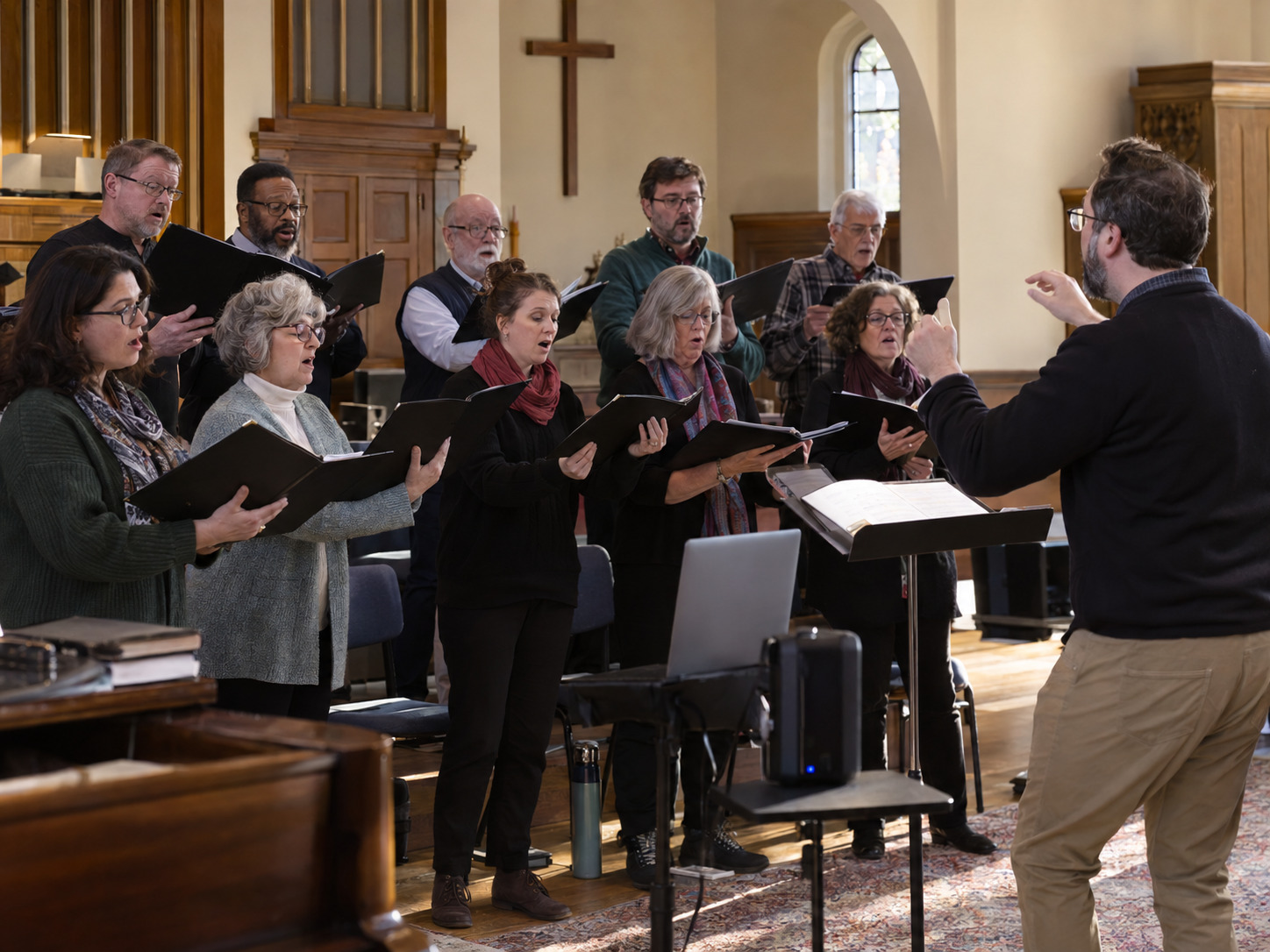
“For Unto Us a Child Is Born” can feel familiar long before the choir can sing it securely with orchestral accompaniment. The practical challenge is not only learning notes. It is agreeing on repeated entrances, consonants, dynamic contrast, cue ownership, and the exact track the choir will hear in the room.
Start with the final accompaniment early. Teach difficult material in small sections, but keep returning to the complete musical arc so the imitative lines and strong shared declarations feel like one movement rather than a stack of exercises.
Know what the track is asking the choir to carry
Spiritrax lists the piece as movement 12 of Handel's Messiah, an SATB chorus in G major. The arrangement alternates quieter imitative writing with stronger unified fanfare-like passages.
That contrast shapes the rehearsal plan. In the imitative sections, each section needs an independent entrance and clear text. In the larger shared moments, the choir needs agreement on vowel, consonant, balance, and release so orchestral energy does not become choral noise.
Preview the exact “For Unto Us a Child Is Born” backing track before distributing files. Confirm the selected key, file, and score materials with the choir's director rather than assuming every recording follows the same rehearsal choices.
Rehearse the first layer as speech
The repeated text can blur when singers treat every note as equally important. Before adding full sound, speak the relevant phrase in rhythm with the director's chosen articulation.
Listen for:
- the first consonant arriving together within each section;
- the final consonant leaving room for the next entrance;
- repeated words staying clear instead of becoming percussive noise;
- the stressed syllable carrying the phrase;
- singers releasing without adding an extra vowel.
This is not a substitute for score study. It gives the choir a shared language for the text before pitch, breath, and accompaniment compete for attention.
Keep the volume conversational. The goal is coordination, not performance intensity.
Build entrances from the cue backward
An entrance is easier when singers know what they are listening for immediately before it.
For each section, mark three things:
- The last sound or pulse the singers hear before entering.
- The breath point the conductor will show.
- The first complete word or musical idea the section must carry.
Then practice from the cue into the first full phrase. Do not stop after the first correct note. The choir needs to learn how the entrance continues, hands the material to another section, or joins the larger texture.
If an entrance only works after several spoken counts, test whether the singers can hear the track clearly enough. More counting does not fix poor monitor placement or a playback level that disappears behind the room.
Let sectionals solve independence, not create four tempos
Sectional rehearsal can make the imitative writing less crowded. Each group can study its line, text, breaths, and repeated patterns without fighting the full texture.
Use the same approved reference:
- distribute one clearly named accompaniment file;
- give every leader the same rehearsal markings;
- use the director's chosen tempo and cut points;
- record questions instead of inventing a local answer;
- return each section to the full choir before treating the work as learned.
A sectional has succeeded when singers can rejoin the complete texture without waiting for another part to lead them through every entrance.
Avoid building permanent rehearsal versions that the main choir never hears. A short loop can help isolate a passage, but singers should know where that passage lives inside the final track.
Separate learning sound from performance sound
Early rehearsal may need a stronger accompaniment level so singers can identify orchestral cues. Later rehearsal should test the balance the congregation or audience will actually hear.
Move through three stages:
1. Hear the architecture
Listen without singing. Follow the score, identify entrances, and notice where the texture grows or clears.
2. Carry the line
Sing at a moderate level with enough accompaniment to support pitch and pulse. Prioritize text, breath, and independence.
3. Test the room
Use the intended microphones, speakers, choir position, and playback operator. Adjust track level before asking singers to force more sound. The accompaniment should support the choir without covering the words.
The last stage often exposes practical problems that a practice room hides: a delayed cue, a speaker aimed away from the choir, a microphone picking up too much track, or an ending that leaves the operator uncertain.
Rehearse the contrast, not just the difficult notes
Choirs naturally spend time on the busiest passages. The stronger shared sections need preparation too.
Decide:
- how the choir will grow into the larger declaration;
- which consonants need energy without arriving early;
- how lower and upper voices will balance;
- where the sound should broaden and where it should stay moving;
- what the conductor will do at the final release.
Run the transition from an imitative passage into a unified one. That change is part of the musical effect. If rehearsal starts only at the loud section, singers may learn the destination without learning how to arrive together.
Give the playback operator a musical map
The operator should receive more than a filename.
Provide:
- exact track title and selected key;
- where the track sits in the service or concert;
- who gives the start cue;
- whether spoken words or silence come immediately before it;
- the choir's first entrance landmark;
- what happens after the ending;
- the location of an identical tested backup.
Rehearse the handoff from the preceding service element into the track. Then continue past the final note into the next spoken, silent, or musical moment. The room experiences the whole transition, not only the chorus.
For a worship service, agree on placement and surrounding words with the service leader. Do not let a convenient playback cue decide the pastoral shape of the service.
Use Part 1 when the program reaches beyond one chorus
An individual track is practical when this is the only movement being prepared. A longer Advent, Christmas, or concert plan may need several movements that belong together.
The Messiah Part 1 collection includes the first 21 movements listed by Spiritrax, including “Comfort Ye,” “Every Valley,” “And the Glory of the Lord,” “For Unto Us a Child Is Born,” “Glory to God,” and “His Yoke Is Easy.” It can serve as a single planning source when a choir and soloists are building a broader Part 1 program.
Choose around the actual repertoire. A collection does not remove the need to confirm each movement, selected key, singer assignment, score, file order, and rehearsal plan. For the full work, Spiritrax also provides the Complete Messiah collection.
A three-rehearsal framework
Rehearsal one: map and teach
- Listen to the complete track with scores open.
- Mark section entrances and the cues immediately before them.
- Speak the repeated text in rhythm.
- Isolate the two or three places where independence breaks down.
- End with one complete run at a sustainable rehearsal volume.
Rehearsal two: connect and balance
- Review difficult entrances from their cues.
- Rejoin sectional work in the full texture.
- Practice the contrast between imitative and shared passages.
- Confirm consonants, vowels, breaths, and releases.
- Run with the final accompaniment file from beginning to end.
Rehearsal three: operate the event
- Use the intended choir position, playback device, and sound system.
- Start from the preceding service or concert cue.
- Check what the choir and room each hear.
- Run through the ending and the next event.
- Confirm the performance file and backup are identical and clearly named.
The number of rehearsals may differ for each choir. Use this as a sequence of jobs, not a promise that every ensemble will be ready on the same calendar.
Questions choirs ask
Can a choir rehearse this movement with a backing track?
Yes. A consistent accompaniment track can support entrance, tempo, text, and full-run practice. The choir still needs a conductor or music leader to shape balance, articulation, breath, and the rehearsal process.
Should each section receive a separate practice file?
Use only materials the director has approved. Section leaders can work from the shared score and accompaniment, isolate short passages in rehearsal, and bring questions back to the full ensemble. Do not let unofficial files create conflicting tempos or forms.
Is the Spiritrax track in the original key?
The reviewed product page lists the track in G major and identifies it as the original key. Confirm the current product selection and the choir's score before rehearsal.
Is this movement only for Christmas?
It is strongly associated with Advent and Christmas programming. The service or concert leader should decide whether its text and musical role fit the specific event.
Should we buy the individual movement or Messiah Part 1?
Choose the individual track when this is the only movement needed. Consider Part 1 when the program includes several movements from the opening portion of the work and the team benefits from keeping them in one collection.
The choir does not need to overpower the orchestra. It needs to enter independently, speak clearly, share the large moments, and trust the same accompaniment from the first rehearsal through the final cue.
Planning more than one opening Messiah movement? Preview the Spiritrax Part 1 collection, confirm the exact movements and keys your singers need, and keep the choir, soloists, and playback operator working from one approved set of files.
Explore Messiah Part 1