
Classic Hymn Backing Tracks for Church Services, Choirs, and Soloists
Worship Music & Hymn Resources
By Spiritrax Content Studio · May 8, 2026
Updated May 13, 2026
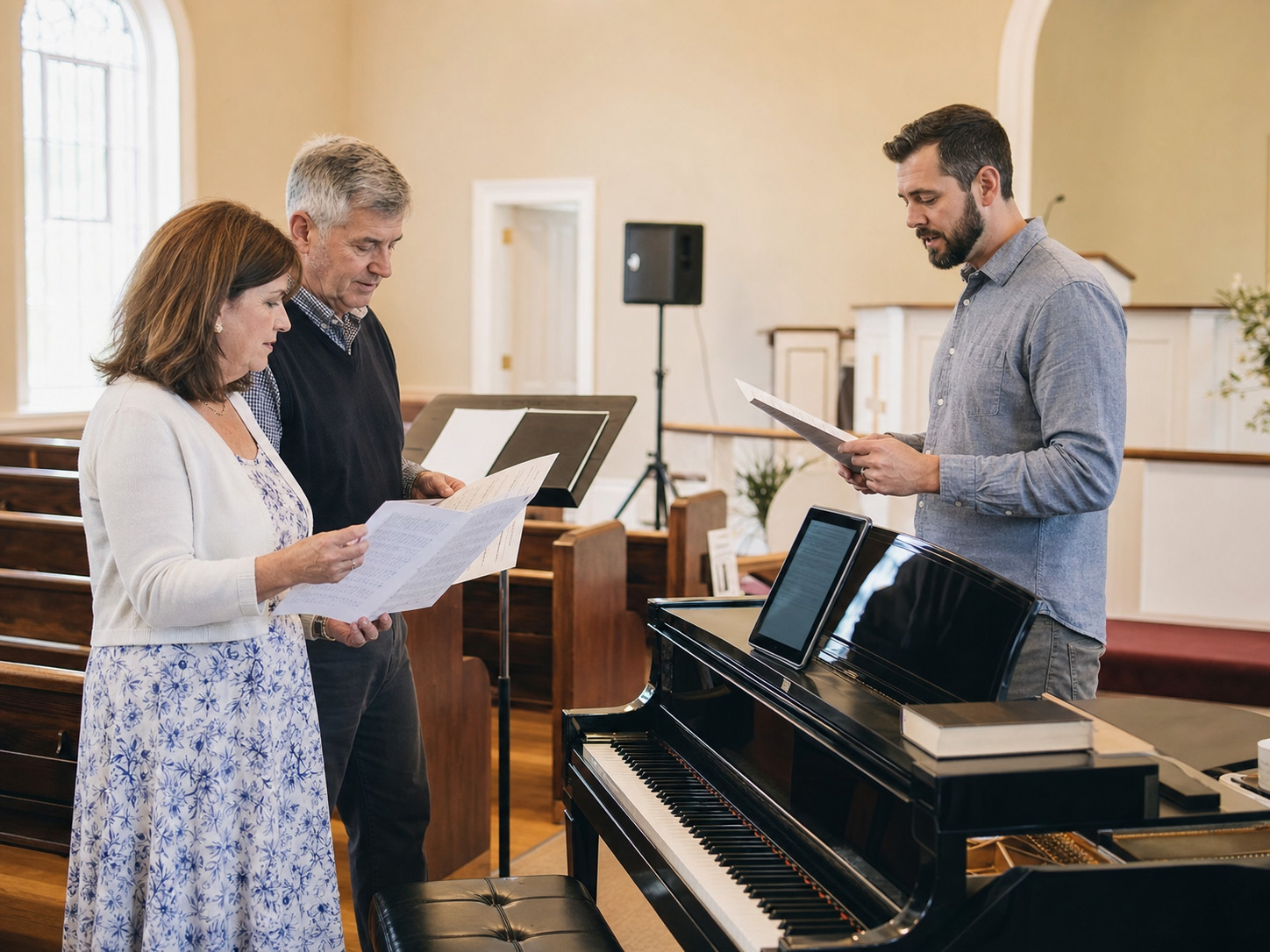
Classic hymns still carry a lot of worship planning because people know how they are supposed to feel. A congregation may not know every verse by memory, but it often recognizes the shape of "Amazing Grace," "Holy, Holy, Holy," "Be Thou My Vision," or "The Old Rugged Cross" before the first phrase is finished.
That familiarity is useful. It also raises the standard for the accompaniment track. The track has to support the words, leave room for breathing, and keep the music steady without making the service feel stiff.
For churches, choirs, soloists, retirement communities, small groups, and volunteer-led services, hymn backing tracks work best when they are chosen for the moment, not only for the title.
Start with the role of the hymn
Before choosing a track, decide what the hymn needs to do in the service. The same song can function differently depending on placement.
A classic hymn might be used as:
- a congregational opening,
- a choir anthem,
- a solo during offering or communion,
- a reflective prayer response,
- a memorial or funeral selection,
- a small group worship song,
- a closing hymn or sending song.
That role affects key, tempo, volume, and whether the track should feel full or restrained. A big arrangement may work beautifully as a sending song but feel too large under prayer. A simple piano-led track may be perfect for a soloist but too quiet for a room that needs congregational energy.
Choose keys people can actually sing
Hymns often look easy on paper because the melodies are familiar. In practice, the key can make or break participation.
For congregational singing, avoid keys that sit too high for untrained voices. For soloists, choose the key around the singer's strongest storytelling range, not around the original recording. For choirs, test the melody and harmony against the singers you actually have that week.
The Spiritrax Classic Hymns Collection is useful because it gathers familiar hymns in commonly sung keys, with accompaniment tracks designed for worship settings, choirs, soloists, and untrained groups. The collection includes tracks such as "Amazing Grace," "Be Thou My Vision," "Blessed Assurance," "Come Thou Fount of Every Blessing," "Holy, Holy, Holy," "The Old Rugged Cross," and "What a Friend We Have in Jesus."
Match the arrangement to the room
The right backing track should feel like it belongs in the room. A small chapel, a large sanctuary, a livestream setup, and a nursing home service may all need different levels of energy.
Use these questions before downloading:
- Will the congregation sing, listen, or both?
- Is a soloist leading from a microphone?
- Does the choir need a steady pulse or more expressive space?
- Will the track be played through a full sound system or a small speaker?
- Does the service need a reflective hymn or a confident closing?
- Is there enough introduction for singers to enter clearly?
If volunteers are running sound, choose clarity over complexity. A track with a clean intro, steady tempo, and predictable ending will usually serve the service better than an arrangement that requires last-second fades or complicated cues.
Good hymn choices for common service moments
Here are practical ways to think about familiar hymns:
| Service moment | Hymn direction | Planning note |
|---|---|---|
| Opening worship | "Holy, Holy, Holy" or "All Creatures of Our God and King" | Choose a key that supports congregational singing. |
| Prayer or reflection | "Be Thou My Vision" or "What Wondrous Love Is This" | Keep the volume low enough for the words to lead. |
| Testimony or invitation | "Amazing Grace" or "Blessed Assurance" | Let the singer phrase naturally; do not rush the text. |
| Funeral or memorial | "The Old Rugged Cross" or "What a Friend We Have in Jesus" | Choose warmth and steadiness over a showy arrangement. |
| Sending or closing | "Come Thou Fount of Every Blessing" | A fuller arrangement can help the service end with confidence. |
This is not a fixed rule. It is a planning frame. The best hymn is the one that fits the scripture, sermon, prayer, community, and singer in front of you.
Rehearsal tips for hymn backing tracks
Even familiar hymns need rehearsal when a track is involved. The track will not wait for a late entrance, a page turn, or a breath that was not planned.
Before the service:
- Download the final MP3 early.
- Test the track through the actual sound system.
- Mark the exact start, verse count, and ending.
- Print or share the same order with the worship leader and sound operator.
- Rehearse the introduction and first entrance.
- Decide whether the congregation will see lyrics, hymnals, or printed verses.
- Keep a backup copy on a second device.
If the hymn will be used in a livestream, video, or recorded service, confirm the licensing requirements for that use separately. Live performance, streaming, recording, and reposting can involve different permissions.
Choirs and soloists need different support
A choir often needs the track to provide tempo, form, and confidence. A soloist often needs the track to leave room for expression. That difference matters.
For choirs, rehearse entrances, verse transitions, and cutoffs. For soloists, rehearse breath points and the ending. For small groups, keep the arrangement simple enough that people can follow without a conductor.
If the singer is new, a guide vocal demo can help them learn melody, phrasing, and entrances before they rehearse with the instrumental track. If the group is experienced, the accompaniment version may be enough.
FAQ: classic hymn backing tracks
What is a hymn backing track?
A hymn backing track is a recorded accompaniment file that supports singing without a live pianist, organist, or full band. It can be used by soloists, choirs, worship leaders, and small groups.
Can a congregation sing with backing tracks?
Yes, if the key, tempo, introduction, and volume are chosen carefully. Congregational singing works best when people know when to enter and can hear both the track and the leader.
Are hymn backing tracks useful for small churches?
Yes. They are especially practical when a church does not have a regular accompanist, needs consistent rehearsal support, or wants a dependable track for a special service.
What hymns are in the Spiritrax Classic Hymns Collection?
The collection includes twelve familiar Christian hymns, including "Amazing Grace," "Be Thou My Vision," "Blessed Assurance," "Come Thou Fount of Every Blessing," "Holy, Holy, Holy," "The Old Rugged Cross," and others.
Do I need to check licensing?
For live use, venue, church, CCLI, streaming, and recording requirements can vary. Confirm the permissions that apply to your service, especially if it will be streamed, filmed, archived, or reposted.
A steady track helps the words lead
Classic hymns do not need to be overproduced to be useful. They need to be singable, clear, and placed with care.
Start with the service moment, choose a comfortable key, rehearse the entrance and ending, and use the backing track to support the words rather than compete with them. For a ready-made starting point, the Spiritrax Classic Hymns Collection gives worship leaders a practical set of familiar hymn accompaniment tracks for services, choirs, soloists, and small groups.
Download the Classic Hymns Collection for familiar accompaniment tracks, sheet music, and singable arrangements for services, choirs, soloists, and small groups.
Browse Classic Hymns