
Classic Hymns Need a Plan for Solo, Choir, and Congregation
Worship Music & Hymn Resources
By Spiritrax Content Studio · July 7, 2026
Updated July 7, 2026
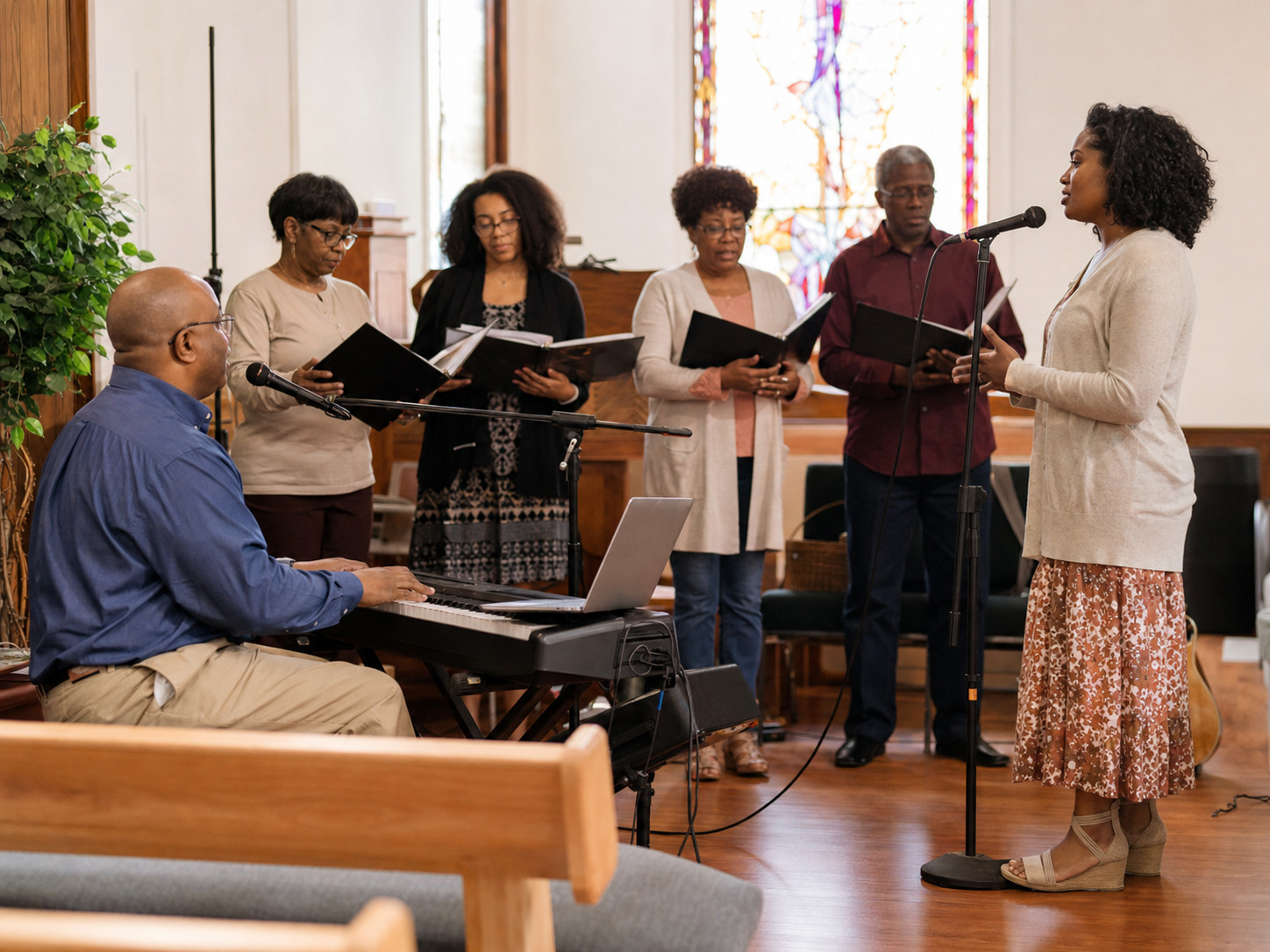
A classic hymn may be familiar to almost everyone in the room, but that does not mean one track will serve every use the same way.
A soloist needs a key that lets the text speak clearly. A choir needs entrances and cutoffs the group can trust. A congregation needs a tempo and range that feel singable without rehearsal. The hymn may be the same, but the accompaniment plan should change with the setting.
That is where a simple use-case decision can make worship music feel steadier.
Start with the way the hymn will be led
Before choosing a backing track, decide who is carrying the hymn:
| Setting | What matters most |
|---|---|
| Soloist | Key, breath, phrasing, and a clear ending |
| Choir | Entrances, cutoffs, balance, and rehearsal confidence |
| Congregation | Singable range, steady tempo, and familiar shape |
| Small group | Simplicity, portability, and easy playback |
| Service underscore | Low volume, length control, and space for spoken words |
The Spiritrax Classic Hymns Collection is useful because it gives worship leaders a practical starting set of familiar hymn accompaniments instead of forcing every service to begin with a separate search.
For a soloist, protect the text first
A hymn solo works best when the singer can communicate the words without fighting the track. The highest note is not the only question. Listen for where the singer breathes, where the phrase needs time, and whether the ending feels settled.
Check these details before the service:
- Is the key comfortable under pressure?
- Does the intro give the singer enough time to enter?
- Can the singer hear the track clearly from the microphone position?
- Does the arrangement leave room for the text?
- Is the ending obvious enough for the sound operator?
If the soloist sounds tense, the congregation will feel it even when the notes are correct.
For a choir, rehearse the entrances and endings
Choirs often know the hymn but still need the track to keep the group together. A backing track can help with consistency, especially when the accompanist is unavailable or rehearsal time is short.
Use rehearsal time for the practical moments:
- first entrance;
- verse transitions;
- unison-to-harmony changes;
- cutoffs;
- final consonants;
- the handoff between spoken service elements and music.
The track should support the choir's listening. It should not become so loud that the group stops hearing itself.
For congregational singing, keep the room in mind
Congregations do not sing like soloists. A key that is exciting for one voice may be uncomfortable for mixed voices. A tempo that feels expressive in rehearsal may feel too slow once the room is standing.
For congregational use, favor:
- familiar hymn shape;
- a moderate tempo;
- clear introductions;
- a comfortable range;
- volume that supports rather than covers the room.
If the congregation is not expected to sing, say that clearly in the service order. A solo, choir anthem, or meditation moment can be meaningful without asking the whole room to join.
Match the hymn to the service moment
Classic hymns can serve many parts of worship, but placement changes the track choice.
| Service moment | Helpful approach |
|---|---|
| Prelude | Gentle instrumental or familiar hymn at low volume |
| Call to worship | Short, clear, and not too elaborate |
| Offering or reflection | Arrangement with space and steady pacing |
| Choir anthem | Enough structure for group entrances and cutoffs |
| Closing hymn | Stronger tempo and confident final cadence |
When the service moment is quiet or pastoral, avoid a track that forces a big finish. When the service needs a confident sending song, avoid an arrangement that fades before the room has resolved.
Keep playback simple for small churches
Many Spiritrax customers are working with volunteer singers, small churches, youth groups, or worship teams without a full band every week. In that setting, the track plan should reduce stress.
Prepare:
- the final MP3 download on the device that will play it;
- a backup copy;
- printed or shared service order notes;
- start and stop cues;
- microphone and speaker check;
- a clear decision about whether the room sings, listens, or follows a soloist.
Simple preparation often matters more than a complicated arrangement.
When the collection is the better starting point
If one service needs a single song, an individual hymn track may be enough. If your church, school, studio, or group regularly needs familiar hymn accompaniment, a collection can save planning time and support better service flow.
The Classic Hymns category and collection path are strongest when you need several reliable options for:
- Sunday worship;
- choir rehearsal;
- solo preparation;
- small-group devotionals;
- memorial or pastoral services;
- nursing home or community worship;
- holiday-adjacent services that need familiar music.
The value is not only having more songs. It is having a practical library ready when the service plan changes.
FAQ: classic hymn backing tracks
Should a soloist and congregation use the same key?
Not always. A solo key should serve the singer's voice. A congregational key should sit comfortably for mixed voices. If the congregation is expected to sing, choose the room over the soloist's dramatic range.
Can a choir rehearse with a backing track?
Yes. A backing track can help a choir rehearse entrances, tempo, verse transitions, and endings. Keep the volume low enough that singers still listen to each other.
Are classic hymns better as individual tracks or a collection?
Use an individual track when you need one specific hymn. Use a collection when your church, studio, choir, or group needs repeated access to familiar hymn accompaniment across many services.
Should broad informational hymn posts include ads?
For this article, no. The reader is likely planning a worship service or rehearsal, and a mid-article ad would distract from the high-trust planning and hymn-discovery path.
The takeaway
The hymn may be familiar, but the use case still matters.
Choose the track around the singer, choir, congregation, and service moment. Then keep the playback simple enough that the music supports worship instead of becoming another thing the room has to manage.
Use the Spiritrax Classic Hymns Collection as a practical starting point for soloists, choirs, small groups, and worship services that need familiar hymn accompaniment.
Browse Classic Hymns