
Church Anniversary Music Should Carry Memory Into Mission
Planning Guides
By Spiritrax Content Studio · August 10, 2026
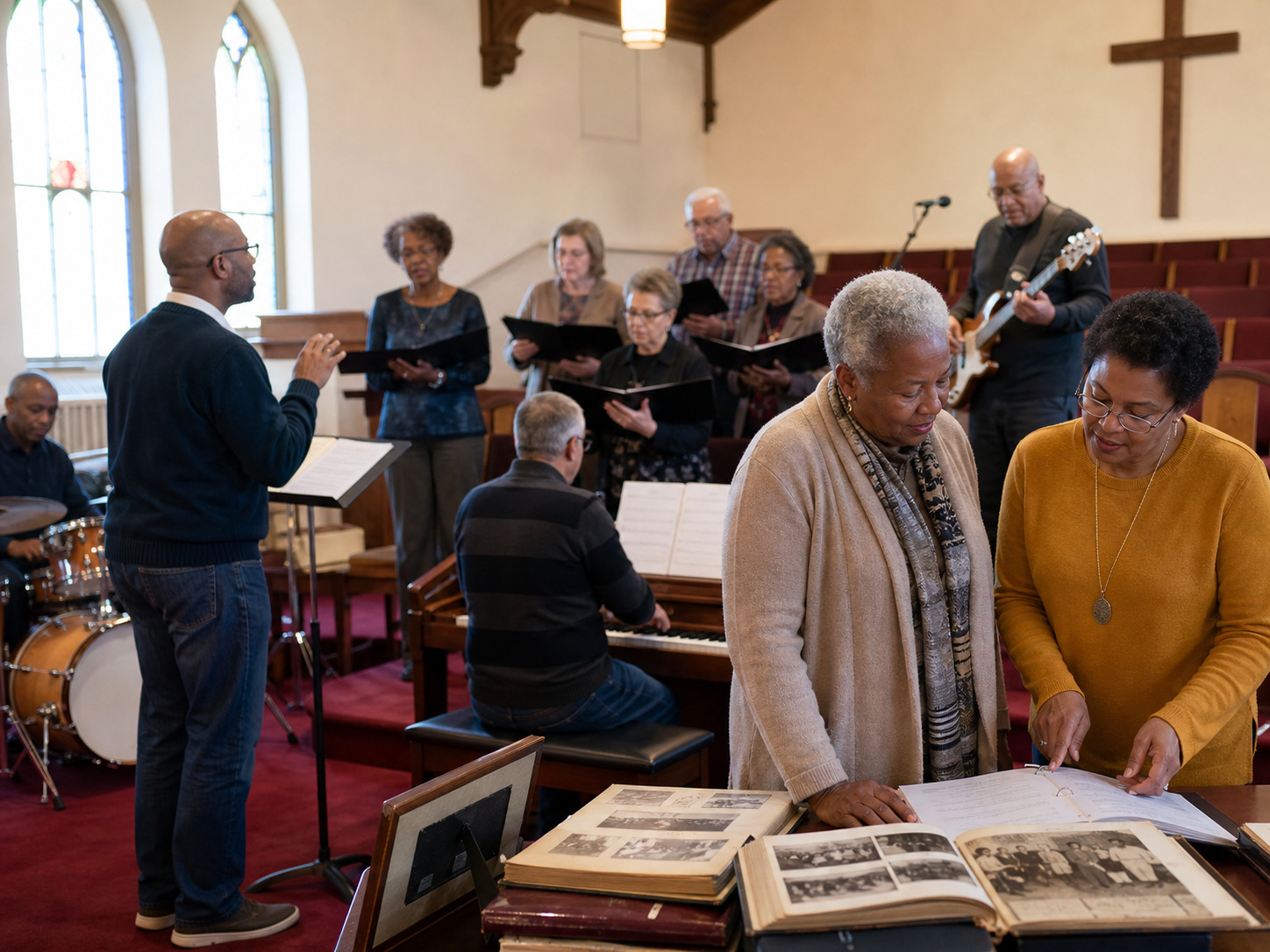
A church anniversary music plan should help the congregation remember faithfully, give thanks honestly, welcome people across generations, and sing toward the community's next season together.
The service does not need to turn every memory into a performance. It needs a clear arc, music people can carry, room for stories and prayer, and reliable cues for the volunteers leading the gathering.
Backing tracks can support that plan when the choir is small, instrumentalists are limited, guest singers have little rehearsal time, or the service needs consistent accompaniment across several musical styles.
What music works for a church anniversary service?
Choose music for four service jobs:
- Gathering: welcome current members, returning guests, families, and friends.
- Remembering: make room for the people, ministries, sacrifices, and prayers that shaped the congregation.
- Thanksgiving: give the room a shared song of gratitude.
- Sending: connect the anniversary to faithful work ahead rather than ending in nostalgia.
A familiar hymn, choir selection, solo, instrumental prelude, congregational refrain, or intentional silence can serve one of those jobs. Popularity matters less than placement, key, participation, and meaning for the local community.
Begin with the story the service can support
Anniversary planning often collects more history than one service can hold.
Ask a small planning group to name:
- the milestone being marked;
- the people and ministries that should be honored;
- difficult seasons that should not be erased;
- the congregation's present character;
- returning guests or former leaders who may participate;
- and the future commitment the service should name.
The United Methodist Church's Discipleship Ministries anniversary planning resource recommends a meaningful, contextual service rather than a generic celebration. Whatever the congregation's tradition, that principle is useful: let local history shape the service without asking one morning to tell every story.
Choose two or three clear themes, then let music support them.
Build an arc from memory to mission
A practical anniversary service can move through five musical moments.
| Service moment | Music's job | Planning question |
|---|---|---|
| Arrival | Welcome people into a shared story | Can guests talk, greet, and find their place? |
| Opening | Give the room one voice | Is the first entrance and refrain easy to join? |
| Remembering | Support testimony, names, photos, or prayer | Would music clarify the moment or crowd it? |
| Thanksgiving | Let the congregation respond together | Is the key comfortable across generations? |
| Sending | Turn gratitude toward the future | Does the ending feel like a next step, not a museum closing? |
This is a planning frame, not a required order of worship. Adapt it to the congregation's tradition, leadership, and pastoral purpose.
Choose one song the whole room can carry
An anniversary may bring together longtime members, children of former members, returning guests, newer families, choir alumni, and people who have not sung in the room for years.
Give them one early point of participation that does not depend on knowing the local arrangement.
That may be:
- a familiar hymn verse;
- a repeated refrain;
- a call and response;
- a solo verse followed by congregational singing;
- or a short musical phrase taught before the service begins.
The Spiritrax Classic Hymns Collection offers familiar accompaniment options in practical keys. Select a piece because its text and musical range fit the community's story and the service moment, not only because the title is widely known.
Use history without turning the service into a slideshow
Photos, dates, names, and artifacts can help people remember, but music should not be forced under every historical detail.
Decide which elements need:
- silence;
- spoken testimony;
- a short instrumental bed;
- a complete solo or choir selection;
- or congregational response.
If photos are shown, rehearse the exact sequence and duration. Do not choose a four-minute track for a ninety-second presentation unless the ending has been planned. Decide whether the music will finish naturally, fade at a named point, or continue into prayer.
For a reading of names or a memorial moment, protect speech intelligibility and emotional space. A quiet accompaniment may help, but silence may serve better. Pastoral leadership should make that decision with sensitivity to the people and history involved.
Invite former musicians with a clear role
Choir alumni, former worship leaders, guest soloists, and past instrumentalists can make an anniversary feel connected across time. They also need a more exact plan than “join us on Sunday.”
Send each guest:
- the song title and version;
- key;
- verse, chorus, repeat, and ending plan;
- guide-vocal or rehearsal reference when available;
- accompaniment-only track for final preparation;
- arrival and rehearsal time;
- dress guidance if applicable;
- microphone or instrument plan;
- and the name of the person answering musical questions.
If a guest cannot attend rehearsal, give that person a role the team can support safely. A familiar refrain or a clearly cued solo verse is more dependable than an arrangement that relies on untested harmony, movement, or live tempo changes.
Pick keys for the gathered voices
An anniversary service is not the moment to discover that the best-known recording sits too high for the congregation or too low for the guest soloist.
Test:
- the leader's complete range;
- the highest repeated congregational note;
- the lowest sustained phrase;
- the choir's strongest shared register;
- the first pitch after any spoken introduction;
- and the final verse or chorus, when voices are most tired.
If a soloist leads while the congregation listens, choose the soloist's key. If the room is expected to sing, choose a centered congregational key and let the leader serve that range.
Spiritrax tracks are offered in different keys where available, and custom backing tracks can support approved key, tempo, cut, cue, lead-in, or arrangement needs for a specific service plan.
Let spoken memories remain understandable
Anniversary services often include testimonies, recognitions, guest greetings, or a reading of the congregation's history.
If music plays underneath speech:
- use a light, predictable section;
- keep rhythm and melody from competing with words;
- test the actual speaker and microphone;
- name the level change on the cue sheet;
- and plan how the music stops or continues.
Do not ask the operator to “keep it under the speaker” without a rehearsed level and ending. The person speaking may pause, shorten a story, or add a name. Give the operator a clear recovery instruction, such as finishing the current phrase and fading on a visual cue.
Rehearse transitions, not only songs
The most fragile anniversary moments often happen between prepared elements.
Run these handoffs:
- welcome into opening song;
- historical reading into prayer;
- photo or video presentation into congregational response;
- guest introduction into solo;
- testimony into choir selection;
- offering or recognition into thanksgiving hymn;
- and final charge into the sending song.
For each handoff, record the last spoken words, who gives the cue, what the operator hears, what the singer hears, and how the next person enters.
If applause is likely, decide whether the next track waits, begins under applause, or starts after a spoken reset. Do not leave that choice to the moment.
Prepare one shared anniversary music folder
Keep the service from becoming a file search.
Create one folder with:
- final accompaniment tracks;
- guide vocals clearly marked for rehearsal only;
- instrumental prelude or presentation music;
- the service order;
- lyric or hymnal references;
- guest-participant notes;
- the operator cue sheet;
- and a backup copy for a second tested device.
Number files in service order. Remove old exports from the active folder. Download everything before the service and confirm that the playback path works without depending on a personal login or unstable connection.
Write cues a volunteer can follow
For every audio item, list:
| Cue field | Example of useful detail |
|---|---|
| Service position | After the second testimony |
| File | A07_Thanksgiving_Hymn_Performance |
| Trigger | Pastor says, “We give thanks together” |
| First entrance | Soloist enters after four measures |
| Participation | Congregation joins on verse two |
| Level note | Lower under spoken invitation |
| Ending | Full button; hold applause before next welcome |
| Backup | Same filename on second device |
Observable cues reduce stress for volunteers and make rehearsals repeatable.
Decide whether celebration needs restraint
A milestone can be joyful without being loud at every point.
Use contrast:
- conversation-friendly arrival music;
- a confident opening;
- quiet space for remembrance;
- a shared song of gratitude;
- and a clear, hopeful sending.
This shape makes the larger moments feel earned and protects people whose memories of the church include grief, conflict, change, or loss as well as celebration.
Church anniversary music checklist
- Name the milestone, themes, and future commitment.
- Give gathering, remembering, thanksgiving, and sending distinct musical jobs.
- Choose one early song or refrain the whole room can join.
- Match keys to the actual singers and congregation.
- Give former musicians exact music and rehearsal information.
- Rehearse photos, testimonies, recognitions, and memorial moments with their real timing.
- Keep speech clear when music plays underneath.
- Run the transitions before and after every musical item.
- Download, number, and back up all final files.
- Write observable triggers, entrances, level changes, and endings.
- Confirm any separate permissions needed for lyrics, recording, livestreaming, or reposting.
FAQ: church anniversary worship music
What songs should be used for a church anniversary?
Choose songs that serve the local service arc: welcome, remembrance, thanksgiving, and sending. Familiar hymns, congregational refrains, choir selections, solos, instrumentals, and silence can all be appropriate when their text, key, placement, and participation plan fit the community.
Should the service use only old favorite hymns?
No. Include enough familiar material to honor shared memory and support participation, then connect it with music that represents the congregation's present life and future mission. Avoid turning the service into either nostalgia only or a showcase of novelty.
How can former choir members participate with limited rehearsal?
Give them one clearly defined selection or refrain, the exact key and form, a rehearsal reference, an accompaniment-only track, a cue, and a realistic arrival time. Keep the musical role within what the group can verify before the service.
Can backing tracks play under church-history readings?
Yes, when a quiet section supports the words and the level, duration, fade, and contingency are rehearsed. Silence may be more appropriate for names, grief, or especially important testimony.
Should an anniversary service be livestreamed with downloaded music?
Livestreaming, lyric display, recording, public performance, and reposting may involve separate permissions. Confirm the permissions that apply to the songs, sound recordings, lyrics, venue, and platform before the service.
The takeaway
Church anniversary music should help a congregation hear its story, sing its gratitude, and move toward its next faithful season.
Choose a clear service arc, give every piece one job, make participation comfortable across generations, prepare guests carefully, protect spoken memories, and rehearse the handoffs. Reliable accompaniment supports the celebration best when it helps the community gather—not when it asks the community to admire the production.
Give current members, returning guests, and former musicians a familiar musical path through gathering, remembrance, thanksgiving, and sending with downloadable classic hymn accompaniment.
Explore the Classic Hymns Collection