
Build a Bible Study Worship Set People Can Actually Join
Planning Guides
By Spiritrax Content Studio · July 15, 2026
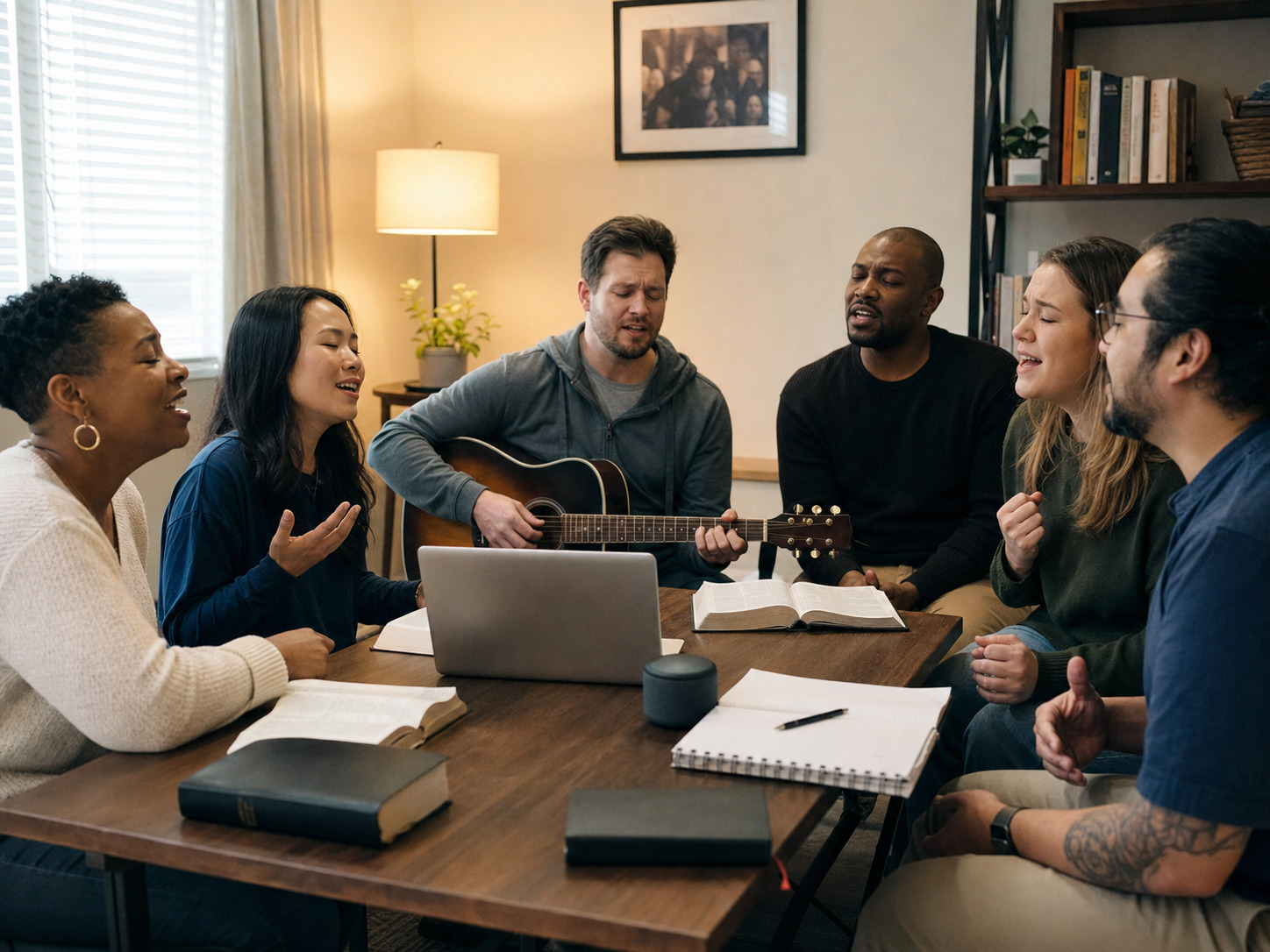
Worship in a Bible study does not need to sound like a Sunday stage.
It needs to help the people around the table take part.
A familiar song, a comfortable key, and a simple accompaniment track can give a small group enough support to sing without asking one person to become a full worship band. The plan works best when the music fits the room, the leader knows the cues, and nobody feels pressured to perform.
Begin with the purpose of the gathering
Name what the music needs to do before choosing a song.
The group may need:
- a gentle opening that helps people settle;
- one familiar song connected to the passage;
- a short response after prayer;
- quiet reflection before discussion;
- a closing song that sends people out together.
Not every Bible study needs a three-song set. One well-chosen song may be enough.
| Gathering moment | Helpful music choice |
|---|---|
| People arriving | Instrumental or very familiar opening song |
| Before the study | One singable song tied to the theme |
| Prayer response | Short, calm arrangement with a clear ending |
| Closing | Familiar chorus or hymn the group can join quickly |
The music should support the study rather than delay it or make the transition feel formal.
Choose familiarity before variety
Small groups often include confident singers, quiet singers, new believers, visitors, and people who have never sung outside a larger congregation.
Familiarity lowers the pressure.
Choose a song with:
- a melody people can follow after one hearing;
- a repeated chorus or predictable structure;
- words that fit the passage or prayer focus;
- a range that ordinary mixed voices can manage;
- an arrangement that does not require a dramatic soloist.
If the group does not know the song, play a guide vocal or short reference before asking everyone to sing. Then move to the instrumental accompaniment when the entrance and melody feel secure.
Spiritrax offers contemporary worship backing tracks that can support singers, worship leaders, youth groups, and small Bible studies without requiring a live band.
Pick a key for the people at the table
The recorded artist's key is not automatically the small group's key.
Test the highest part of the chorus with the person who will lead. Then ask whether the rest of the group can join without straining or dropping out. A comfortable communal key is usually more useful than a version that showcases one voice.
Before choosing a track, confirm:
- who starts the song;
- whether the group is expected to sing every verse;
- where the highest note sits;
- whether the opening note is easy to hear;
- whether another available key feels more natural.
If several keys are available, let the actual room decide. A quick rehearsal with two people is more useful than guessing from the song title.
Keep the arrangement smaller than the gathering
A full arrangement can be beautiful and still feel too large for seven people in a living room.
Listen for space. The leader's voice and the group's singing should remain present. If the track is dense, lower the volume instead of asking everyone to compete with it.
For an intimate setting, favor:
- clear melody and harmony;
- a moderate, steady tempo;
- an introduction that is easy to count;
- a predictable song form;
- a clean ending;
- dynamics that leave room for prayer and conversation.
The accompaniment is there to support participation. It does not need to reproduce the scale of a concert or a large worship service.
Build a two-song plan that can shrink to one
If the group wants more than one song, choose a simple sequence:
- Gathering song: familiar, welcoming, and easy to enter.
- Response song: connected to the study theme, prayer, or closing reflection.
Prepare both, but decide in advance which one can be removed if discussion runs long or the group needs more time for prayer.
That decision protects the gathering from a rushed ending. It also helps the leader avoid forcing the second song simply because it was planned.
Browse Spiritrax worship accompaniment collections when the group needs a small set of related material rather than an isolated track.
Make the first cue easy to follow
The opening determines whether people join or watch.
Rehearse the first twenty seconds:
- Open the exact final file.
- Listen through the introduction.
- Identify the first vocal note.
- Decide whether the leader gives a spoken invitation.
- Sing the first line.
- Check whether the track volume supports the group.
If the introduction is long, tell people when to expect the entrance. If it is short, have lyrics ready before playback begins.
The leader should not be searching a phone or laptop while asking the group to sing. Open the track first, place the device within easy reach, and agree on the start cue.
Use lyrics without making the room feel technical
People need the words, but the delivery can stay simple.
Depending on the group, use:
- printed lyric sheets;
- a legally prepared slide on a nearby screen;
- the group's normal licensed lyrics resource;
- a familiar hymnbook or songbook when appropriate.
Handle any needed song-use or lyric permissions through the church or group's normal licensing process. A backing-track purchase supplies the accompaniment recording; it does not replace any separate permissions the gathering may need for lyrics, projection, streaming, recording, or public use.
Keep devices from becoming a distraction. Silence notifications, avoid advertisements or autoplay, and download the final MP3 before the gathering.
Prepare a quiet playback setup
A small group usually needs less equipment than the leader expects.
Use the actual room to decide whether the laptop, tablet, phone, television, or compact speaker is enough. Test from the farthest chair and make sure the accompaniment is clear without becoming the loudest presence in the room.
Use this checklist:
- download the final file;
- charge the playback device;
- silence calls and alerts;
- test the connection offline;
- set the volume before people arrive;
- keep a second copy on another device;
- know how to pause or stop quickly;
- remove old versions from the active playlist.
For a broader setup walkthrough, see the Spiritrax practical worship backing-track guide.
Let the leader remain a participant
The person pressing play should still be able to pray, listen, and sing with the group.
Keep the playback plan light enough that it does not turn the leader into a technician for the whole meeting. If another trusted person can start and stop the file, explain the cue before the gathering. If not, place the controls where the leader can reach them without interrupting the song.
It is also fine to stop using the track if the group begins singing comfortably on its own. The accompaniment supports the gathering; it does not control it.
FAQ: worship music for Bible studies
Can a small Bible study use worship backing tracks?
Yes. A clear accompaniment track can support group singing when no pianist or worship band is available, especially when the song, key, introduction, and volume are prepared for the people present.
How many songs should a Bible study include?
There is no required number. One familiar song may serve the gathering better than a long set. If two songs are planned, know which one can be removed when discussion or prayer needs more time.
Should the group use a guide vocal?
A guide vocal can help the leader learn the melody and entrance. For the gathering itself, the instrumental track usually leaves more room for the leader and group to sing.
What kind of speaker does a home Bible study need?
Use the smallest setup that plays clearly for the whole room. Test the actual space, keep the volume below the live voices, and avoid relying on Wi-Fi or streaming during the gathering.
What if nobody wants to lead alone?
Ask two people to begin together, choose an especially familiar song, and keep the first cue simple. Shared leadership can feel more welcoming than putting one person on the spot.
The takeaway
Small-group worship works when people know how to join. Choose one familiar song, test a communal key, use a clear and modest arrangement, rehearse the first cue, download the file, and leave room for the gathering to change. The best track plan makes the music easier to enter and the people around the table more important than the playback.
Choose clear, singable accompaniment for a home group, prayer gathering, or Bible study. Preview Spiritrax contemporary worship tracks and find a key and arrangement that help people participate without turning the gathering into a performance.
Browse Small-Group Worship Tracks