
Be Thou My Vision Needs a Key the Whole Room Can Carry
Worship Music & Hymn Resources
By Spiritrax Content Studio · August 3, 2026
Updated August 3, 2026
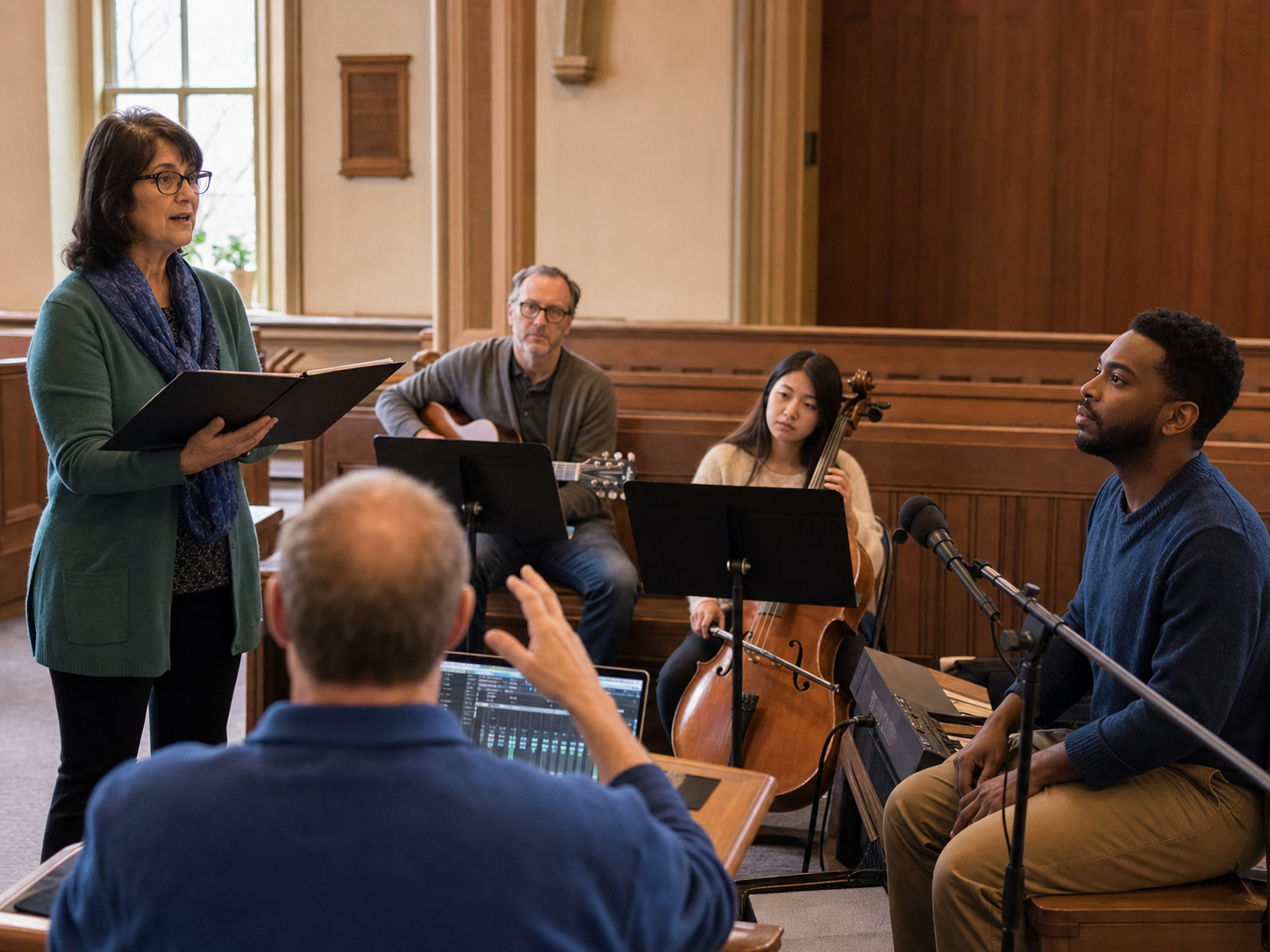
“Be Thou My Vision” works best when the arrangement, key, and service moment support the people who are actually singing. A beautiful track can still feel too high for the soloist, too low for the congregation, or too full for a quiet moment of reflection.
The practical choice begins with three questions: Who is leading? Who is expected to join? What should the hymn do in this service?
Answer those before choosing a key or rehearsing the final arrangement.
Choose the service role first
The same hymn can carry a very different musical responsibility from one service to another.
It may serve as:
- a congregational hymn;
- a solo or small-ensemble feature;
- a gathering or prelude selection;
- an offertory or reflective response;
- a memorial or remembrance selection;
- a closing piece that sends the room out calmly.
The role changes how much space, projection, and rhythmic definition the arrangement needs. A soloist can shape a verse with more personal rubato. A congregation usually benefits from predictable phrases, a clear tempo, and enough lead from the singer or worship team to enter together.
Decide whether the room is listening or joining. That one distinction prevents many key, tempo, and microphone problems.
Start with the final phrase, not the first verse
The opening of a familiar hymn can feel comfortable even when the highest or most sustained phrase later in the song does not.
When testing a key, ask the singer to rehearse:
- the first complete phrase;
- the highest phrase in the planned verses;
- the final lines after singing the song from the beginning;
- any verse that carries the most emotional weight in the service.
Choose the key that remains steady at the end—not merely the one that sounds impressive in the first thirty seconds.
For congregational use, listen beyond the lead singer. A key that flatters one solo voice may leave much of the room watching instead of singing. The leader should be secure enough to guide the melody without pulling every phrase toward the top or bottom of the range.
Compare the available keys with real voices
The Spiritrax “Be Thou My Vision” backing track is available in D, F, A, and C major. Its Irish/Celtic arrangement uses a 3/4 waltz feel and includes all four verses.
That gives a singer or worship team several practical starting points, but the key names alone do not tell you which one is right.
Use this rehearsal process:
- Preview a comfortable candidate key.
- Sing the complete final verse, not only the opening.
- Test the track through the actual microphone and speaker setup.
- Ask whether the congregation will join or listen.
- Repeat the same passage in the next likely key.
- Choose the version that supports clear words, steady breath, and an unforced tone.
Do not assume that the original key is automatically the best key. The product page identifies D major as the original key, but the people and purpose in the room should make the final decision.
Let the 3/4 pulse move without rushing
A 3/4 hymn arrangement needs flow. If the tempo drags, each line can feel heavier than the text needs. If the tempo rushes, singers lose the time required to shape consonants, breathe together, and finish longer phrases.
During rehearsal, mark the pulse lightly before anyone sings. Let the worship leader or soloist feel where each phrase begins and where the longer notes release. Then sing one verse without stopping.
Listen for:
- breaths that happen in the same place;
- entrances that land confidently on the pulse;
- final consonants that do not arrive late;
- a last line that has room to finish;
- accompaniment that supports rather than crowds the voice.
If the service moment is reflective, calm does not have to mean slow. A steady pulse can create more peace than a tempo that keeps losing momentum.
Plan all four verses before rehearsal
Because the Spiritrax arrangement includes all four verses, decide the verse plan in advance.
Options include:
- all verses led by a soloist;
- first verse solo, later verses joined by the congregation;
- alternating solo and ensemble leadership;
- selected verses for a shorter service moment;
- instrumental opening followed by the planned vocal entrance.
Write the plan on the worship order and share it with the playback operator. If you are not using every verse, rehearse the exact stopping point rather than fading the file unexpectedly in the service.
For a congregation, make the invitation to join clear. The room should not have to guess whether the first verse is a solo or whether participation begins immediately.
Match the arrangement to the room
The product arrangement includes Celtic colors such as bagpipes, low Irish whistle, dulcimer, and bodhrán. Those textures can give the hymn a distinctive character, but the playback level and vocal balance still need to suit the space.
In a small chapel, start lower than you think you need. In a larger sanctuary, check whether the rhythm remains clear at the back without making the accompaniment overpower the words near the front.
Test from more than one seat:
| Listening position | What to check |
|---|---|
| Singer’s position | Can the leader hear the pulse and pitch clearly? |
| Front seating | Are the words still more present than the track? |
| Center of the room | Does the melody feel supported and balanced? |
| Back of the room | Is the pulse clear without excessive volume? |
If the room has live musicians joining the track, rehearse that exact combination. An acoustic instrument, choir, or additional vocalist can change the balance even when the playback level has not moved.
Build a simple rehearsal path
A dependable rehearsal does not need to be long. It needs to answer the right questions in the right order.
First rehearsal: voice and key
- Compare the likely keys.
- Sing the highest and final phrases.
- Choose the complete verse plan.
- Decide who leads each verse.
Second rehearsal: track and structure
- Confirm the exact downloaded file.
- Practice the opening cue.
- Rehearse transitions between solo and group singing.
- Mark the planned ending or stop.
Room check: sound and participation
- Use the actual microphone and playback system.
- Check the track from several seats.
- Confirm that the lead voice remains clear.
- Rehearse the operator cue and backup plan.
If the team is using guide material during preparation, keep the title and key consistent across every file. The guide-vocal and accompaniment-track rehearsal plan explains how to move singers from learning support to the final performance track.
Avoid four common problems
Choosing the key from habit
“We always sing it in this key” is not a voice check. Test the current singer, current verse plan, and current room.
Rehearsing only the first verse
The last verse arrives after the voice has already been working. Rehearse it in context before deciding that the key is comfortable.
Leaving the congregation’s role unclear
If people are expected to join, tell them when. Use a confident lead and a predictable entrance.
Treating the track as the whole plan
The file cannot decide the verse order, microphone balance, vocal cue, or pastoral placement. Those choices still belong to the service team.
A Sunday-morning checklist
- The correct title and key are loaded.
- The full file plays on the primary device.
- A local backup is available.
- The singer has rehearsed the final verse.
- The verse plan matches the worship order.
- The congregation’s entry point is clear.
- The microphone and playback level were tested together.
- The operator knows the spoken cue and ending.
FAQ: using “Be Thou My Vision” with a backing track
What key should I choose?
Choose the key that lets the lead singer complete the highest and final phrases with a steady, unforced tone. If the congregation will join, favor a key the room can carry rather than one chosen only for a soloist’s best notes.
Can the track work for congregational singing?
Yes. The Spiritrax product description identifies the arrangement as suitable for congregational hymn use as well as performance and general praise. Rehearse a clear vocal lead, verse plan, and participation cue.
Does the arrangement include every verse?
The current product page states that the arrangement includes all four verses. Confirm the plan with the singer and operator so the service does not end or fade by accident.
What should I test in the sanctuary?
Test the key, lead-vocal clarity, 3/4 pulse, verse transitions, opening cue, ending, and playback balance from several listening positions.
Should I include every verse?
Use the number of verses that serves the specific service moment, then rehearse that exact structure. Avoid making the decision during live playback.
Let the hymn fit the people in front of you
A thoughtful “Be Thou My Vision” plan is not built from the key name alone. It connects the singer’s complete range, the congregation’s role, the 3/4 movement, the verse plan, the room, and the operator cue.
Choose the key after singing the ending. Choose the structure before the service. Then let the track support the hymn without becoming the center of it.
Preview the Irish/Celtic arrangement in D, F, A, or C major, then choose the key that supports the complete final phrase, the planned verses, and the people singing.
Preview Be Thou My Vision