
Give the Gloria Refrain in ‘Angels We Have Heard on High’ a Clear Cue
Holiday & Special Occasion Music
By Spiritrax Content Studio · September 21, 2026
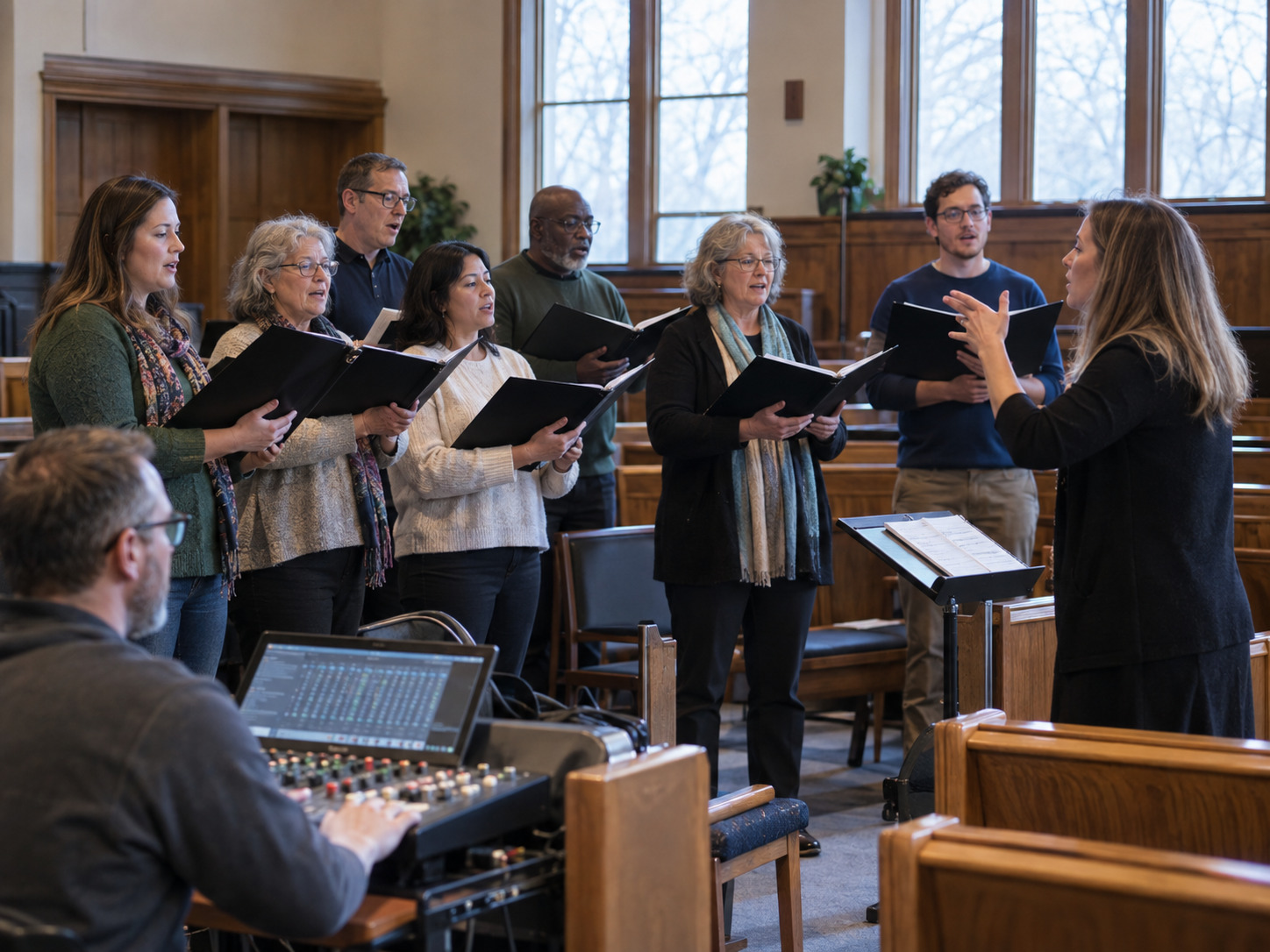
“Angels We Have Heard on High” often feels secure until the room reaches “Gloria.” The practical backing-track question is whether the singers can hear the refrain's entrance, sustain its long line, and return to the next verse together. Pick a comfortable key, check the exact arrangement's verse and interlude structure, and rehearse each transition—not just the opening.
Spiritrax lists a contemporary “Angels We Have Heard on High” accompaniment with acoustic guitar, bass, drums, strings, and electric guitar. Its catalog shows keys including F, A, D-flat, and E; the Christmas Collection Vol. 1 lists its version in F. Preview the exact version you intend to use rather than assuming the collection and a separately selected key will sound identical.
Count the path into “Gloria”
The refrain is the place where an otherwise confident congregation or small choir can spread apart. Some singers breathe early; others wait for the accompaniment to announce the return. Play the track once without singing and mark the last dependable instrumental cue before the refrain. Then have the leader give one consistent breath or visible gesture at that point.
Run the handoff in a short loop: final line of the verse, instrumental turn, first “Gloria,” and the end of the refrain. Do not start every rehearsal from the beginning. The same small passage will show whether the problem is the key, the cue, the tempo, or simply an unclear leader.
Choose the key for the whole group
Do not choose a key from the first verse alone. Sing the refrain at full length, then immediately try the next verse. A key that makes the opening easy can leave the long refrain effortful for a volunteer choir; a key chosen for a soloist may not suit a congregation.
Ask the leader and singers to note where breath is actually needed. If the long line cannot be sustained comfortably, plan a shared breath that preserves the phrase rather than asking people to force it. Try the available preview in the room with the actual singers before settling the version. If you need a different key, verify that the selected product offers it and rehearse that exact file.
Map verses, interludes, and the ending
Before service or a concert, write a simple track map:
| Moment | Leader's cue | Playback check |
|---|---|---|
| Opening | Who gives the first breath? | How many audible beats or bars precede the singing? |
| Refrain | Who releases the group into “Gloria”? | Which instrument marks the entrance? |
| Next verse | Who signals the return? | Is there an interlude or immediate pickup? |
| Ending | Who releases the final note? | Does the file stop, decay, or continue? |
That map matters more than a generic instruction to “follow the track.” If you are using the song instrumentally, the same checkpoints can guide a reader, movement leader, or sound volunteer through the transitions without adding a vocal cue that is not there.
Keep the mix helpful, not overpowering
Listen from the middle and back of the room while the group sings the actual refrain. The accompaniment should give rhythm and harmonic confidence without swallowing the words. If the entry feels late, first test the audible cue and leader's gesture; turning the entire track up may make the refrain less clear.
Give the playback volunteer the approved filename and key, the start signal, any planned level change, and the ending cue. Keep alternate keys and practice previews outside the service playlist. A preview's audio watermark is not the downloaded accompaniment; Spiritrax notes this distinction on the collection page. Check the final purchased file itself before the event.
A short rehearsal sequence
- Hear the exact track once and count the opening and interludes.
- Speak or lightly sing the verse-to-refrain transition with the leader's cue.
- Sing the complete refrain in the chosen key, noting a shared breath if needed.
- Continue into the next verse rather than stopping at the impressive phrase.
- Run the ending and leave the intended silence before the next service element.
For a broader seasonal selection, compare this song with the other pieces in Spiritrax's Christmas accompaniment catalog. Let the service's purpose and the people singing determine the sequence rather than treating every carol as interchangeable.
Common questions
Which key should a small choir use?
The one the actual singers can carry through both verse and full refrain with clear text. Preview the available keys, test the entire passage, and settle on one file for rehearsal and presentation.
Is an accompaniment track enough to teach the refrain?
It gives a repeatable musical reference, but the group still needs a leader's entrance cue and a shared breath plan. A demonstration or separate vocal rehearsal may help learn the line before singing with accompaniment alone.
Can the collection be transposed after purchase?
Do not assume the collection download contains every key. The collection page lists F for this song and directs buyers to order different keys separately. Confirm the current product options before choosing a version.
Preview the F-major collection version and confirm that its key and arrangement fit your singers.
Preview the Christmas Collection