
A Brief History of Handel's Messiah
Backing Track Guides
By Spiritrax Content Studio · March 2, 2026
Updated March 17, 2026
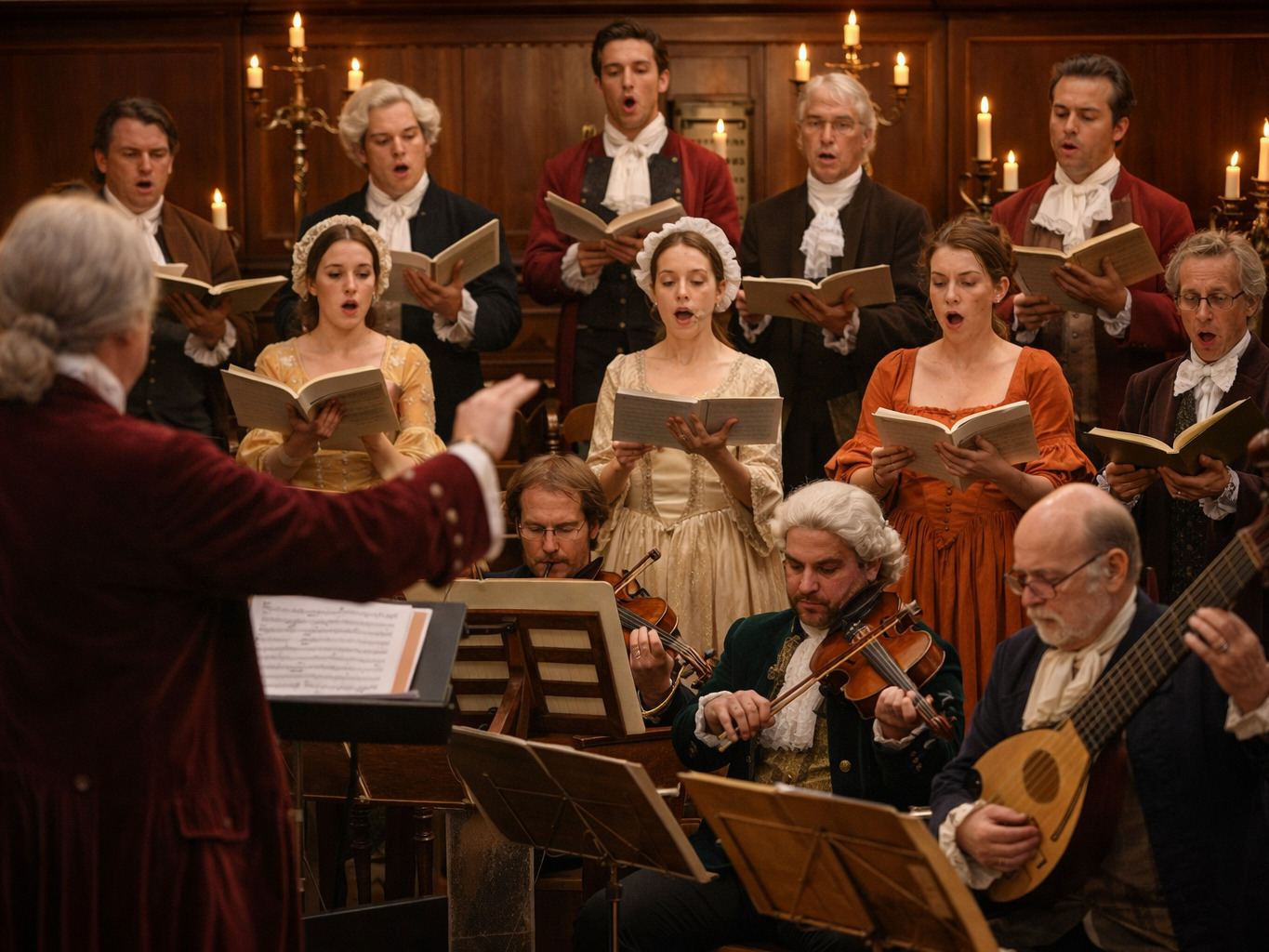
Handel’s Messiah first filled the air in Dublin, not a grand hall, but a small venue, to raise money for those in need. Handel wrote it quickly in 1741 and led the premiere in 1742. Notices encouraged ladies to attend without hoops, and gentlemen to leave their swords at home to fit more people. The music had to start clean and clear, and everyone needed to find their place. These early practices still help us plan for Spring 2026 with backing tracks, count-ins, and steady cues that create space for each singer and every ear Encyclopaedia Britannica.
Over the years, Messiah transformed. After its initial performances, it became a hit in London, leading to yearly concerts, especially linked with the Foundling Hospital. In the 19th century, large choirs and slower tempos were in fashion. But in the 20th century, many returning groups favored lighter tempos and often performed at a lower pitch than today. Yet, in churches and community halls, Messiah continues to unite people every spring. This journey is why your track choices are important: the edition you have, the pitch you select, the tempo you set, and the way you cue your singers Royal Albert Hall, Handel and Haydn Society.
What does this history mean for your choir's setup? Start with the right score. Many choirs use the Novello/Watkins Shaw edition, while others prefer an Urtext like Bärenreiter. These editions might not place repeats or cuts the same way. Make sure your tracks align with your score before your first rehearsal. Check the order of movements, the number of bars before entries, and where returns occur. This check saves time and helps you avoid surprises during count-ins.
Next, choose your pitch. Today’s standard pitch is A=440. Many historically-informed groups use A=415, which sounds a bit lower. If your singers prefer that sound but you’re in a modern setting, ask for a semitone-down version of your tracks. This keeps the music comfortable for the singers and in tune with your space. If a soprano or bass needs a different key for an aria, plan that before practice so your files match.
Tempo choices matter too. Big 19th-century choirs performed slowly and grandly. In contrast, smaller groups often sound clearer with quicker pacing. When using tracks, create two speeds for key pieces: a practice tempo around 80-85% to help lock in runs, and a target tempo for performance. Start slow to keep articulation clear, then build up speed. This approach helps pieces like “Since by man came death,” “For unto us,” and the “Amen” fugue come alive without stress.
Ornaments can enhance the music, but they must fit the track. Only add turns and small flourishes to da capo arias if they are well-rehearsed and won’t interfere with an obbligato line. If unsure, keep it simple this year. An honest, clear line works just fine.
How do you create a Spring 2026 set? Many churches prepare a 12-15 minute Holy Week block with “Surely He hath borne our griefs,” “And with His stripes,” and “All we like sheep.” Easter morning might feature a 20-minute set, starting with “Behold the Lamb of God,” followed by “I know that my Redeemer liveth” for soprano, then “Since by man came death,” “The trumpet shall sound” for bass, with “Hallelujah” as the capstone. To get ready tracks for this plan, check out the Part II and Part III packages, which make planning faster for the season ahead: Find Tracks.
“Hallelujah” includes one more piece of history. People often stand during this segment, but it’s unclear if a king started this custom. What is clear is the need for time and space before the first downbeat. When using tracks, include a two-bar count-in and an extra bar of intro, or give a spoken cue. Practice the fermata and the final cutoff with your group twice: once with the click in their ears and once with the track muted. This allows for control when the audience claps between numbers Encyclopaedia Britannica.
Now, let’s dive into the rehearsal nuts and bolts. Pick your edition and mark any cuts. Select your pitch. If necessary, request a semitone-down set to echo the older sound while keeping singers fresh. Set a clear tempo plan with two speeds for each chorus and aria. Use two-bar count-ins for entries. For speech-like recitatives, use a soft continuo bed and a click that stops before the first word, allowing the soloist to shape their line. Make sure diction is clear before adding in trumpet or violin lines.
Run sectionals on tricky spots. Divide S/A and T/B for fast passages. Loop short runs at a slower speed before moving up to performance tempo. Plan breath marks to avoid page turns on melismas. For the “Amen” fugue, focus on one skill each day: entries, then the stretto, and finally, the cadence and release. Keep stamina repetitions brief and clean.
During rehearsal, let live voices take the lead. In smaller spaces, set the tracks slightly lower than the choir so the voices shine through. For “The trumpet shall sound,” elevate the trumpet line a bit. Provide a reference A before each movement, and retune between arias and choruses to keep the sound consistent.
If your team is a quartet, you are close to Handel’s initial setup. Keep recits light and clear, allowing the soloist to take the lead, with the continuo bed just audible. Choose comfortable keys for “I know that my Redeemer liveth” and “Rejoice greatly,” based on the soprano’s comfort. For the bass aria, ensure the trumpet fits well in your space and does not overpower the voice. When time is short, select choruses that stand out: “Hallelujah,” “Since by man came death,” and “Worthy is the Lamb.”
This article approaches the topic from a fresh angle compared to our recent Easter guide, which provided a straightforward, step-by-step plan. Here, history informs your decisions and helps shape the desired sound. For more hands-on cues, combine these insights with the tactics discussed in The Ultimate Easter Classic: Handel's Messiah. To access a full library covering every movement, explore the complete Messiah for consistent layouts and practice files you can keep for future years.
In summary, Messiah started as a quick, lean work meant to serve a community. This is great news for small teams today. With the right edition, smart pitch and tempo choices, and tracks that provide clear starts, your Spring 2026 service can honor the past while remaining vibrant in the present. History is not just a relic; it is a guide for how to count in, breathe, and sing together with confidence.
Get Easter-ready with movement-by-movement Messiah accompaniments for soloists and choirs before Spring 2026 services.
Download Backing Tracks